News · 12 July 2026
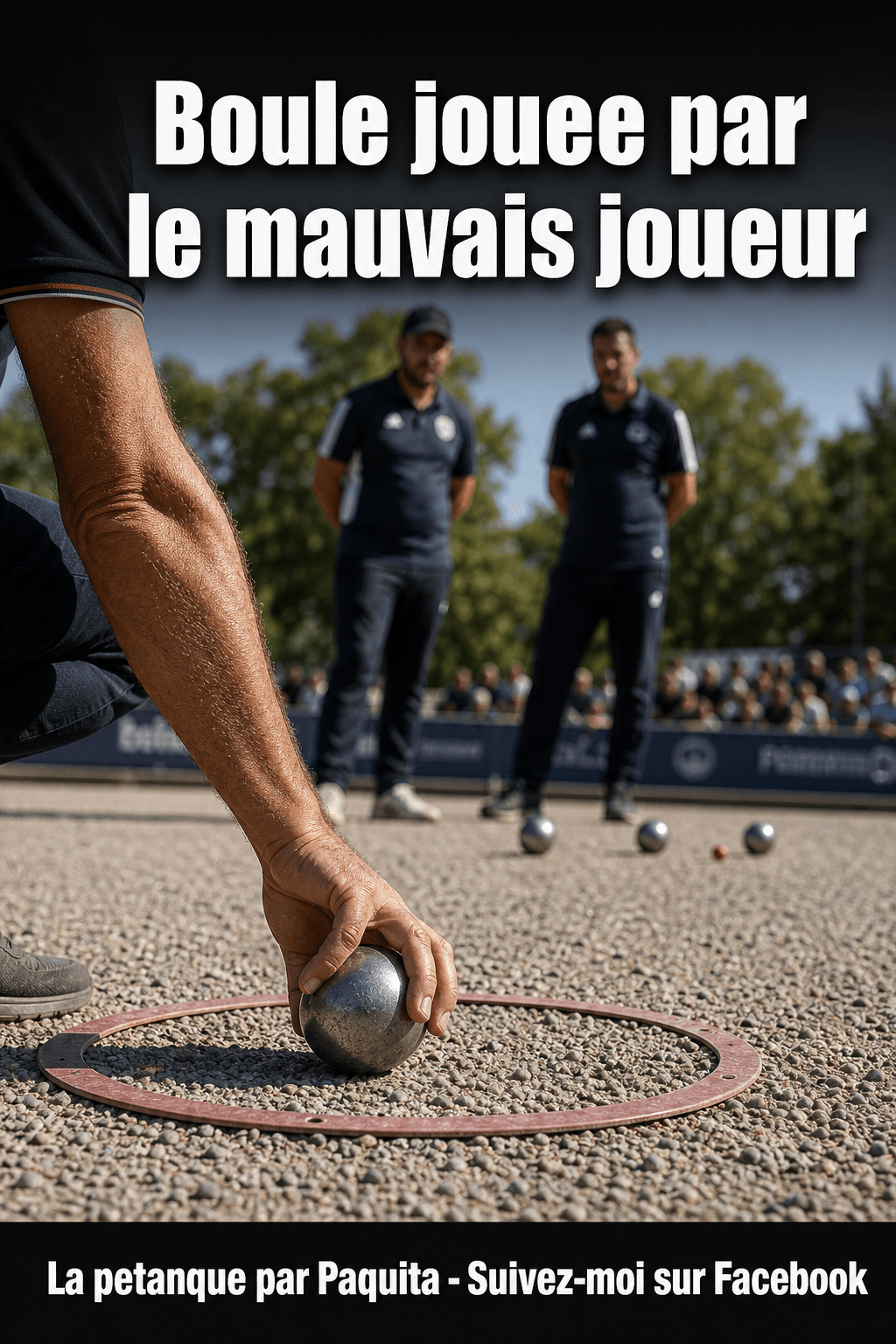
Boule played by the wrong player in pétanque: the regulatory consequences
NewsWhat to do when a boule is played by the wrong player in pétanque? Clear explanation of the FFPJP rulebook, the consequences, and the right reflexes.1.Why the order of play is central
Pétanque is played by conditional alternation: the team that does not hold the point must play until it regains it or until it runs out of boules. Within this framework, knowing who plays is not a detail. A boule played too early can give away free information, move an opponent's boule, open up the game or close off a trajectory. This precision seems slow in the moment, but it avoids cobbled-together decisions. In a competition, correctly applying the rules does not mean speaking louder than the opponent: it means reconstructing the facts, protecting the useful positions and resuming the end within a framework that both teams can understand.
Before any discussion, freeze the scene. Nobody touches the boules, the jack or the circle. The more the position remains intact, the simpler the decision will be.
2.The simplest case: no boule moved
If the boule played by the wrong player changes nothing, the situation is generally easier to correct. The boule in question can be considered according to the framework of the incident, but the essential point is to restore the order without inventing a disproportionate sanction. Even among friends, take ten seconds to look at the exact effect of the boule. This precision seems slow in the moment, but it avoids cobbled-together decisions. In a competition, correctly applying the rules does not mean speaking louder than the opponent: it means reconstructing the facts, protecting the useful positions and resuming the end within a framework that both teams can understand.
3.When the played boule changes the end
The problem becomes sensitive if the boule played by the wrong player moves the jack or boules already played. The correction must seek to restore the initial state when it is known. If the boules were marked, replacing them is more credible. If nothing was marked and the players cannot agree, the umpire becomes indispensable.
When the order becomes confused, do not ask “who wants to play?”. Ask instead: “who holds the point now?”. The answer designates the team that must play.
4.The team's responsibility
A team must know its number of remaining boules and the point held. The captain or the most lucid player must calmly announce the situation before a partner rushes in. Many errors come from vague communication: one player thinks they hear “your go”, another thinks their team does not hold the point, and the boule is played. This precision seems slow in the moment, but it avoids cobbled-together decisions. In a competition, correctly applying the rules does not mean speaking louder than the opponent: it means reconstructing the facts, protecting the useful positions and resuming the end within a framework that both teams can understand.
5.How to avoid the argument
The right protocol is simple: stop, observation, positions, decision. We stop the end, observe who was supposed to play, check the movements, then call the umpire if the consequence is not obvious. The aim is not to win on the rules, but to resume the game on a fair basis.
| Situation | Sound decision | Mistake to avoid |
|---|---|---|
| Error without movement | Resume the order of play | Turn the oversight into a controversy |
| Jack or boule moved | Replace if position known | Move by hand without agreement |
| Doubt between teams | Call the umpire | Vote between players |
| Confused order | Start again from the point held | Play because “it seemed logical” |
To progress, you need to structure your match routines, manage the roles and make the right decisions under pressure.
Discover