News · 20 July 2026
Ball that bounces and returns to the player at pétanque: official rule
NewsA ball hits an obstacle, bounces and returns to the player: does it count? Here are the official rules and good reflexes.1.The principle: a rebound does not cancel a ball
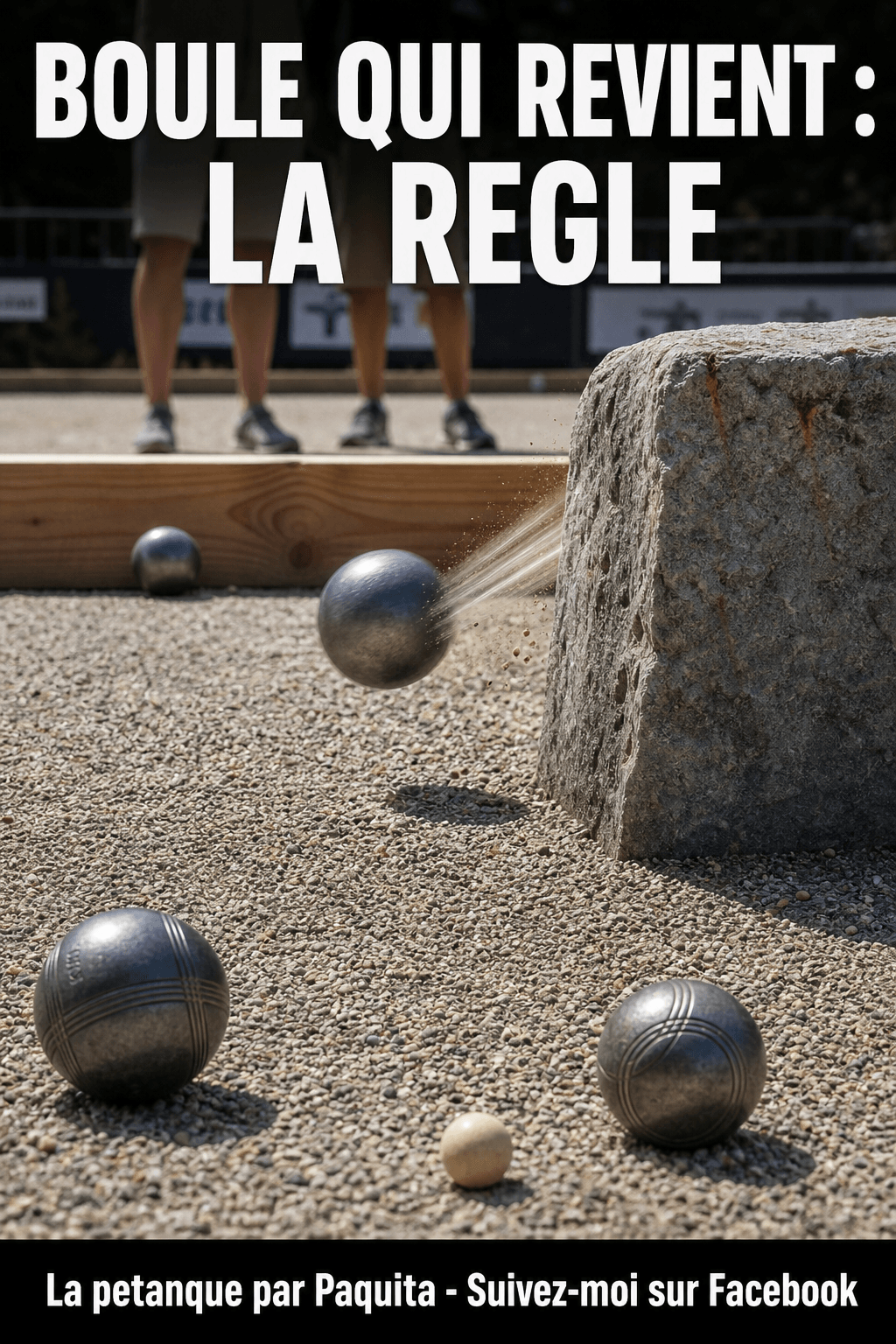
A ball can hit an imperfection in the ground, a border integrated into the field or an authorized natural obstacle without being canceled. Petanque is played on living ground; rebounds are part of the game as long as the ball stays within the intended frame.
What shocks players is not always what concerns the rules. A ball that returns two meters after hitting a stone may be perfectly valid if that stone is in the playing zone and was not placed intentionally.
Useful question: did the ball hit an obstacle on the court or an external participant? This is where the decision lies.
2.Natural obstacle, artificial obstacle: the difference
A stone, a bump, a boundary board or a border can be part of the normal environment of the terrain. If the organization has not declared the obstacle a prohibited area, rebounding is generally accepted. On the other hand, a bag, a chair, a spectator's foot or an object placed by a player relates to another logic.
Preparing the ground therefore matters a lot. The clearer the limits and obstacles are before the game, the less time the discussions take during the game.
3.When the ball must be canceled or replayed
If the ball is stopped or deflected by a person, an animal, a mobile object or an unforeseen external element, the regulations regulate the continuation according to the origin of the movement. You can cancel the ball, replace it, or leave the position depending on the exact case. The player does not choose the solution alone.
The tricky part is the proof. If no one has seen the contact, you must remain cautious and call the competition referee. Touching the ball before the decision is the worst thing to do.
4.Why the player cannot claim cancellation for comfort
A missed ball that returns badly does not become cancelable because its result is bad. In the same way, a lucky ball that comes back to hit the goal does not become illegitimate because it annoys the opponent. The regulations protect equality: same ground, same obstacles, same consequences.
Before shooting near an edge, accept the possible bounce. If you want to avoid the comeback, change the trajectory or type of shot rather than hoping for a rollback.
5.The correct procedure in the event of a dispute
We freeze the scene, we ask what was touched, we check if the obstacle belongs to the terrain, then we decide. In an official game, the referee must be called before the players change the position of the balls or the goal. The goal is to preserve the facts.
In a friendly game, apply the same discipline: no balls picked up in a mood, no decisions shouted from the circle. A rebound is judged calmly.
Decision made
Rushed decision
| Contact | Boule | Reading |
|---|---|---|
| Stone from the field | Often valid | The field speaks |
| Spectator | External case | Stop and decision |
| Border announced | According to limit | Check before playing |
To understand bounces, edges and tricky trajectories, nothing replaces a real method of reading the ground.
Discover