News · 21 July 2026
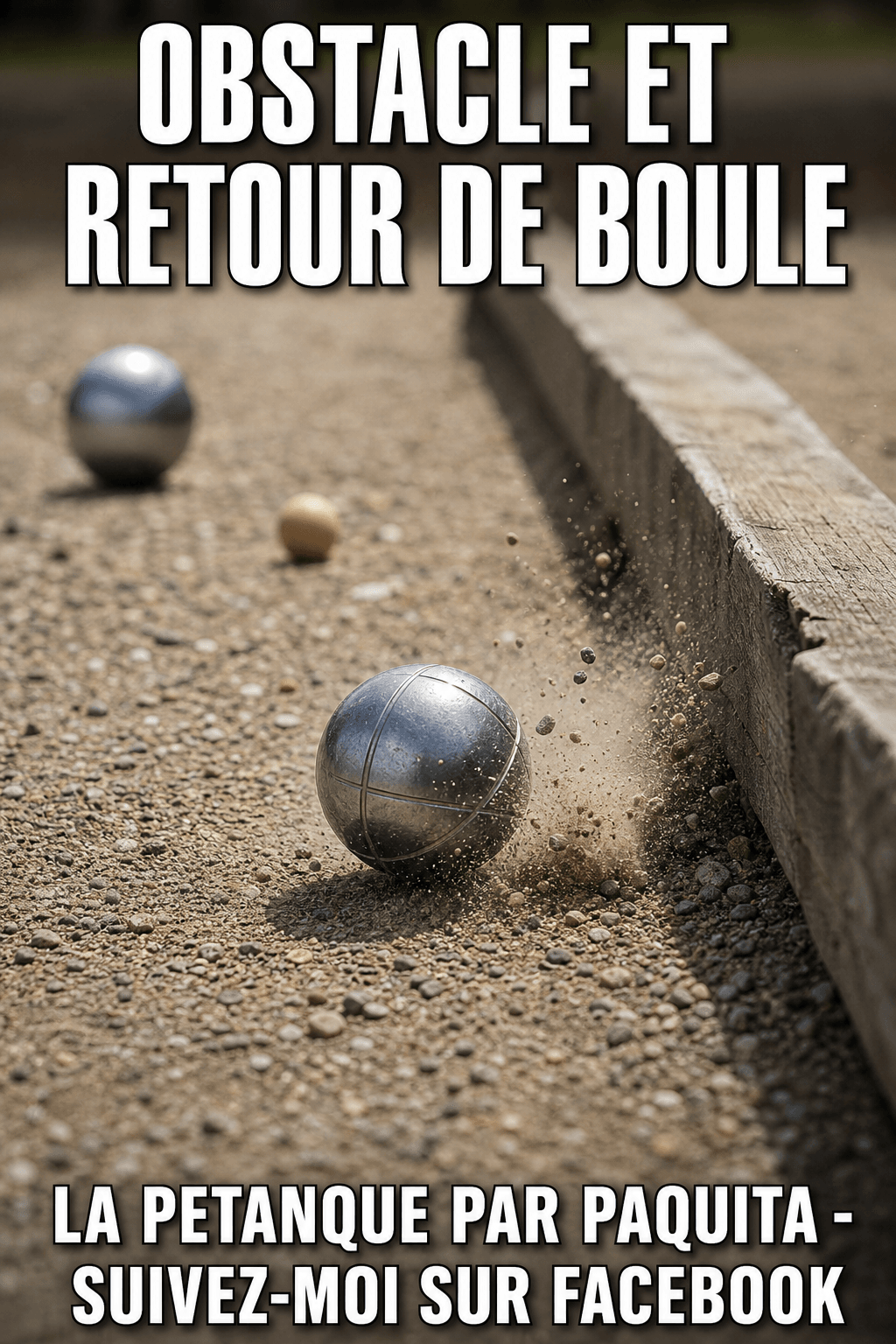
The ball that hits an obstacle and returns: does it count according to the regulations?
NewsA ball hits a border, an obstacle or a stone then returns to the game: here are the official criteria to know if it still counts.1.A rebound does not automatically cancel the ball
The key point is simple: touching something is not always a foul. On many courts, borders, fixed stones and irregularities are part of the playing environment. If the ball touches them without leaving the valid frame, it can continue its course and remain played.
The spectacular nature of the rebound should not influence the decision. The rules do not punish luck; it frames the validity of the trajectory.
2.Going out of the field changes everything
If the ball completely crosses a loss line before returning, the situation is no longer the same. A void ball does not magically become valid again because it bounces and goes in. We must therefore look at the exact passage at the limit, not just the final position.
This is where discussions arise: one team looks at where the ball ended up, the other remembers the journey. In competitions, the route can be decisive.
The right reflex is always the same: observe, keep the marks, then decide. This discipline protects the point as much as the climate of the game.
3.Fixed obstacle, moving obstacle: do not confuse
A fixed obstacle in the terrain and a moving object added by chance do not produce the same reading. A planned border, a natural relief or an inlaid stone may be part of the land. A bag, a chair, a bottle or a spectator relate to another logic.
Before applying a rule, the obstacle must therefore be qualified. Many bad decisions come from a poorly chosen word.
In a borderline situation, don't try to win the discussion. Try to reconstruct the facts in order: where the goal was, where the ball was, what boundary was crossed, and by what.
4.The method for deciding in three questions
First question: has the ball crossed a loss limit? Second question: is the affected obstacle part of the terrain or not? Third question: does the final position disturb a boule or a base that must be replaced? These three questions are enough in most cases.
When asked calmly, they turn an argument into a check.
| Useful reflex | Why | Frequent mistake |
|---|---|---|
| Mark before moving | Secure the proof | Moving too fast |
| Check the validity | Avoid a false point | Play by eye |
| Call the referee if in doubt | Neutral decision | Endless debate |
5.Why the referee must be called early
The longer we wait, the more the traces disappear. The dust settles, the players walk, a next ball modifies the field. Calling the referee early is not an admission of weakness: it is the best way to preserve the game.
In competition, this reflex is particularly important when a ball returns after touching a visible boundary.
6.Exploit or neutralize the rebound
A ball returned to play can completely change the lead. She can find herself in front, cut a shooting line or protect the goal. If it is valid, we must play with this new geometry instead of remaining stuck on the injustice felt.
Good players know how to turn the page quickly: once the decision is made, only the next ball counts.
To learn to adapt your game to edges, fast surfaces, bounces and unforeseen situations that change a lead.
Discover