Mental · 15 August 2026
Pétanque concentration: the 10-second routine
A ten-second routine to choose a target, quiet mental noise and play the boules that matter better.A deliberately slow little routine — looking at the jack, naming the area, breathing out — stops stray thoughts from taking over the movement. It does not make a boule perfect; it makes your decision clearer.
1.The brain loves noise; the player must choose a signal
Before an important boule, the ground quickly fills up with the score, partners’ eyes, the last miss, an opponent’s remark or the urge to make up for it. None of that gives a playing line. Useful concentration is not an empty mind; it is the ability to choose one concrete piece of information when several things demand your attention. Distance, landing area, height, boule to protect: those are the elements that move an end forward.
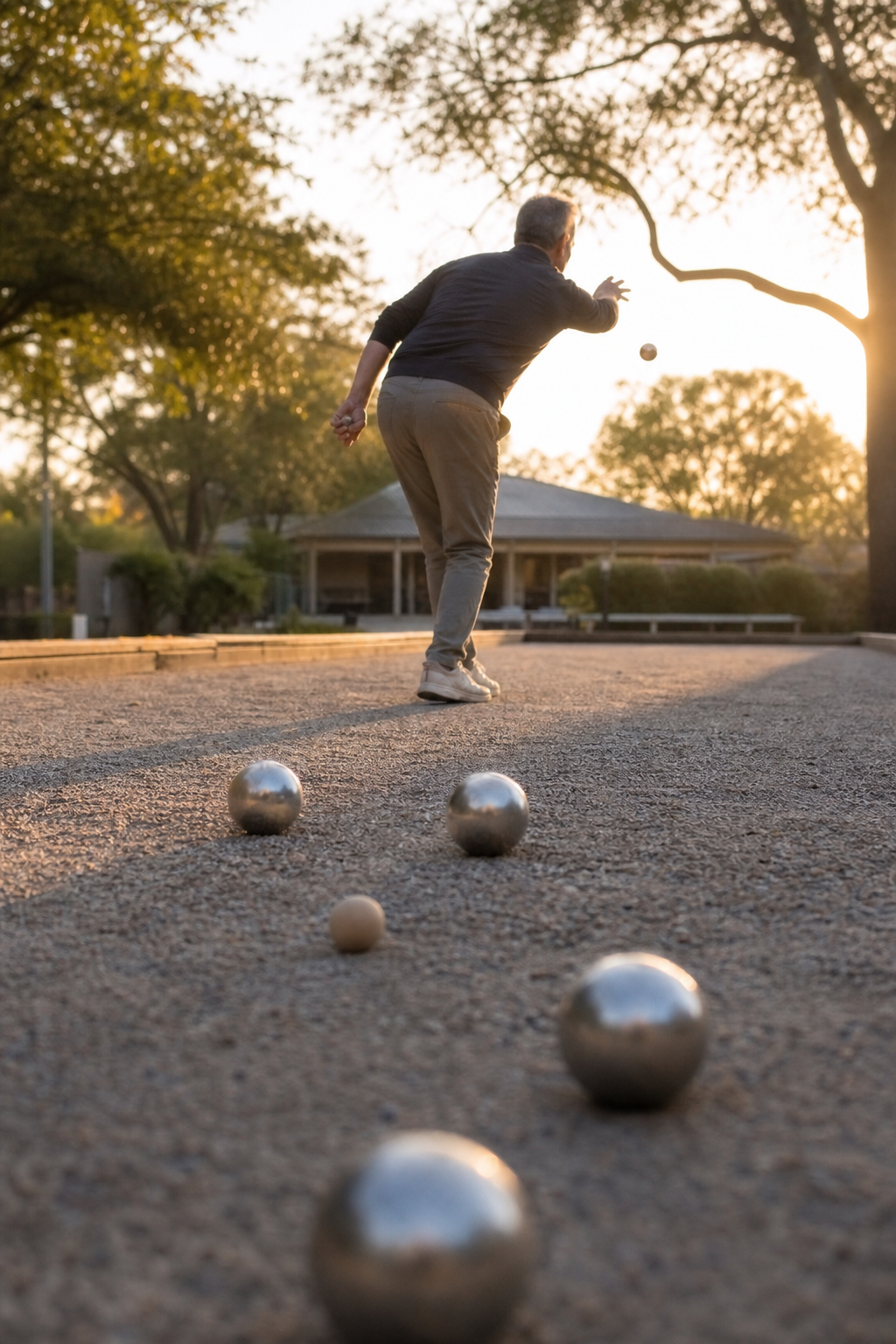
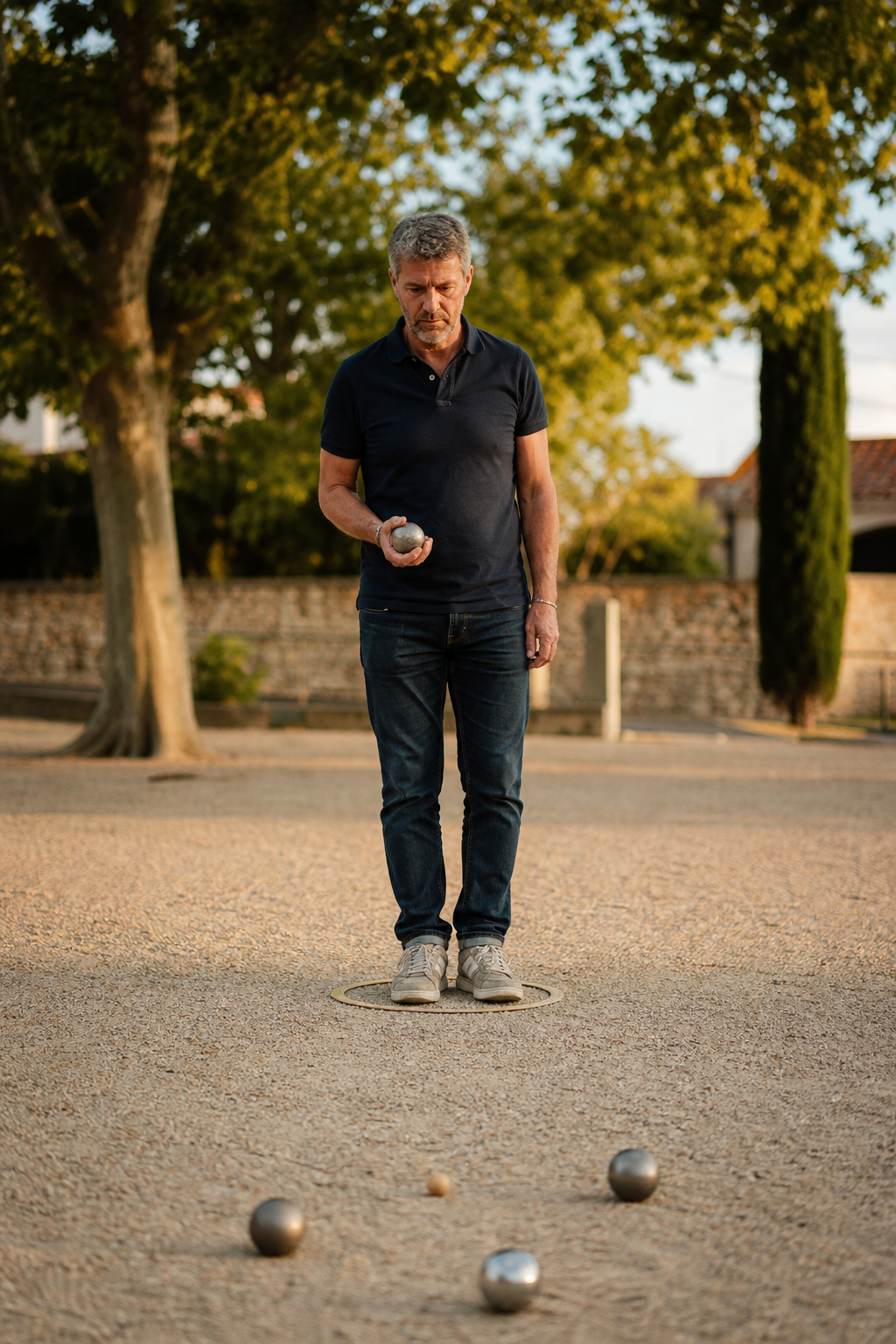
The unusual habit is to slow down deliberately for a few seconds while everything urges you to hurry. The player fixes the jack, breathes in, names the landing area mentally, then breathes out before entering the circle. That tiny detour cuts off the inner voice judging the movement before it exists. It turns vague worry into a playable instruction.
Waiting to feel completely confident before playing. Confidence changes; a routine remains available even after a bad end.
2.A short routine is better than a complicated ceremony
A good routine fits within the allowed time and does not look like a performance. Start by looking at the jack and the last genuinely dangerous boule. Then choose a very simple phrase: ‘I land before the boule’, ‘I shoot straight on’, or ‘I keep to the right’. Finally, make the out-breath a little longer than the in-breath. The aim is not to relax at all costs; it is to give the body a steady rhythm.
| Time | Useful question | Desired effect |
|---|---|---|
| Before the circle | Which boule really matters? | Avoid looking at the whole ground at once |
| In the circle | Where should I land the boule? | Choose a precise trajectory |
| After the movement | What does the boule teach me? | Observe without judging yourself |
This structure works for pointing as well as shooting. For a point, the landing area is the central marker; for a shot, it is the target and shooting intention. In both cases, avoiding a negative phrase is valuable. ‘Don’t miss’ keeps attention on failure. ‘Straight on the centre’ or ‘land thirty centimetres short’ creates a technical image.
3.In a tight end, the pause protects the decision
Imagine a game tied at 10–10. Your team has just conceded two points and the ground grips on the left. You have one boule in hand, an opponent’s boule fifty centimetres from the jack and two boules still with your team. Hurry would make you shoot immediately to erase the disappointment. The routine offers something else: look at the opponent’s boule, name a landing area on the right, breathe out, then ask your partner: ‘Do we protect first?’
This conversation does not remove ambition. It restores the order of priorities. If the safety point keeps the opponent away, it can be the best choice; if the target is clear and the shot is prepared, shooting becomes logical again. The real gain is choosing with the remaining boules, not with the pride wounded in the previous end. To refine that reading, the guide pétanque tactics offers useful markers between attack and protection.
Keep a sentence that brings you back to the present in your bag: ‘one target, one height, one movement’. It is more useful than a speech about mental strength.
4.A focused team talks less, but better
The routine is not reserved for the player holding the boule. The pointer can announce one area, the middle player can check the distance and the shooter can wait for a clear target. When everyone adds a hypothesis, concentration becomes a meeting. When everyone brings reliable information, it becomes help. Agree on three shared words before the competition: distance, area, choice.
Silence can also help. After a missed boule, avoid technical commentary just as the player returns to the circle. First give that player the chance to restart the routine. Discussion can come after the end, with facts. This discipline protects team confidence and prevents one player’s emotion from becoming the rhythm of all three.
5.In training, make the ritual visible before making it discreet
At first, say your routine quietly: ‘I look at the jack, I see my area, I breathe out’. It is not childish; it checks that you are not skipping the important step. Then play ten points at the same distance and note not only the result but whether you followed your sequence. The session’s aim is not to pile up perfect hits; it is to make the good start repeatable.
A second session can add a constraint: a partner announces a tight score or difficult ground, and you must restart the routine without speeding up. Ground details matter; the guide on difficult terrains helps you choose a line before throwing. With practice, attention learns to return to action rather than feed a disaster scenario.
Measuring progress by more than the score
A successful routine can come before a missed boule, just as a lucky boule can follow a muddled decision. Do not immediately confuse result with quality. After the game, keep three questions: did I name a target? did I breathe before the boules that mattered? did I help my partner without overloading them? These markers show whether concentration is becoming a skill rather than luck.
Keep a small notebook over three competitions. You may see that attention slips after an argument, in the sun, or when you want too quickly to erase a mistake. That observation allows a precise answer: a shorter phrase, water and shade preparation, or a team instruction. The pathway improving at pétanque can then help turn that observation into a training session.
7.The next movement matters more than the last thought
Concentration does not mean becoming impassive. It means accepting that a thought arrives without giving it the steering wheel. A ten-second routine recalls what depends on you: look, choose, breathe, play. Start at your next friendly game. Tell your partners you are testing this marker, then keep it for three important ends. That is how an unusual habit becomes a very concrete strength.
Choose an action phrase, use it for ten pointing boules, then note one thing only: did I follow my routine before chasing the result?
Frequently asked questionsFrequently asked questions
Won’t the routine make me lose time?
No, if it stays short. Three markers and one exhalation take under ten seconds and often avoid much longer hesitations.
Should the routine be the same for shooting and pointing?
Keep the same structure but change the technical image: landing area for pointing, target and intention for shooting.
What if a partner talks to me during preparation?
Agree before the game on a simple stop word. Technical discussion must end before the player enters the ritual.
Does this method help beginners?
Yes. It teaches them early to look at the ground and play an intention instead of throwing to ‘see what happens’.
How do I know whether I am really improving?
Count the boules for which your routine was complete, not only successful boules. Consistency of process eventually improves decision quality.