News · 15 July 2026
What changes between free play and official pétanque competition
NewsFree play or official pétanque competition: terrain, times, refereeing, equipment, dress, penalties, and reflexes to adopt before registering.1.Free play tolerates habits, competition applies a framework
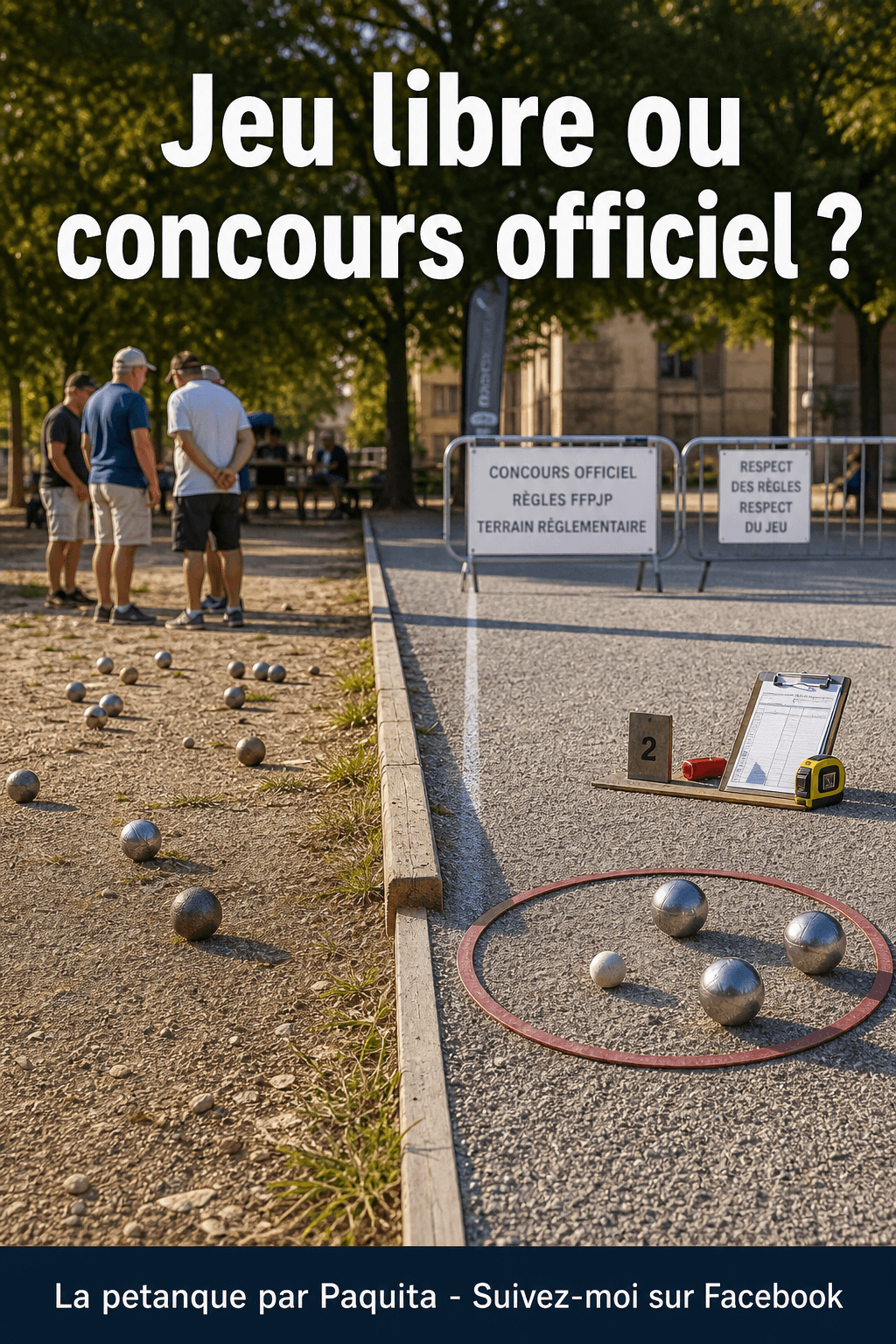
In a free game, players often arrange things among themselves: you shift the circle a little to avoid a root, you re-throw an approximate jack, you accept any outfit and you discuss the points with flexibility. This friendliness is part of pétanque culture. In official competition, the logic changes. The rules are no longer just a moral reference, they become the common framework of the competition. The court is allocated, schedules matter, the jack’s distances are checked and disputed decisions can come back to the referee. The move from free play to official play surprises many good players, not because they don’t know pétanque, but because they aren’t always used to being held to a precise procedure.
2.The court is no longer just a practical space
In free play, you often choose the court that suits everyone. If the area is too stony, too narrow or too close to an obstacle, you adapt verbally. In competition, the allocated court must be respected, with its boundaries, its lines and the organisation’s instructions. A boule or a jack out of bounds isn’t dealt with according to the group’s mood. You need to know when the object is dead, when it stays valid, and from which circle the end must continue. The major difference lies in responsibility: the official player must observe the court before playing, not only after an incident.
Key point: don't touch anything until the situation has been recorded. In a tournament, the first practical mistake often consists of moving a bowl, a jack or a circle before clarifying the applicable rule.
3.Playing time becomes a real constraint
In a friendly game, no one really times it. In competition, the time limit to play after the jack or the previous boule comes to rest can be sanctioned. It isn’t a decorative rule: it prevents endless games and strategic slow-downs. The player who takes three consultations, changes boule, goes back to the circle, then re-discusses the decision exposes themselves to a warning. The right reflex is to prepare your choice while the opponent plays, then to enter the circle with a clear intention. Competition rewards quick clarity, not rushing.
4.Equipment, licence and dress: the official looks at the details
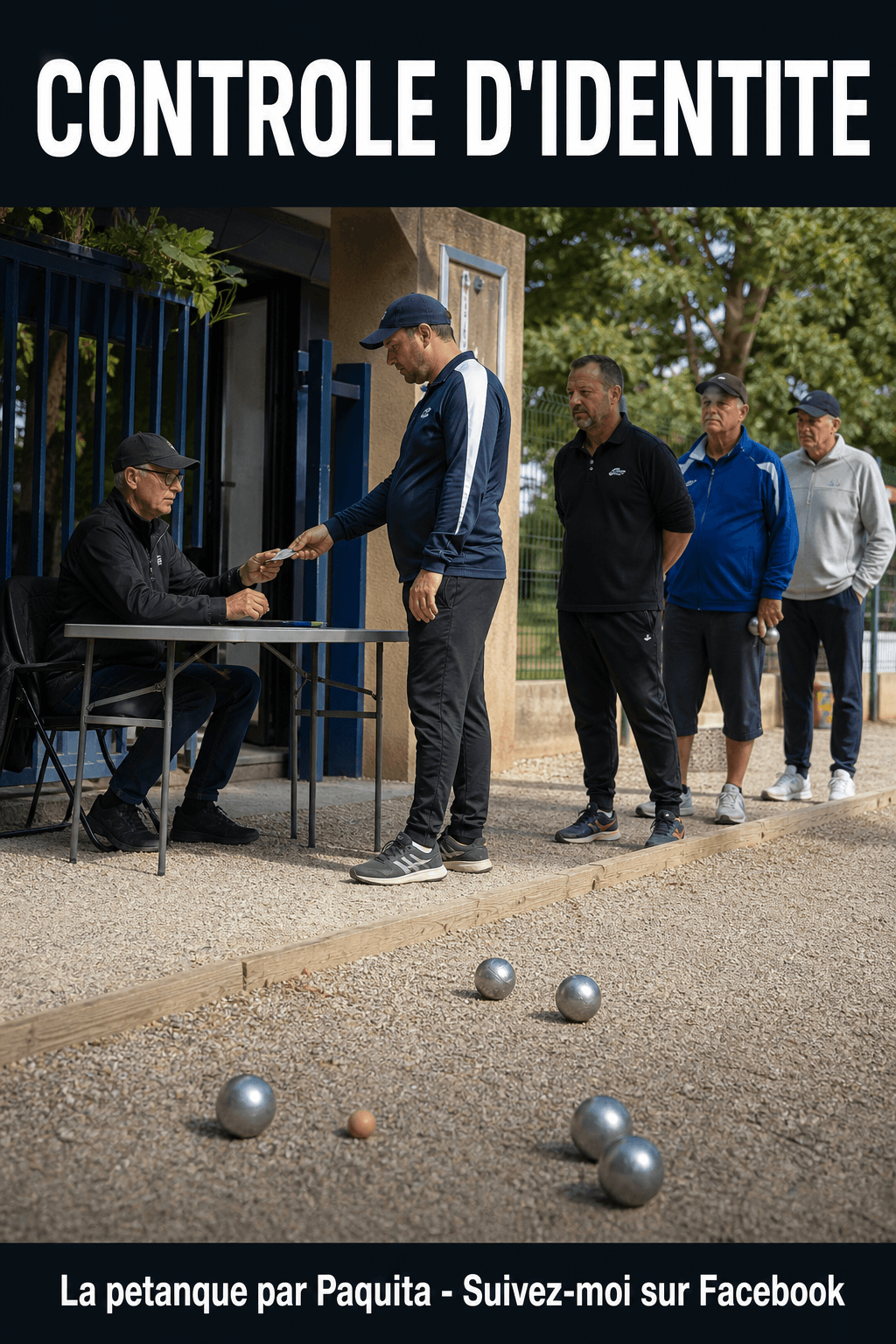
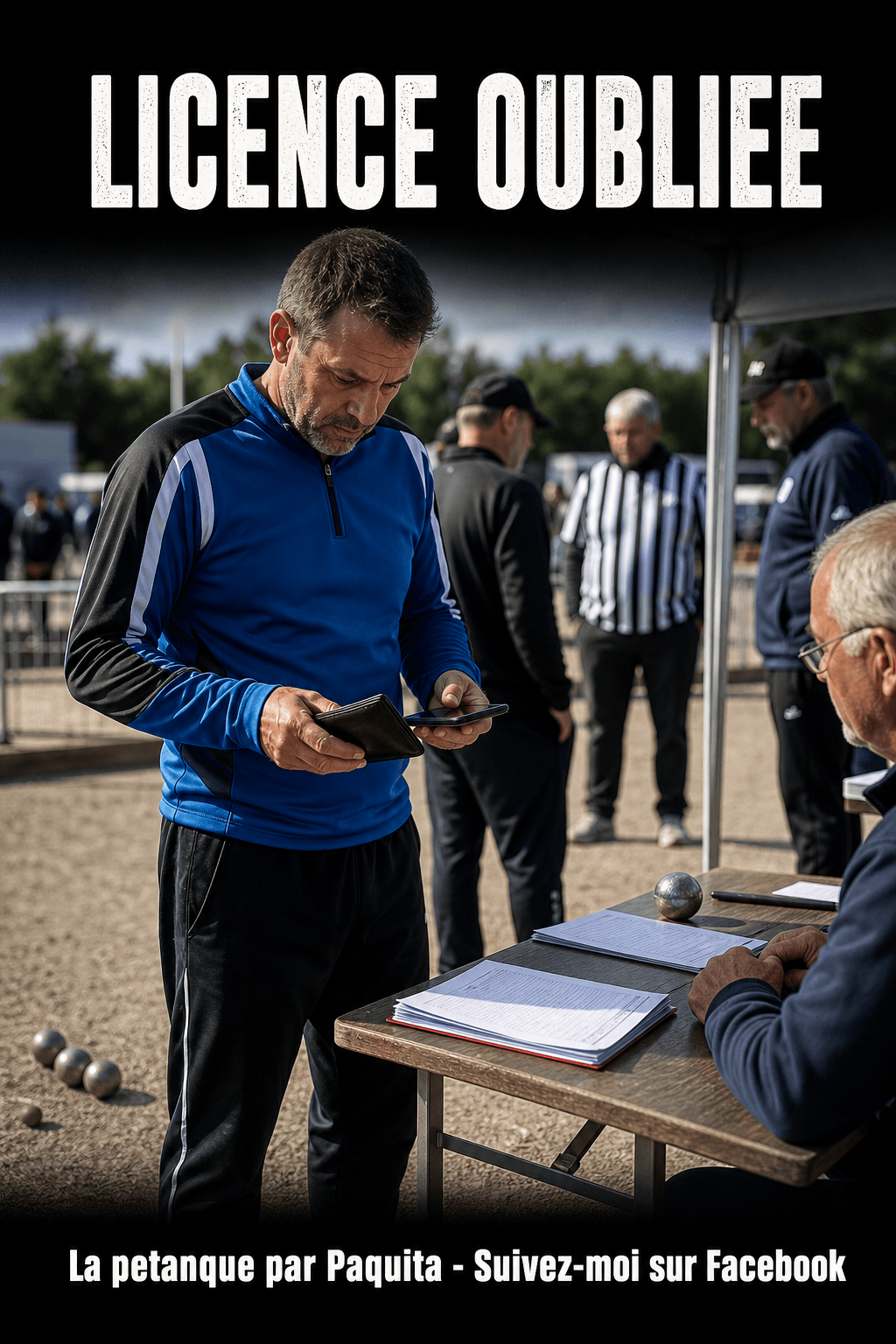
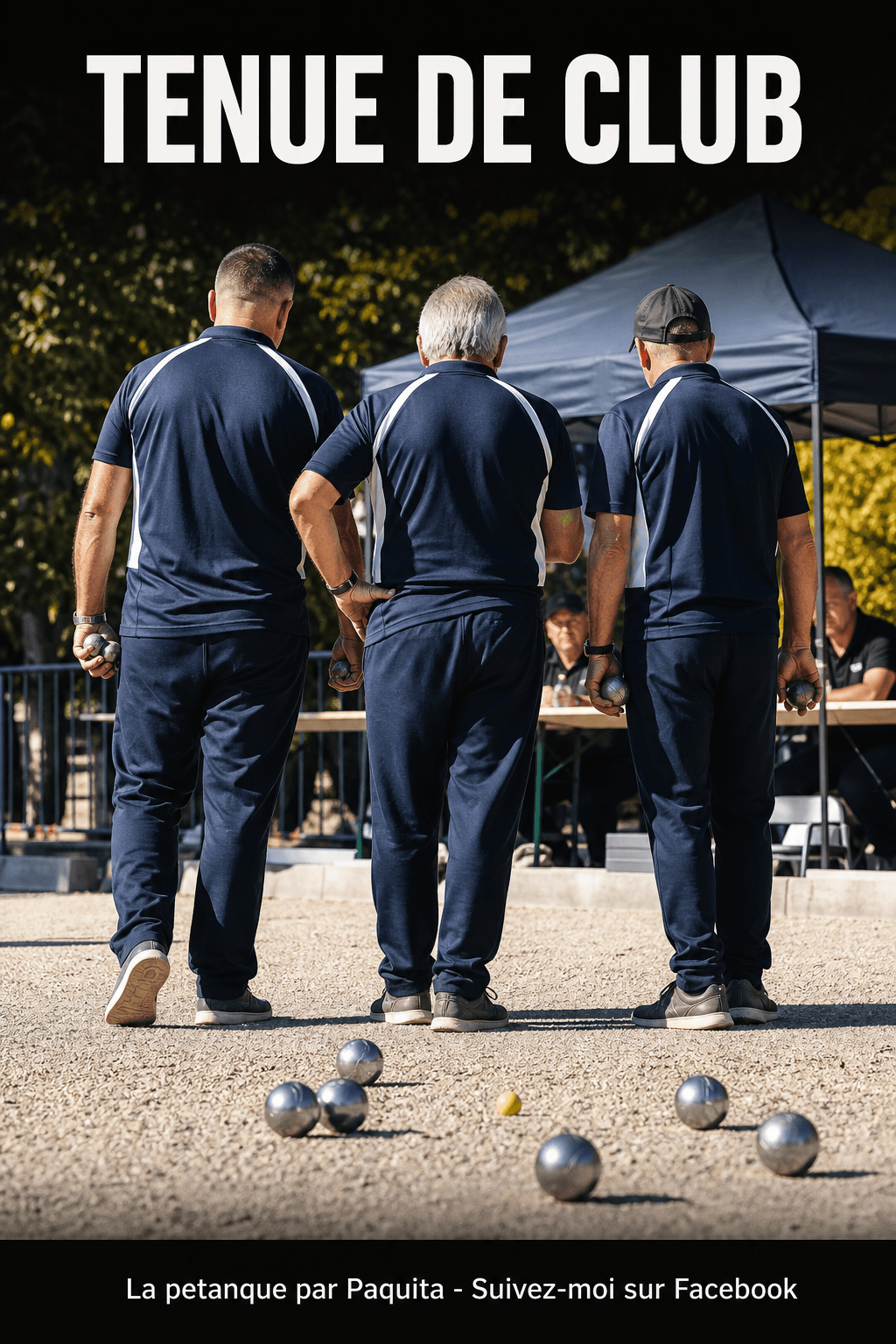
In free play, a leisure boule, an old jack or a mismatched outfit generally cause no trouble. In official competition, the boules must meet approval requirements, the player must be able to justify their entry and the dress may be governed by the specific regulations of the event. These points seem administrative, but they prevent disputes. A non-compliant boule, a dubious marking or unsuitable equipment can become a problem at the worst moment. Before a competition, checking your equipment therefore isn’t perfectionism: it’s insurance.
| Situation | Good reflex | Common mistake |
|---|---|---|
| Doubt over a line | Record before touching | Replace by eye |
| Disputed equipment | Check the markings | Say "we've always played with these" |
| Decision dispute | Call the umpire | Negotiate under tension |
5.The referee replaces on-court negotiation
The biggest psychological change is the possible presence of a referee. In free play, players negotiating a dispute often look for an acceptable compromise. In competition, the referee decides according to the text and the observed situation. They aren’t there to confirm the loudest opinion, but to protect the fairness of the game. Asking for a referee isn’t a lack of fair play when the situation demands it. On the other hand, calling them for every detail slows the game down and tires everyone out. The good player knows how to tell a measurable doubt from mere frustration.
Before an official game, run a simple check: terrain, circle, jack, bowls, score and order of play. This routine takes less than a minute and avoids most pointless discussions.
6.How to move from free play to competition without tensing up
The best preparation is to play a few training sessions in official conditions: stable circle, jack at a valid distance, limited court, decision time, clear announcement of points. This routine makes the competition less intimidating. On the day, the aim isn’t to become rigid, but to keep the same quality of play within a stricter framework. A player who understands the differences gains in calm: they know when they can adapt, when they must apply the rule and when to ask for an outside decision.
The more official the setting, the more visible small oversights become. The goal isn't to play with fear, but to play with method.
To run a clean competition, manage registrations, pools and brackets without cobbling things together, the PetanqueLand tool helps clubs keep a clear framework from start to finish.
Discover