News · 20 July 2026
These timing infringements in petanque and their official consequences
NewsStarting signal, time to play, waiting, delay, boule thrown too early: timing infringements in pétanque competitions account for many sanctions.1.The start signal: a game doesn't begin on its own
In an official competition, the game fits into an organization. Teams are called, terrains are assigned and the start can be given by a signal or by instruction from the organization. Playing before this framework can create immediate confusion: unrecorded score, absent opponent, misassigned terrain, game started when the umpire hasn't validated a condition.
The temptation exists especially when players are in a hurry or when the terrain is already free. Yet the right reflex is simple: wait for the game to be officially opened. This discipline avoids restarts, disputes and pointless discussions.
Practical rule: if you have any doubt about the start, ask the table or the umpire before throwing the jack.
2.Time to play: a sporting constraint
The time available to play a boule is not a formality. It stops a team from turning every decision into a long negotiation. It also protects the competition schedule, because a single endless game can hold up an entire draw. Players who decide quickly should not have to suffer those who slow everything down.
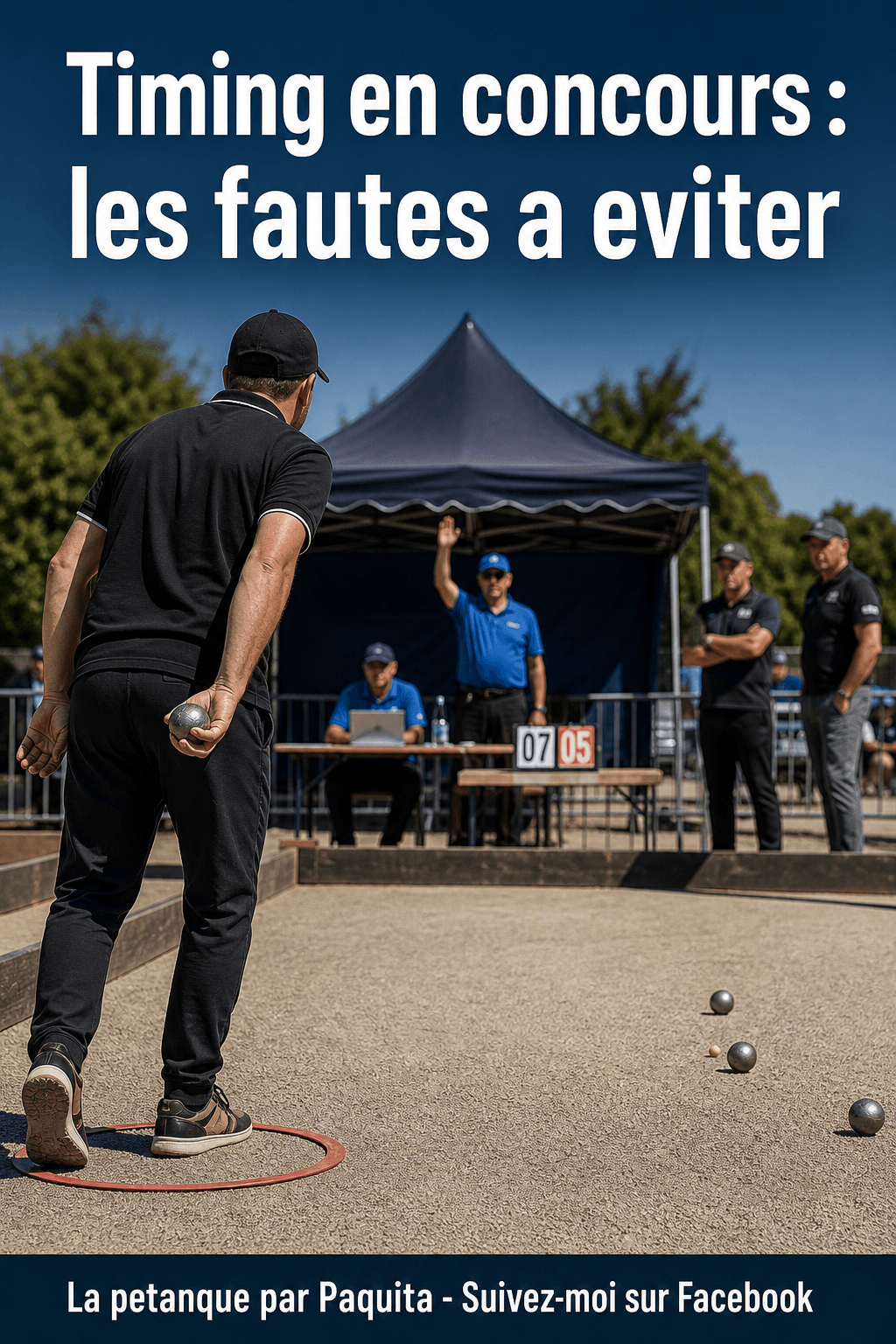
Timing starts when the situation is clear: the point is determined, the boules are stationary and the team knows it must play. The difficulty often comes with borderline cases, for example an ongoing measurement or an obstacle to check. At such moments, it is better to call the referee than to let time become a matter of dispute.
3.Playing too early: the infringement we downplay
Playing too early does not just mean playing fast. It can mean throwing before the signal, before the jack is validated, before the measurement is finished or before the opposing team has clearly completed its action. In a friendly game, you often start over without issue. In a competition, the consequence can be more serious because the action disrupts an official situation.
The most frequent case concerns rushing after an opponent's boule. A player thinks he knows he has to play, steps into the circle and throws while the point is not yet confirmed. If the boule changes the situation, the discussion becomes inevitable. Waiting a few seconds of certainty is much better than a whole disputed end.
Before playing, get into the habit of checking three things: the point is established, your team is to play, and no one is still measuring or scoring. This check takes less time than a dispute.
4.Delaying play: when slowness becomes a fault
There is a difference between thinking and delaying. Thinking means quickly analyzing the terrain, the score and the best option. Delaying means multiplying discussions without a decision, moving away from the terrain, remeasuring several times or interrupting the opponent to gain time. The referee must then protect the rhythm of the game.
Players under pressure often slow down without realizing it. They wipe the boule for too long, ask for the score again, discuss an option already decided. This behavior may seem harmless, but it unbalances the game. In competition, the mental side is part of the game; so is time.
5.Late to the call, no pitch present, late restart
Timing also concerns the organisation around the game. A called team must present itself. A team that is slow to reach its ground, that disappears between two ends or that fails to resume after an interruption can penalise the whole competition. Organisers do not always have the luxury of waiting: the draws, the referees and the grounds are coordinated.
| Timing infringement | Why it's serious | Good reflex |
|---|---|---|
| Start before signal | Game not framed | Waiting for the call-up |
| Boule played too early | Unstable situation | Confirm the point |
| Deliberate delay | Breach of fairness | Decide and play |
| Absence at the call-up | Blocked bracket | Stay available |
6.How to avoid time penalties
The solution is not to play in a rush. It consists in creating a clear routine. When your team has to play, one person announces the option, the player steps into the circle and executes. If an objective doubt exists, you call the referee quickly. This simple approach avoids both false emergencies and deliberate slowness.
The best teams are not the ones who play fastest. They are the ones who know when to think, when to ask for a measurement and when to stop talking. Timing then becomes an advantage: the opponent senses an organized, calm team that is hard to destabilize.
Timing is also a mental matter: knowing how to decide quickly, breathe just right and stay clear-headed when the referee is watching the pace.
Discover