Actualités · 20 July 2026
Mistakes to avoid before a pétanque competition
Mistakes to avoid before a pétanque competition: concrete landmarks, common mistakes and Paquita's advice to progress in pétanque.1.The competition starts before the kick-off
The day before a competition already influences the quality of the next day. Going to bed too late, improvising the trip, neglecting hydration or arriving at the club with no buffer creates mental noise that reduces availability. Many players think they will get "into the match" at the right moment. In reality, they spend most of the first part catching up on a poorly prepared start.
Good preparation does not seek perfection. It seeks stability. Simple schedules, ready equipment, planned outfit, no-surprise meals, realistic arrival time: these reference points protect nervous energy even before thinking about technique.
2.The trap of poorly managed equipment
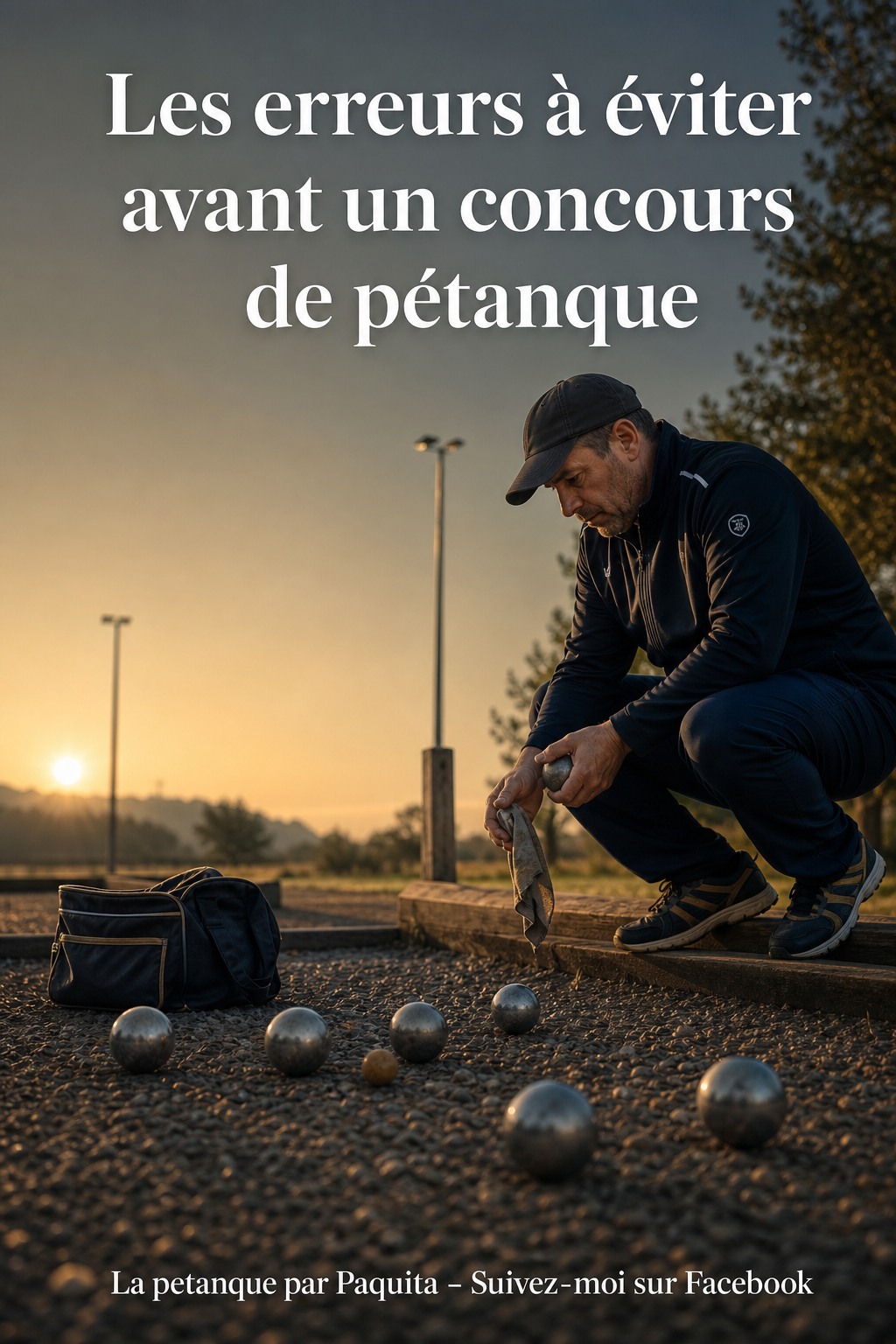
Changing your boules, cloth, accessory or even your shoes on the day of a competition often creates a false sense of positive novelty. In practice, it adds uncertainty. The player chases sensations instead of playing. The equipment for the big day should be familiar, validated and ordinary.
You should also prepare the essentials without overload: boules, jack, tape measure, cloth, suitable clothing, water, simple snack. Too many objects disperses attention as much as too few. The right tournament equipment is the kind you forget because it causes no problems.
3.A warm-up without purpose serves no purpose
Many players "warm up" by throwing boules at random. That wakes the arm up a little, but fixes neither the stance, the tempo nor the reading of the first distances. A good warm-up must answer a clear intention: feel the release of the hand, find the rhythm, test one or two useful lengths, see how the ground reacts.
Ten directed minutes are better than twenty vague minutes. A few targeted points, a few reference shots, a steady breathing and a final pass on reading the terrain are largely enough to enter a tournament properly.
4.Mental mistakes before a game
The first mental mistake consists in projecting yourself too far ahead: winning the competition, avoiding the false step, thinking about how others see you. The second consists in arriving without a compass: no routine, no instruction, no return to the present. These two errors immediately increase the useless tension.
The best mental frame before playing remains very simple: how do I want to start? what pace do I keep? what attitude do I protect if the first end goes badly? The clearer these answers, the less the competition sweeps you away.
5.The useful check-list
A good pre-competition checklist is not long. It only checks what has a real impact: energy, equipment, warm-up, reading the first terrains, team communication guidelines. It is this sobriety that makes it usable.
The danger is turning preparation into an anxious ritual. A check-list serves to free the mind, not to fill it further.
6.Build a real competition routine
The competition routine must be repeatable from one event to another. It can include the arrival time, three warm-up gestures, an equipment check, a tactical reminder and a phrase to enter the match. What matters is not its appearance, but its ability to make you available.
Over time, this routine becomes an inner signal. Your body understands that it is entering competition mode without needing to overload the mind. That is when preparation truly pays off.
A competition is rarely won before the first end, but it can very easily get complicated there if preparation has been neglected.
| Error | Likely consequence | Useful alternative |
|---|---|---|
| Arriving just on time | Needless stress | Plan a simple margin |
| Test new equipment | Muddled sensations | Keeping familiar equipment |
| Random warm-up | Unclear entry into the game | Short but targeted session |
| Think about the final result | Early pressure | Setting a framework for the first part |
Prepare a checklist on a single note: departure, equipment, water, warm-up, first instruction. If it fits in five lines, you'll actually use it.
Concrete support to structure your competition routine, better manage the pre-match and enter the important ends more accurately.
View resource7.Frequently asked questions
Yes, because part of the quality of the competition already depends on sleep, equipment and the organisation of the day.
No. What matters is the precision of the warm-up, not its length.
Because it adds uncertainty and turns attention away from the real decisions of play.
Only if it is too long. A short check-list, on the contrary, serves to lighten the mental load.
Prepare the equipment and the arrival schedule the day before, then keep a short, focused warm-up.