Actualités · 10 June 2026
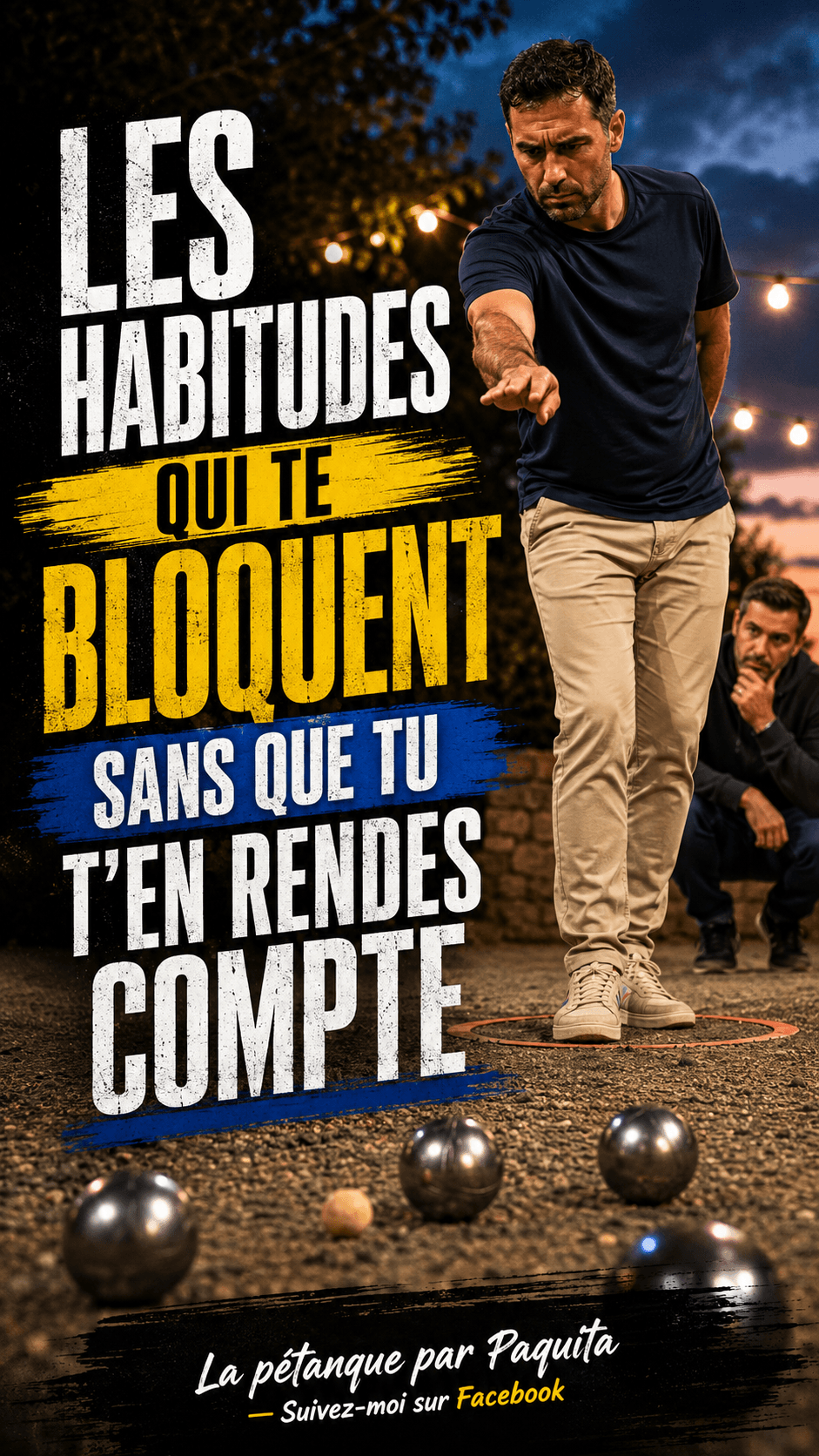
The habits holding you back without you realising
Are you plateauing without understanding why? Often it's not your abilities but invisible automatisms: playing withoutWhy you don't see your own habits
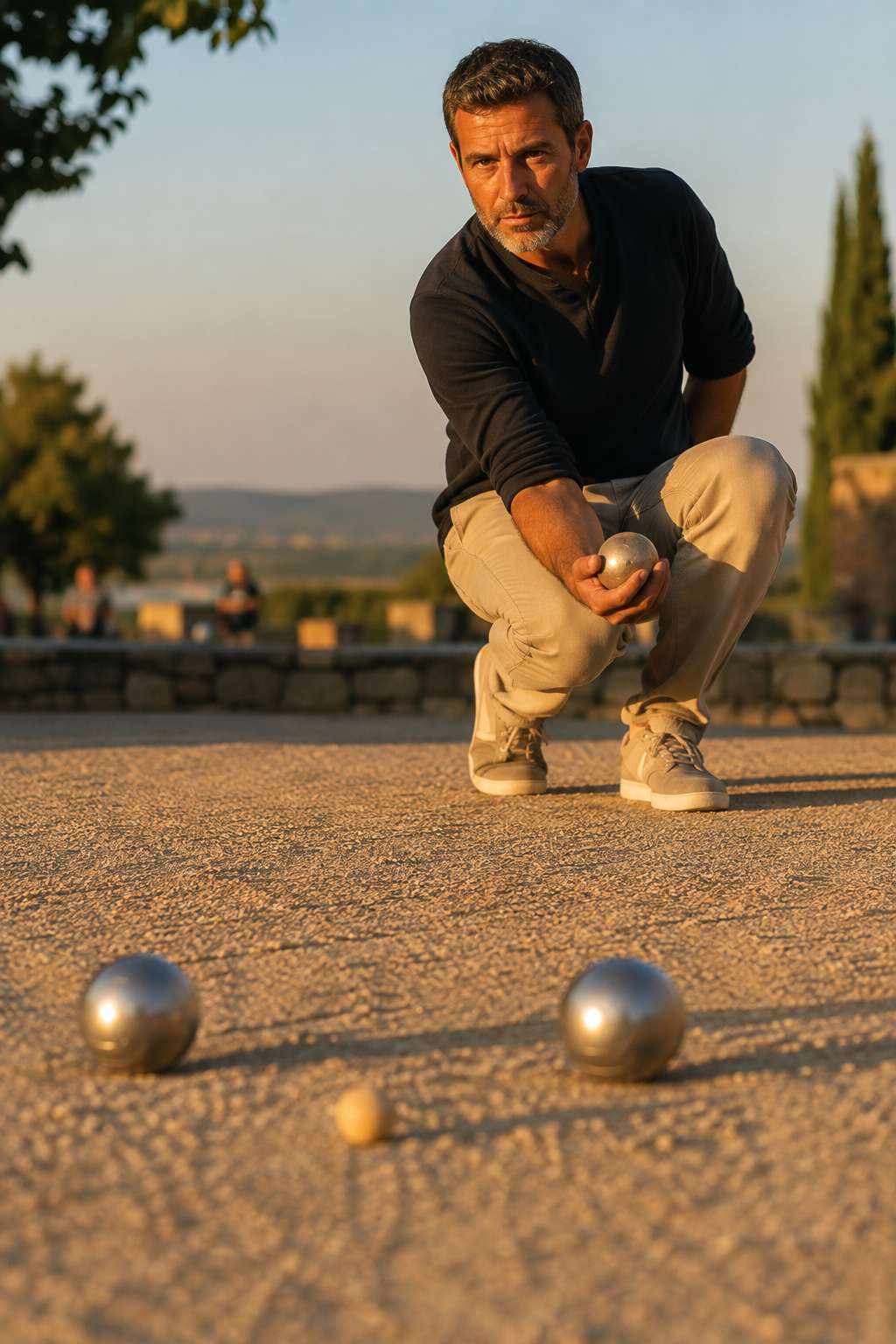
A habit that holds you back has two features that make it almost undetectable from the inside: it is automatic, and it is comfortable.
Automatic, because your brain, to save energy, turns everything you repeat into a reflex you no longer have to watch. That's handy for a successful throwing motion… but just as effective at entrenching a flaw. You no longer 'decide' to lift your head or to always play the same way: it just happens on its own.
Comfortable, because a habit, even a bad one, feels obvious and easy. And what's easy, you don't want to question. That's why the most blocking habits are rarely the ones that hurt — they're the ones that go unnoticed. Here are the nine to hunt down.
Your training habits
This is where the essential plays out, and this is where you get it most wrong. The way you train (or think you train) determines whether you progress or whether you go in circles.
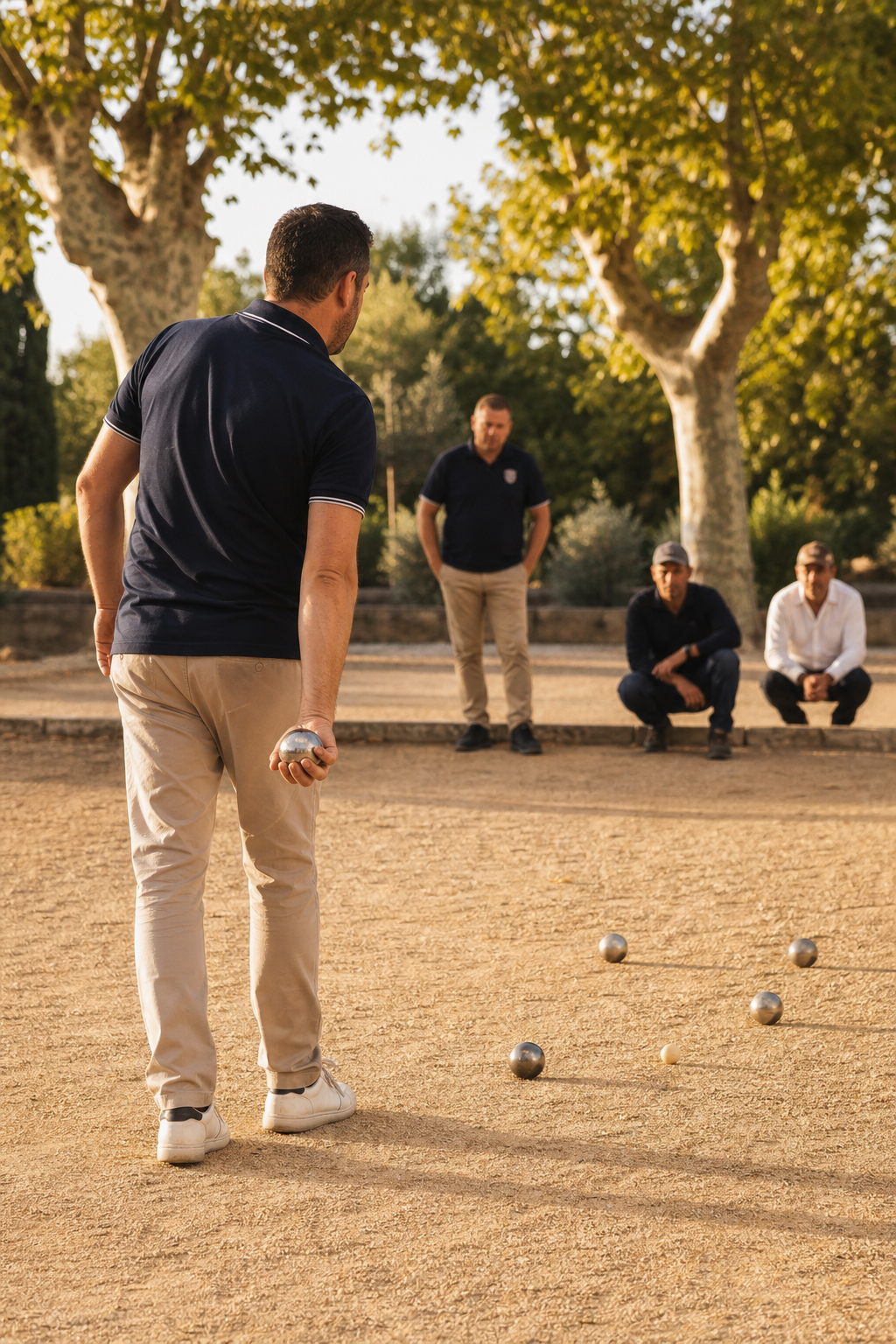
🎲You only train by playing games ✕You repeat your current automatism and you never isolate your weaknesses: you play, but you build nothing. ✓The reflex: set aside dedicated time, separate from playing, on a single goal — a distance, a throwing motion — with a real intention. 📏You always point (or shoot) at the same distance ✕Your throwing motion only tunes itself for a single frame; the day the data changes, you're lost. ✓The reflex: vary the distances within a single session. Alternating anchors the throwing motion far better than repeating the same thing a hundred times. 💪You only work on what you already do well ✕You polish your strengths and leave your weaknesses untouched — it's comfortable, but it plateaus. ✓The reflex: devote half your time to what holds you back: shooting if you're a pointer, the lob if you only know how to roll. PLAYING A GAME ObjectiveWin the end RepetitionEach shot played once WeaknessesAvoided (you play it safe) FeedbackLost in the score EffectMaintaining your level TRAINING FOR REAL ObjectiveFix a specific point RepetitionThe same throwing motion in series WeaknessesTargeted on purpose FeedbackImmediate, bowl after bowl EffectReal building PAQUITA'S TIP'I play three times a week' isn't the same thing as 'I train three times a week'. Playing maintains; training builds. Keep at least one session a week where you're not trying to win, just to correct one thing.
Your habits in the throwing motion
These are the most invisible of all, because they hide in micro-details you can't even feel anymore.
🔧You change your throwing motion after every miss ✕No movement has time to stabilize: you start from zero on every bowl, so nothing ever settles in. ✓The reflex: keep the same throwing motion over a whole series, observe the trend, then correct one single thing at a time. 👀You lift your head to watch your bowl leave ✕You take your eyes off your target at the decisive moment: the aim drifts and consistency collapses. ✓The reflex: keep your eyes fixed on your aiming point until the bowl reaches it. Stable gaze = stable throwing motion. 🦶You neglect your foot position in the circle ✕A different base on every throw produces a different throwing motion on every throw. You're building on sand. ✓The reflex: place your feet the same way every time. It's the invisible foundation of all consistency.Your mental and equipment habits
Finally, the habits that aren't in your legs or your arm, but in the way you think about the game — often the most stubborn.
🗣️You find an excuse for every miss (the terrain, the bowls, the light) ✕If it's always outside factors' fault, you never look at your own throwing motion — so you never correct anything. ✓The reflex: after a miss, first ask yourself a question — what can I adjust on the next shot? 🔮You change your bowls hoping to change your level ✕Equipment doesn't replace technique: you shift the problem, and you start from scratch with every new set. ✓The reflex: first stabilize your throwing motion with suitable bowls (weight, diameter), then stick with them. Consistency comes from constancy. 🔁You always play the same thing by reflex (shoot OR point) ✕You no longer analyze the situation, you execute a habit — often at the worst moment. ✓The reflex: on every bowl, choose based on the game (the position, the balance of bowls), not your preference. A nuance. Not all habits are bad — a solid routine, a repeatable throwing motion, those are good automatismes, and that's even the goal. The idea isn't to question everything, but to tell apart the automatism that help you from those that hold you back. And a plateau is normal in any learning: what should alert you is a plateau that drags on despite training.How to spot YOUR invisible habits
Since the problem is precisely not seeing them, you need tools to make them visible. Here are the most effective ones.
YOUR 5-POINT AUDIT- Film yourself playing. You'll see what you can't feel: the head lifting, the feet moving, the arm stiffening.
- Have someone watch you. A partner or a more experienced player spots in two minutes what's been escaping you for years.
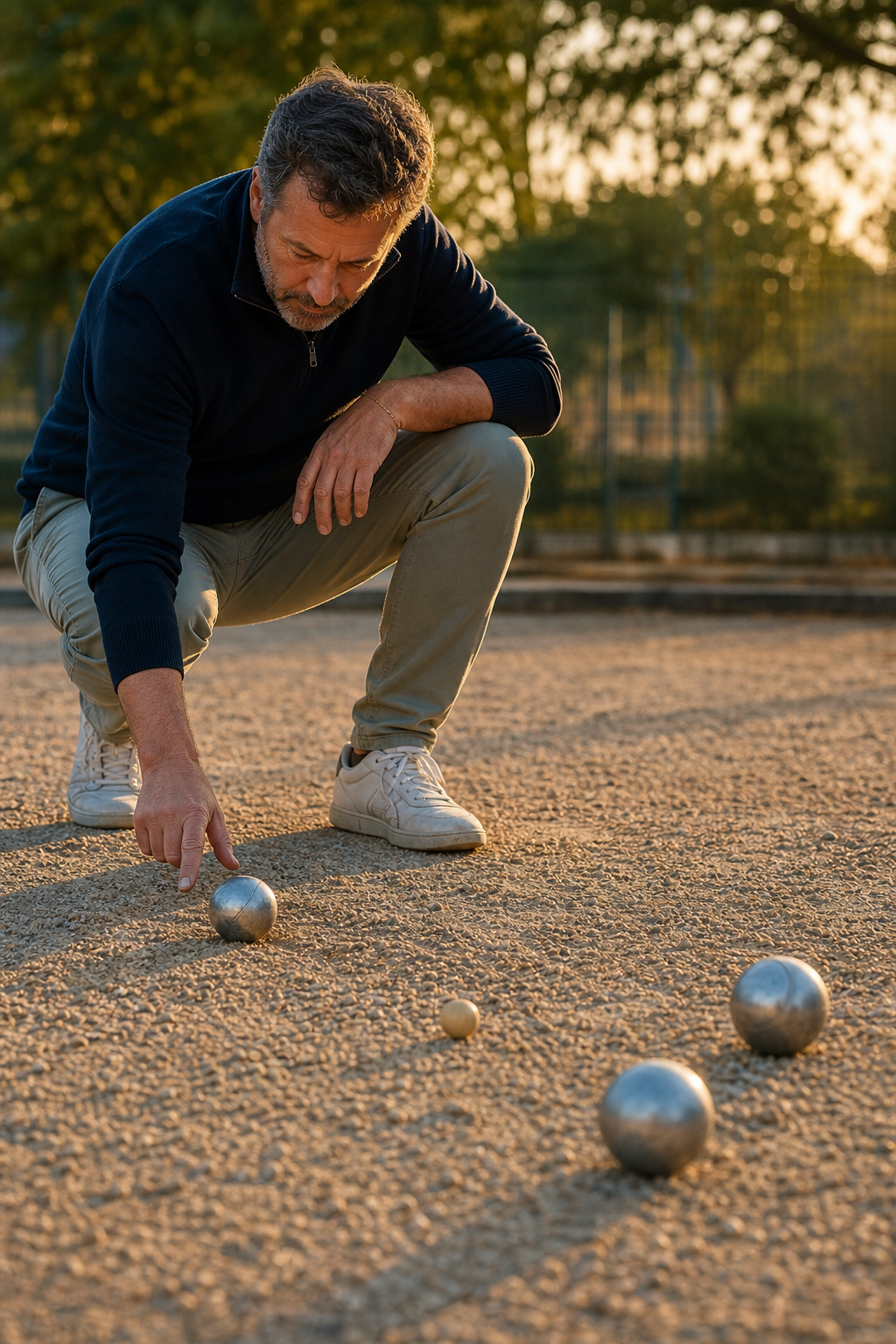
- Note down your misses. A pattern emerges (always short? always on the same side? always on a fast terrain?). The pattern is the habit.
- Compare games and sessions. If you only play without ever targeting a specific point, that's already a habit to correct.
- Beware of comfort. A throwing motion or a choice that seems 'obvious' to you is often simply automatic — so worth questioning.
Once the flaw is spotted, the golden rule comes down to four words: one single thing at a time. Work on it until it becomes a reflex again — a good one, this time — before tackling the next. It's slower than wanting to change everything at once, but it's the only method that really works.
The hardest part isn't learning a new throwing motion. It's seeing the one you've been repeating for years without knowing. An invisible habit can't be corrected: it has to be flushed out first.
— Paquita 📘 Get out of your plateau, for goodTraining method, targeted drills by position, tracking log: Paquita's book helps you spot your blocking automatism and build real progress, session after session. Downloadable bonus included.
📦 Order on AmazonAvailable on Amazon.fr · Paquita — PétanqueLand
Frequently asked questions
How do I know if I have a bad habit when I can't see it?Three levers: film yourself, have someone watch you, and above all note down your misses. A recurring pattern — always short, always on the same side, always on a certain terrain — almost always betrays a habit. What you repeat without thinking is exactly what you need to hunt down.
Isn't playing games enough to progress?It maintains your level, it doesn't build it. In a game, you play each shot once and you avoid your weaknesses to win. To progress, you need dedicated time where you repeat a precise throwing motion, where you target what holds you back, and where you get immediate feedback bowl after bowl.
Why vary distances in training rather than repeat the same one?Because alternating distances and situations anchors the throwing motion more durably than repeating the same thing a hundred times. You learn to tune your pendulum swing on every shot, which transfers far better into a real game — where, precisely, the data changes all the time.
Should you change everything at once when you spot several flaws?Above all, no. Changing ten things at once fixes nothing: you no longer know what works and you lose your bearings. Pick one single thing, work on it until it becomes automatic, then move on to the next. It's slower, but it's the only method that holds up over time.
Can changing bowls really unblock me?Rarely. If your bowls already fit your hand, the problem is in the throwing motion, not the equipment. Constantly changing sets even forces you to relearn everything each time, which sets you back. First stabilize your technique, and only change if it's really justified.
Is a plateau necessarily the sign of a bad habit?Not always: plateaus are normal in any learning, and progress is never a straight line. But if the plateau drags on and you keep training without moving, there's a good chance one or more automatism are holding you back. It's the right time to film yourself or have someone watch you.
📎 Related articles Technique The « forced » gesture: why it never works Mental Playing under pressure: what really changes Video Why changing bowls doesn't change your level Technique Rolling, half-lob, lob: the three ways to point Tactics The invisible mistakes in doublette Tools Free PétanqueLand Tools© Pétanque by Paquita — petanqueland.fr
📖 Order the book on Amazon