Actualités · 20 July 2026
Why some teams play better under pressure in pétanque
Why some teams play better under pressure in pétanque: concrete markers, useful routines and collective reading of the tense moments.1.Why pressure acts differently in a team
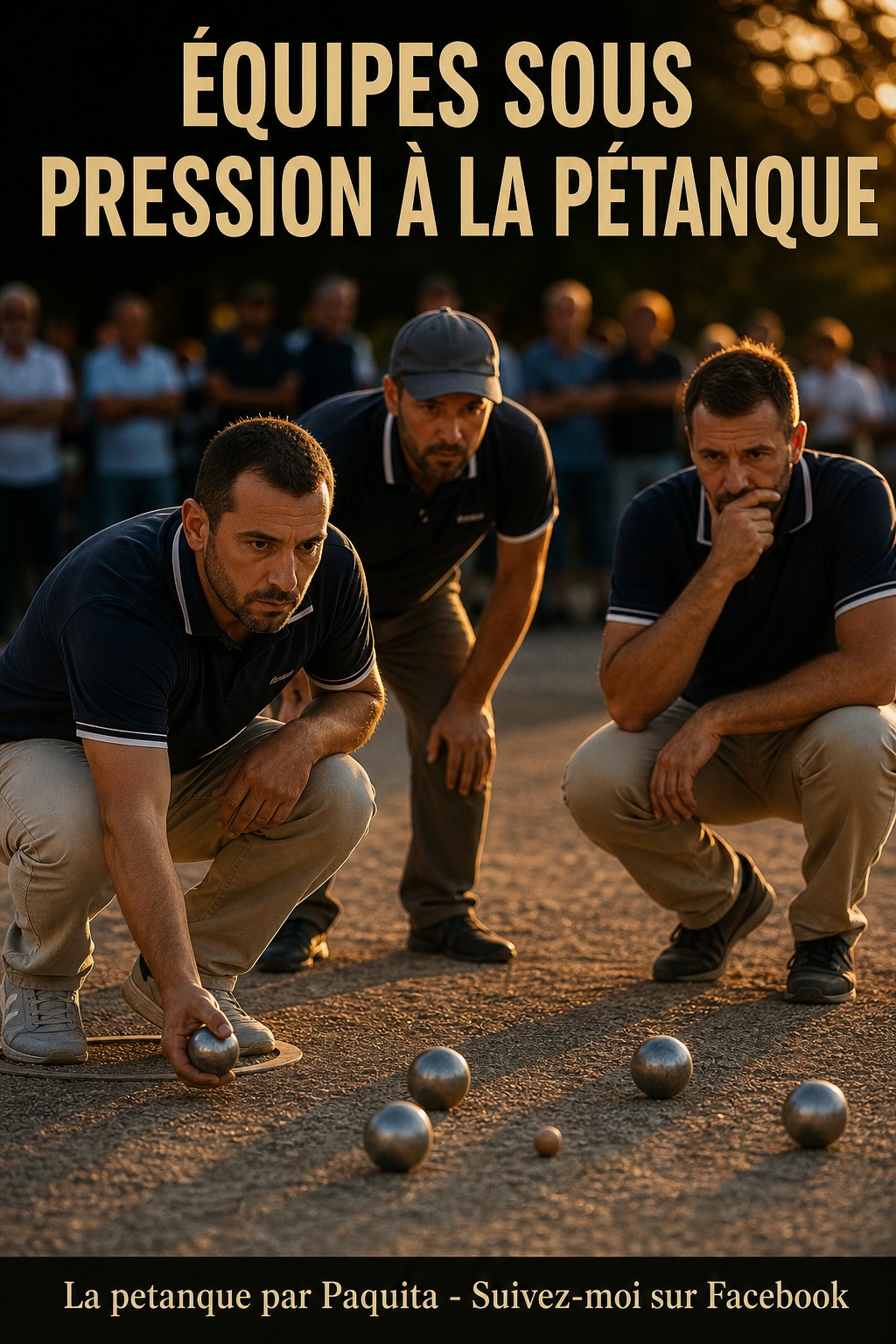
In pétanque, a team under pressure is recognized very quickly. If everyone starts correcting each other, commenting on the last boule or changing the plan after every detail, the tension becomes a centrifugal force. Conversely, teams that hold up in the crucial moment simplify everything. They reduce the options, keep their words short and avoid turning an important end into a permanent debate.
That's what explains why some triplettes look more at ease when the score gets tight. The danger acts as a revealer for them: the routines already in place become visible. Their advantage isn't emotional in the romantic sense of the term; it's organisational. They already know how to behave when the margin for error shrinks.
2.The collective framework that prevents panic
A good team plays better under pressure because it has an implicit framework. Everyone knows who decides if two options are debated. Everyone knows how much time is given before choosing. Everyone also knows that after the decision, everyone pushes in the same direction. This kind of framework avoids needless mental expenditure.
Teams that collapse in hot moments often do the opposite. They reopen already-settled discussions, mix up responsibilities and let fear contaminate communication. The problem isn't only technical: it's the absence of a protocol. When a protocol exists, pressure becomes less threatening because everyone finds a known place again.
3.Words that strengthen instead of weighing down
Under tension, language matters more than usual. A clumsy sentence can stiffen an arm that is already tense. Conversely, a simple word can refocus the whole team. The best triplettes speak little, but they speak to the point: an intention, a trajectory, a distance, sometimes a breath. They do not add emotion to the emotion already present.
You should also note what they avoid. They do not replay the previous end, do not bring up a miss from two minutes ago and do not overload the shooter with three contradictory tips. Their words serve to lighten the moment, not to weigh it down. This verbal discipline is often worth as much as a well-played boule.
4.Why roles become clearer
When pressure rises, strong teams spontaneously clarify roles. The pointer doesn't get scattered in constant tactical comments. The middle links the information. The shooter knows exactly what risk they're taking and why. This clarity doesn't take away freedom; it mostly avoids interference.
Many players imagine that a good team is one where everyone decides everything. In reality, in tight moments, the fluidity often comes from an accepted hierarchy. It's not domination; it's a healthy division. Individual doubt doesn't disappear, but it stops turning into collective noise.
5.What the best triplettes read together
A team that gets better under pressure reads more than just its own boule. It shares a common map of the end: value of the point, position of the jack after contact, remaining options, real risk if the shot is missed. This shared reading avoids isolated decisions that contradict the collective plan.
That's also why some teams look calm even when the crowd closes in and silence falls. They aren't anaesthetised. They simply know what to focus their attention on at the same time. The collective then protects each player against their own dispersion.
6.How to train this collective strength
This quality can be trained. You need to simulate end-of-game situations, impose short decision times, set a communication framework and debrief how you talk to each other as much as the quality of the boules. A team that trains only its technique will sometimes play well. A team that also trains its mental coordination will play more accurately when it matters most.
The right goal is not to eliminate stress. It is to become recognizable under stress. When a team keeps its tempo, its grammar and its logic despite the score, it gives itself a rare advantage. That is often where the impression comes from, seen from the outside, that it loves pressure.
A solid team under pressure invents nothing at the last moment. It recalls faster what it has already rehearsed together.
| Situation | Solid reading | Common trap |
|---|---|---|
| After a missed boule | Come straight back to the next shot | Commenting on and broadening the doubt |
| Choice of shot | One voice decides, the others support | Three opinions that clash |
| Silence on the pitch | Reading as a focus | Experiencing it as a threat |
| Tight finish to an end | Sticking to the shared routine | Looking for an improvised hero |
Before tournaments, choose a shared refocusing phrase. A team that shares the same language saves mental time when everything tightens up.
A simple method to stay clear-headed, protect your routine and play better when the score gets tight.
Discover now7.FAQ - Your frequently asked questions
Because they already have a collective framework. Pressure does not create their strength; it reveals their organisation, their communication and their roles.
No. Above all, speak usefully. One clear call is worth more than a stream of comments that adds confusion.
Not necessarily, but the team must know who decides in case of hesitation. What matters is to avoid drifting.
Yes, by simulating ends of games, imposing speaking routines and debriefing the coordination as much as the technique.
Not automatically. True solidity shows when calm comes with a shared read and consistent decisions.