Actualités · 10 July 2026
Why certain habits make you improve faster at pétanque
All players train — few really progress. The difference? A few simple, repeated habits. Here are the ones that change a season of pétanque1.It's not the quantity, it's the consistency
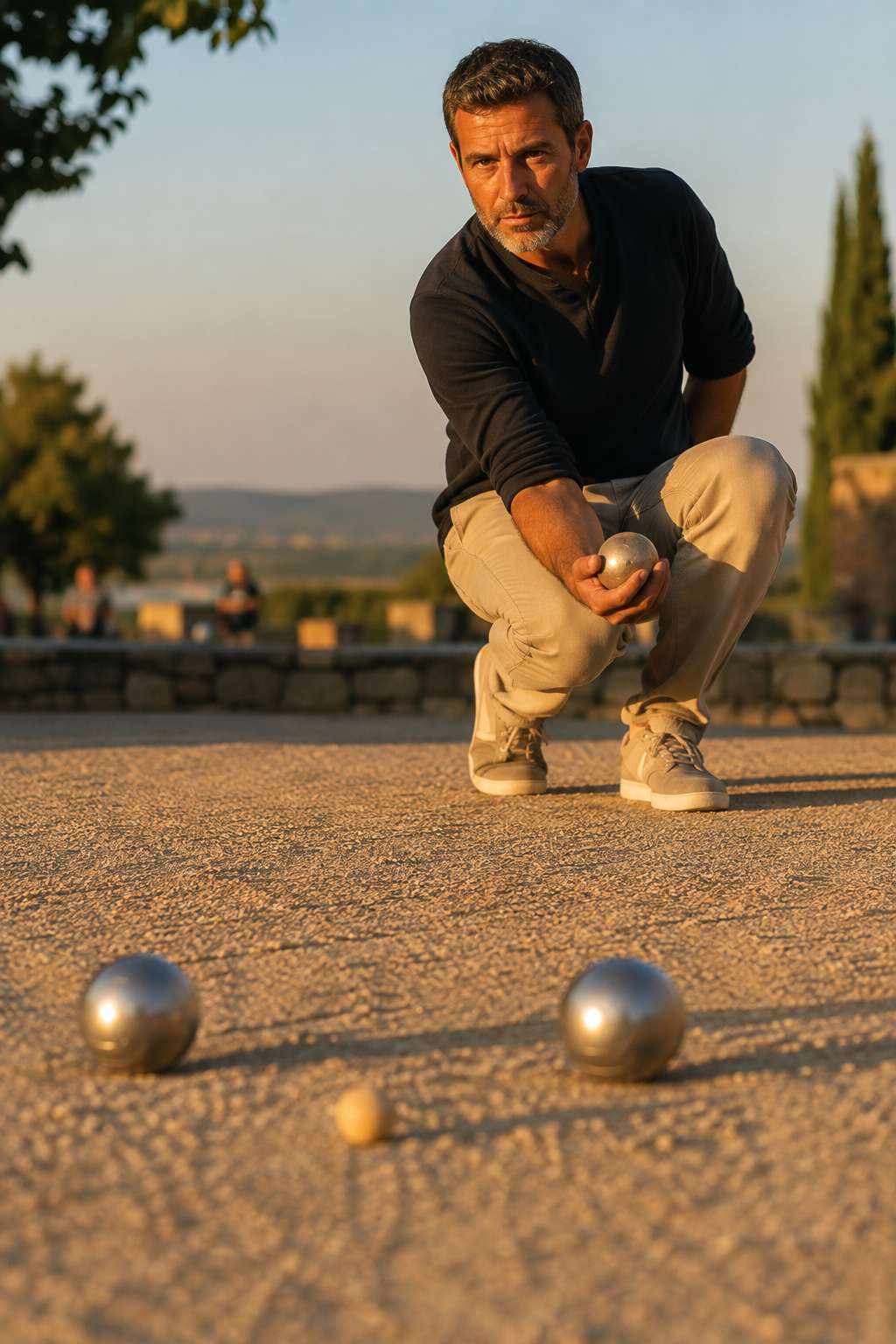
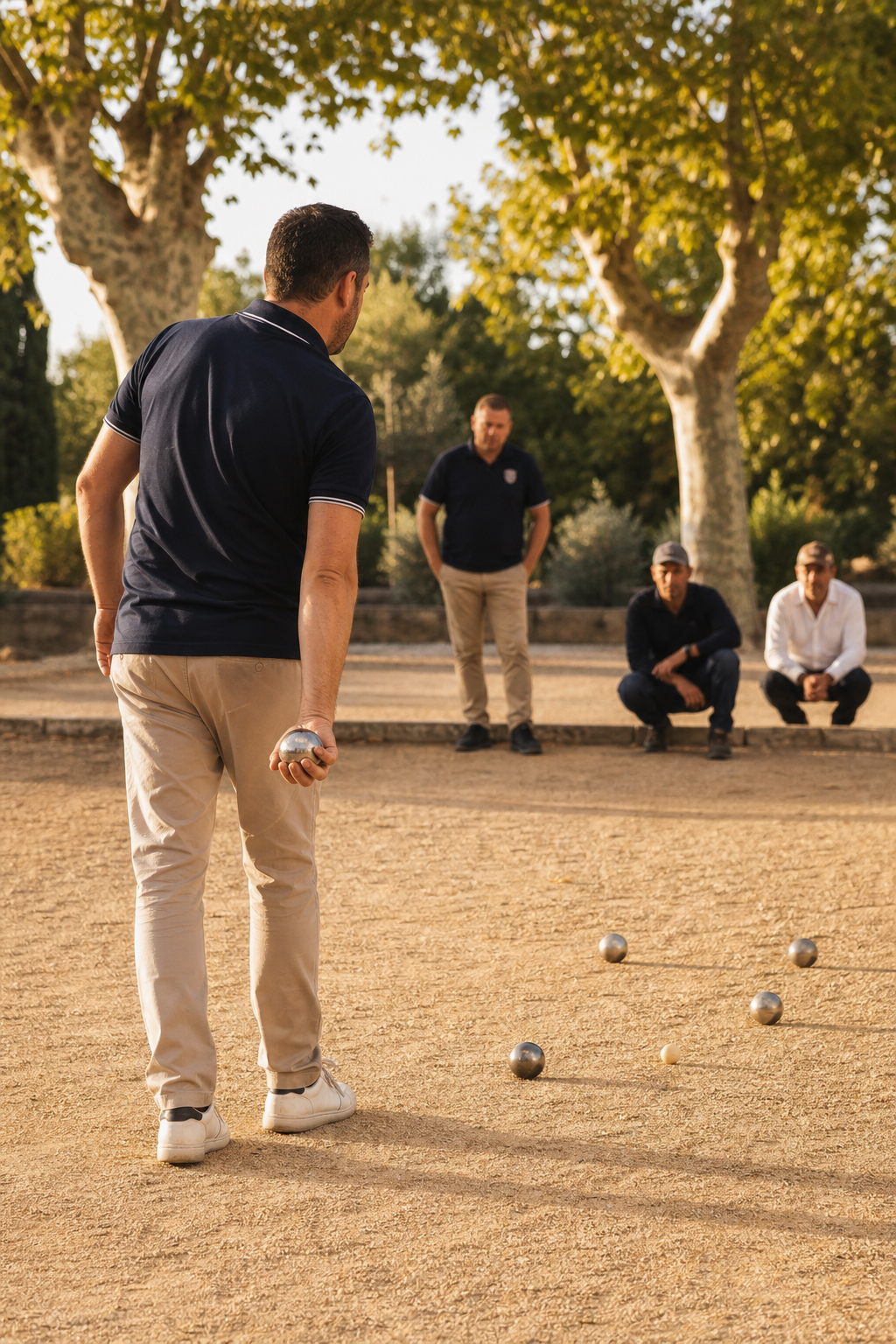
A player who throws 200 bowls without intent progresses less than another who throws 60 with a precise goal. The brain needs spaced repetition : it consolidates during the night, reworks at the next session, and ends up installing the gesture as an automatism. Five thirty-minute sessions will always beat one big three-hour session followed by a week of nothing.
It's this consistency that builds confidence. In the end, you don't recognise the best by their training volume, but by the consistency of their sessions — short, frequent, targeted.
If you only have a little time: two 25-minute sessions a week, with a clear goal, beat a single two-hour session with no through-line. Consistency beats duration — that's the central principle of all motor progress.
2.One key habit: one goal per session
Players who stagnate string together bowls "just to see". Those who progress state their goal before starting: today, I'm working on the lob at 8 metres, or the rolling point on tricky ground, or the jumping shot. Simply having a single goal doubles the learning, because the brain knows what to consolidate.
It's the opposite of "I played for an hour": you may have gathered 80 bowls, but you learned nothing in particular. In training as in a match, knowing what you're looking for is half the work.
3.The pre-bowl routine: the little habit that changes everything
Regular players almost all share the same base: three or four short gestures just before throwing. Breathe out, fix on a precise point on the terrain (not the jack), take a fraction of a second, throw. Always in the same order. This routine looks like nothing but it protects the gesture from emotion, haste and doubt.
Without a routine, the gesture varies with the mood. With a routine, the gesture stays stable whatever the pressure. It's one of the fastest habits to put in place — and one of the most rewarding.
Choose 3 words that describe your pre-bowl routine (for example: breathe — aim — throw) and repeat them mentally before each attempt for two weeks. By the third week, you'll no longer need to think them: your body will execute them on its own, even in a final.
4.The progress notebook: the memory that makes all the difference
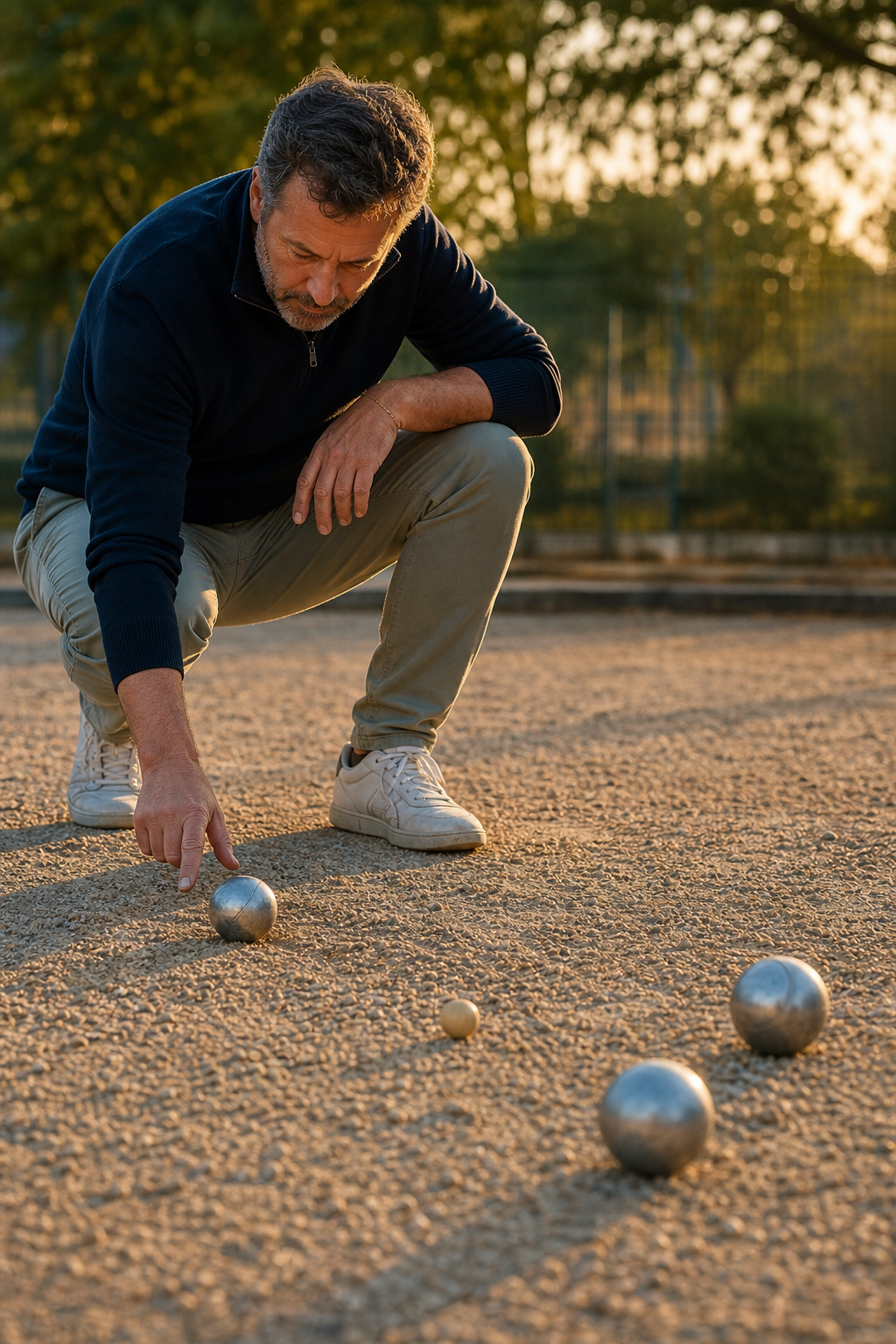
Very few amateur players keep a training notebook. Yet it's the tool that turns experience into knowledge. Three lines per session are enough: today's goal, what worked, what didn't. A few months later, you see patterns emerge — the terrains that trouble you, the distances that resist you, the days you shoot better.
Without a record, each session dissolves into the previous one. With a notebook, each session adds to the next. That's exactly the difference between a player who repeats and a player who learns.
5.With vs without habits: the curve over 6 months
The chart below shows the typical progress gap between a player who installs the right habits and a player who trains "as they can". Over six months, the gap becomes glaring — even though at the start, both have exactly the same level and the same training volume.
| Habit | The right reflex | The common trap |
|---|---|---|
| Frequency | 3 short sessions | 1 long then nothing |
| Goal | 1 theme per session | Throwing without intent |
| Routine | 3 fixed gestures | Gesture that changes |
| Memory | 3-line notebook | Forgetting everything |
6.How to install these habits in 21 days
No need to change everything at once. Choose a single habit to start with — for example, writing three lines after each session. Keep it up for three weeks. Only once it's anchored do you move to the next (the pre-bowl routine, then the session goal). After three months, the four main habits are in place, with no visible effort.
It's this gradual building that works. Wanting everything, all at once, and you'll give up. One habit at a time, and you'll progress more in six months than most amateurs do in three years. To go further, see also our free tools that help structure the tracking.
A well-installed habit takes about 21 days of conscious repetition, then becomes automatic. If you hold three weeks without skipping, you've got it. If you skip two days in a row, the clock resets to zero — that's why consistency is everything.
Installing the right mental and technical habits, session after session, to stay solid even when the score tightens. The book that turns training into real progress.
📗 Discover the book