Actualités · 23 August 2026
Pourquoi certains joueurs de pétanque inspirent le respect avant même de jouer
Le respect à la pétanque se gagne par des décisions claires, une parole juste et une attitude fiable quand la mène se tend.Respect comes neither from acting like a leader nor from an advertised record. It is earned when a player makes every decision clear to teammates: they observe, speak accurately, and own the chosen boule. It is a playing skill, and therefore a habit that can be practised.
1.Respect shows before the first shot
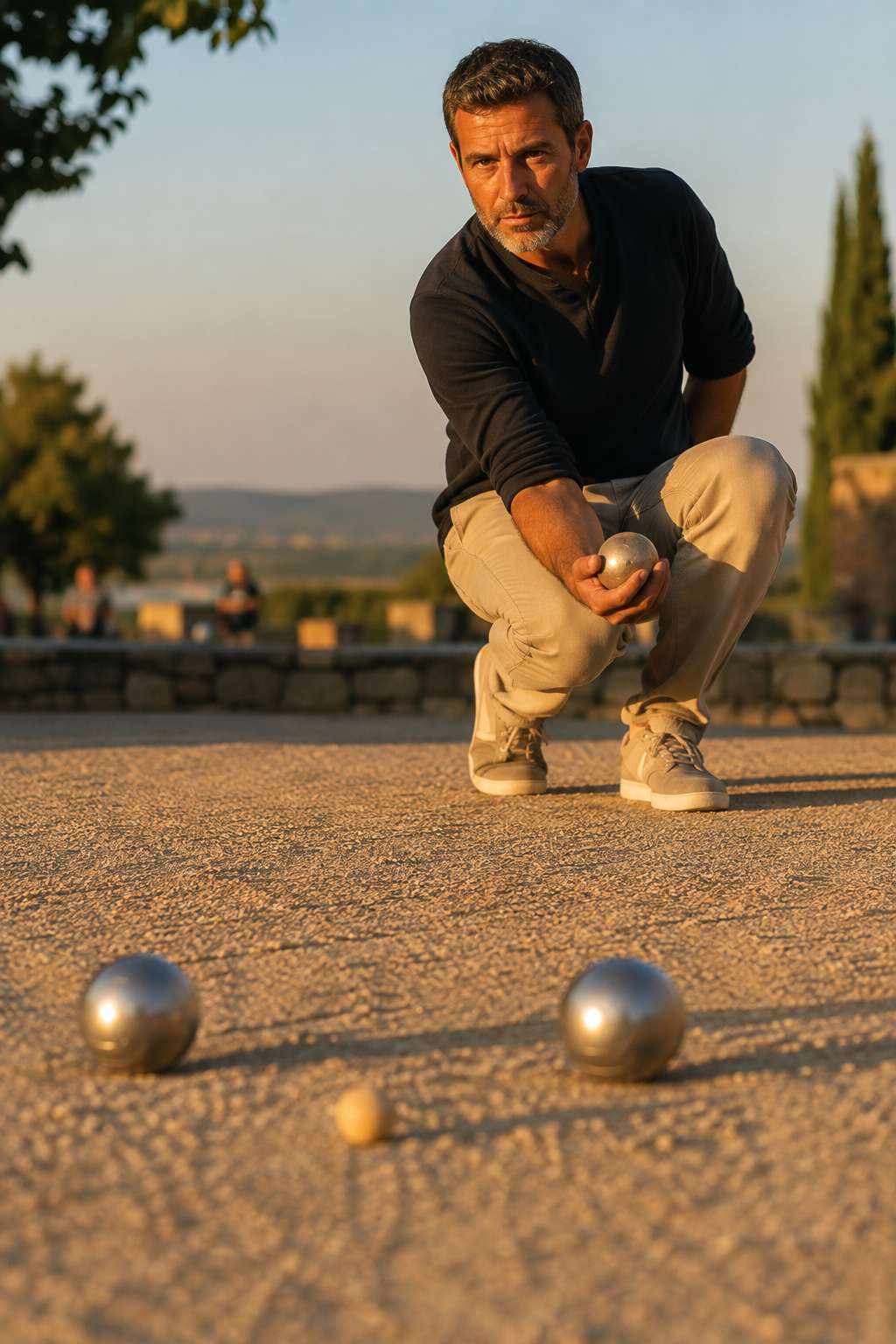
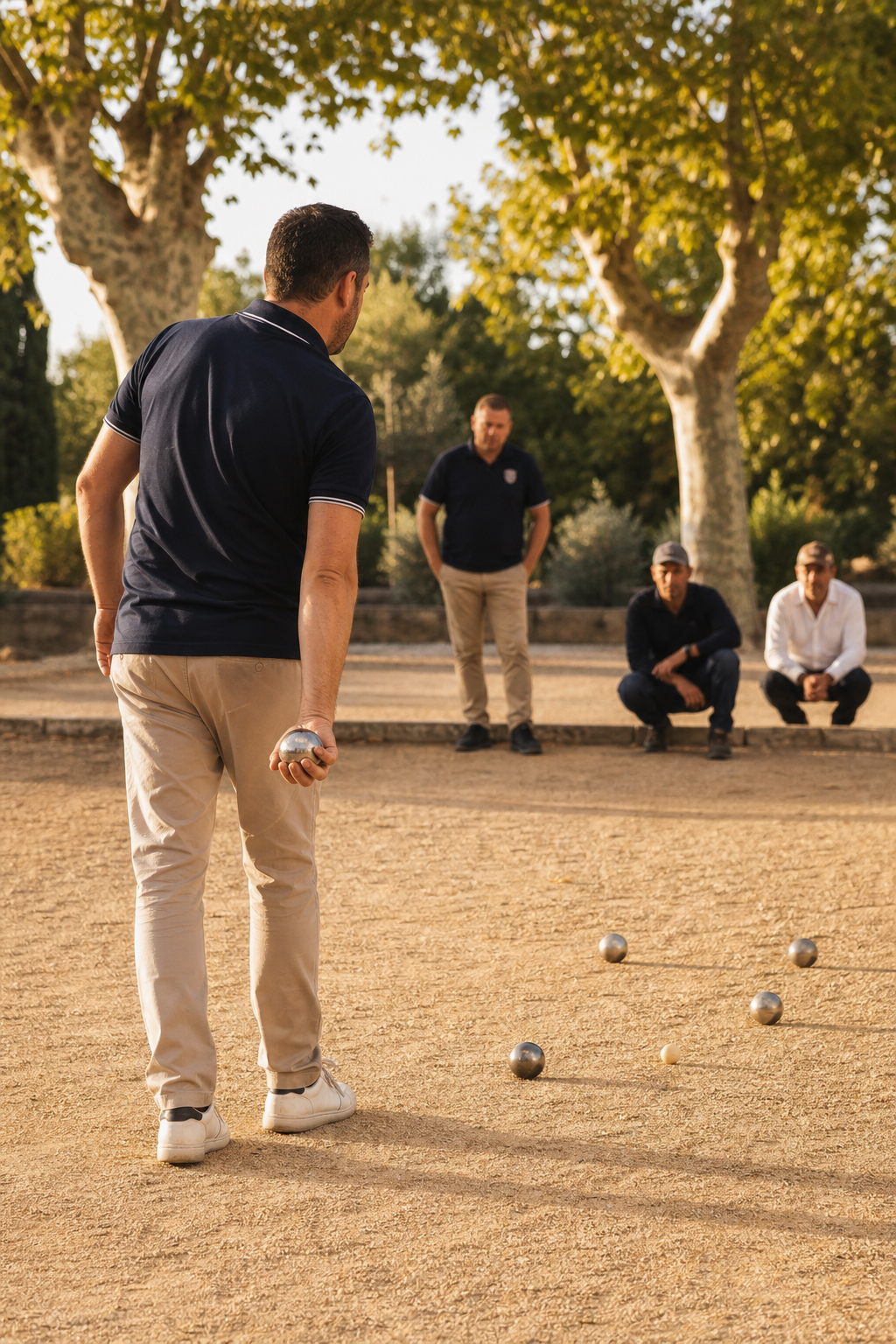
On a court, players quickly notice the difference between solid self-confidence and disguised agitation. The respected player does not try to fill the space: they arrive prepared, greet people, look at the ground, then listen to what the end is offering. Their movements are simple, their rhythm is steady, and teammates know they will not be made to carry the blame for someone else's decision.
This presence rests on three very concrete things: a visible routine, short instructions and a controlled reaction after a missed boule. Nothing theatrical. A simple “we keep the right side, I play in front” is worth more than a long speech. The team understands the plan and can then play freely.
Before commenting on a boule, first name what it protected: the point, the angle, or the score. Trust grows when everyone feels that their effort was understood.
2.The 10–8 end where attitude becomes an advantage
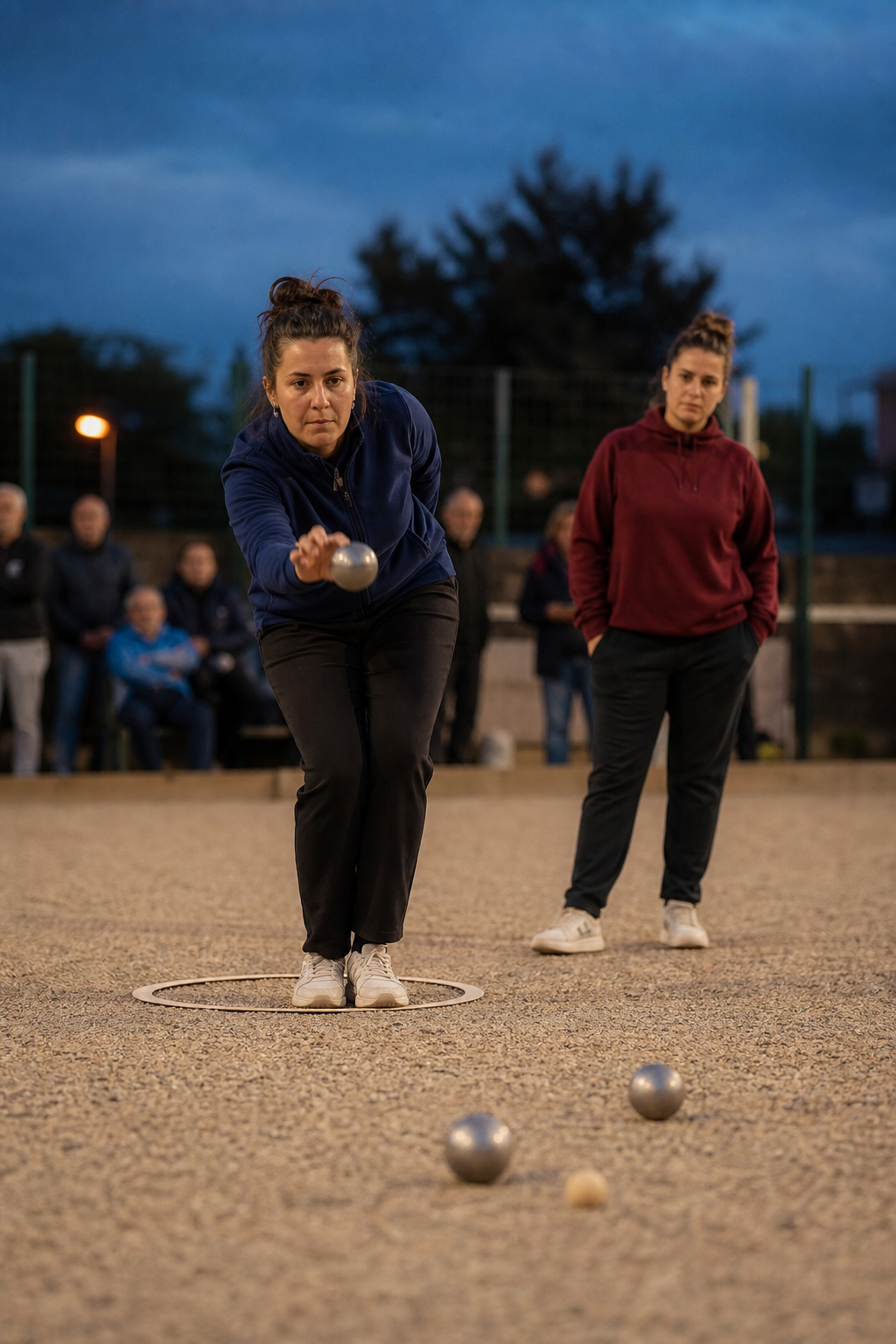
Imagine a triplette trailing 10–8. The jack is eight metres away, slightly to the left. The opponent has placed a decent boule thirty centimetres away; your team has two boules left. The pointer has just missed the intended line and drops their eyes. This is exactly where a player inspires respect: they do not sigh, replay the previous boule in words, or decide alone in a rush.
They state the facts: “Their boule is playable; we have two left. We can tighten on the left or shoot cleanly.” Then they ask how the shooter feels. If the target is clear, the shot is defensible; if the ground runs away, the safety point may protect the end. This shared reading does not guarantee the result, but it stops fear from controlling the delivery.
| Reaction during the end | What the team hears | Likely effect |
|---|---|---|
| “You missed again” | A reproach and a sense of urgency | A tightening arm |
| “We keep two options; which one suits you?” | A framework and trust | A freer delivery |
| “I know better than you do” | A silenced team | Less useful information |
3.Giving an instruction without taking other people’s place
Respect does not forbid guidance; it requires clean guidance. A useful instruction includes an objective, an area, and a margin: “look for the front of the boule without crossing the jack.” It leaves the player their delivery and tempo. By contrast, ten instructions during the backswing interrupt feel and eventually make even an experienced teammate doubt.
The healthiest formula is often: observation, proposal, confirmation. “The slope carries to the right. You can play a half-lob on the left. Do you feel it?” That language builds quiet authority, not authoritarianism. It is especially valuable with a new teammate, who needs a framework without being reduced to their mistake.
Confusing volume with leadership. Speaking louder after a failure does not make the solution fairer; it often takes from the shooter the little calm they need.
4.Reliability matters more than the spectacular shot
A magnificent carreau impresses once. The person who collects the boules, respects the circle, honestly calls a measure, and encourages a doubtful teammate inspires people for longer. Over a season, players more willingly follow the person whose reactions remain consistent when a game turns badly. This emotional reliability is a real tactical gain.
It does not mean hiding every emotion. You can acknowledge frustration, provided you return quickly to the game: breathe, look at the position of the boules, and state the next priority. The article about the difficulty of accepting defeat rightly reminds us that the score never gives permission to damage the team.
5.Building a respect routine in three moves
Before every important end, take two seconds to look at the remaining boules, the slope, and the score. Then express the choice in one positive sentence. Finally, after the delivery, give factual feedback before an assessment. The routine seems modest; repeated, it changes how the group reads you.
To train it, play a game in which the captain is allowed only twelve words before each boule. You will learn to distinguish useful information from noise. Add a simple concentration habit and watch how calm makes your choices clearer. Respect is not claimed: it is made visible, end after end.
6.What Paquita advises you to do from Sunday onward
Choose one team sentence for your next game: “we describe before we judge.” Use it after every difficult boule. At the end, ask your teammates whether the instructions felt clearer. This small review turns a good intention into a collective reflex. To take the subject further, also read what great players keep discreet.
The respected player does not try to look superior. They raise everyone’s quality of decision-making, especially when the end becomes uncomfortable.
Frequently asked questionsFrequently asked questions
Can you inspire respect without being the best player?
Yes. Consistency, listening, and the ability to make a decision clear matter as much as a big record. A reliable teammate quickly becomes a reference point.
Should the shooter always be allowed to choose?
No. The group sets the objective and acceptable risk; the shooter must then be able to express their feeling. A shared decision is stronger than an imposed order.
How should you react after a teammate makes a major error?
Return to the facts: remaining boules, the opponent’s point, and the next option. The technical debrief can wait until after the game, away from the emotion.
Can silence be a sign of respect?
Yes, if it gives the player their moment of concentration. It must not become a punishment: a simple sign or a clear sentence is often enough.
What phrase should you use before a decisive boule?
Try: “we play our option, not our fear.” It recalls the objective without adding unnecessary pressure.