Actualités · 10 July 2026
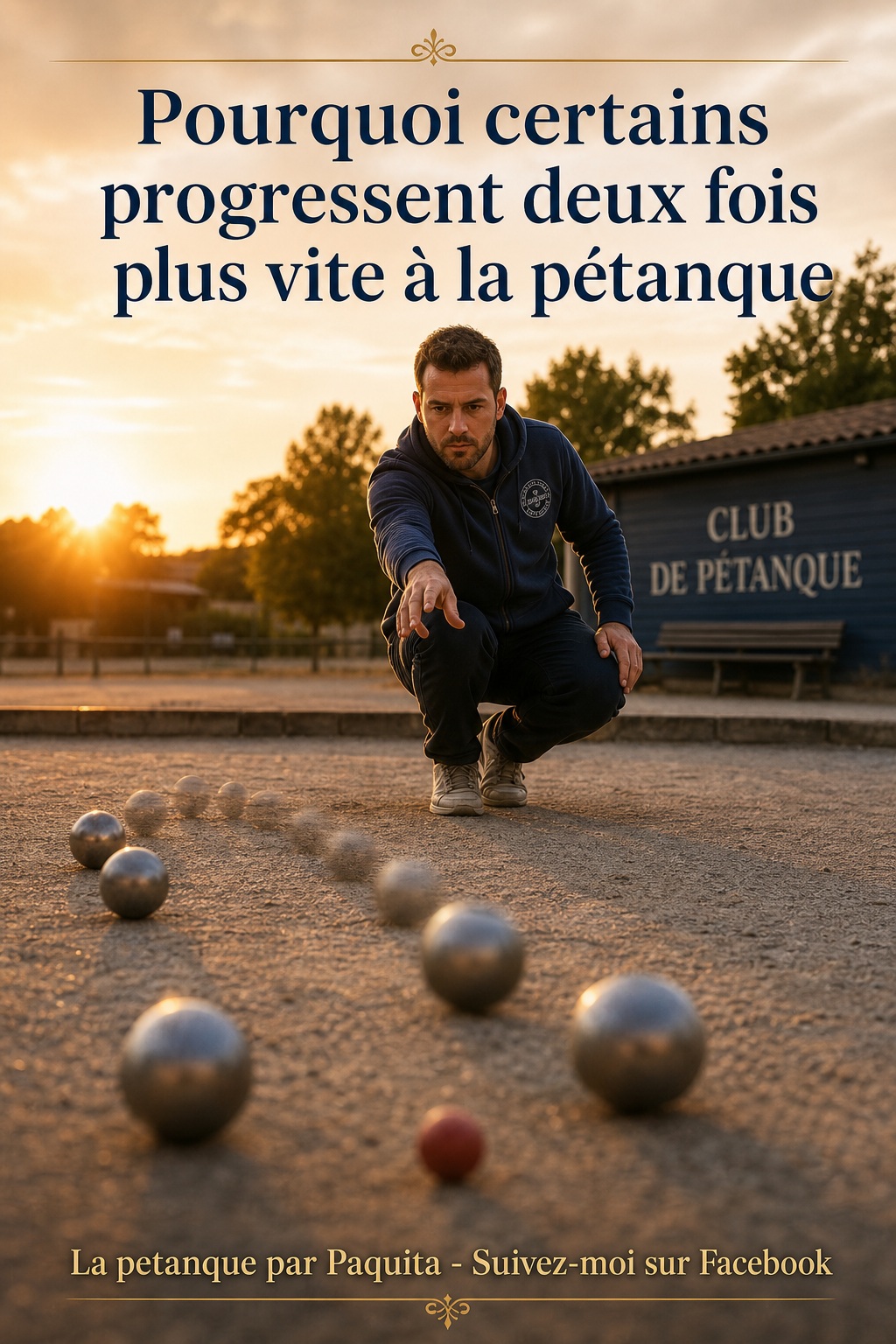
Why some players improve twice as fast at pétanque
With the same training, some players improve twice as fast. This is n1.The paradox of unstructured training
Spending hours on the terrain is a necessary but not sufficient condition for improving. Sports science research clearly identifies two types of practice: repetition practice (repeating what you already know how to do) and deliberate practice (targeting what you don't yet master, in a state of controlled discomfort).
Most pétanque players practice 80% in repetition mode: they play, make mistakes, keep going. This mode is enjoyable and maintains your level — but it doesn't raise it significantly. Players who improve twice as fast spend a significant part of their time in deliberate practice.
Deliberate practice means: targeting a specific skill, deliberately putting yourself in a difficult situation for that skill, and getting immediate feedback on your execution. It's demanding — and that's exactly why few people do it.
2.Habit 1 — Train, don't just play
The distinction is fundamental. Playing reproduces existing patterns — good or bad. Trainingmeans setting a precise goal for the session (for example: improving the rolled point at 8 metres on uneven ground) and focusing your attention on that specific goal, at the expense of everything else if necessary.
Players who improve quickly finish a session differently from others: they can say exactly what they worked on and what changed. Players who stagnate say “we played” — with no further detail.
How to apply it
Before each session, choose a single goal: a type of shot, a distance, a situation (difficult end-of-round position, shooting a stuck bowl). Spend the first 20-30 minutes only on this goal, with intent and targeted repetition. Then play normally.
3.Habit 2 — Seek feedback rather than avoid it
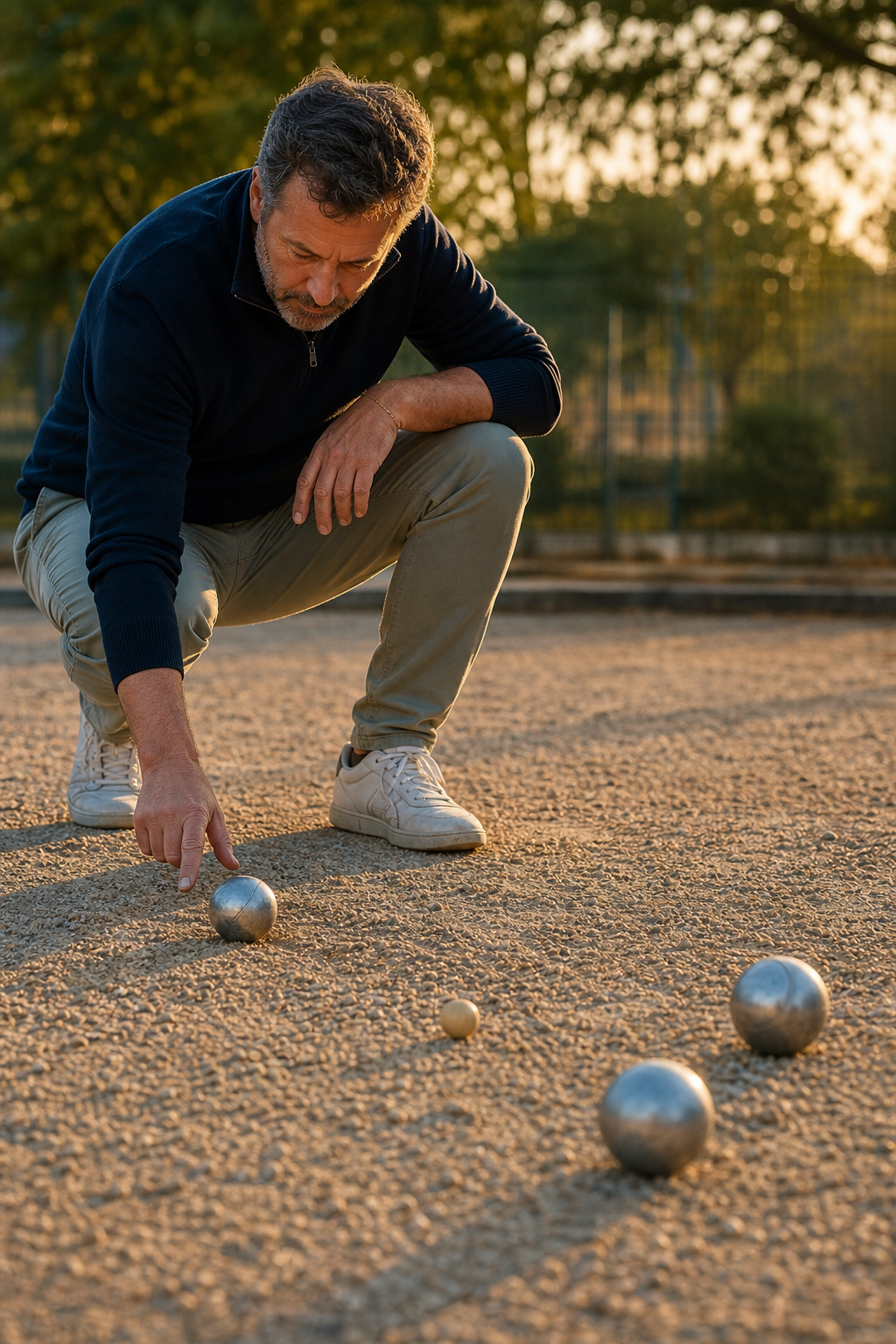
Most players avoid feedback — especially critical feedback. Players who improve quickly seek it out actively. They ask a stronger partner to watch their technique. They film themselves to observe their routine. They ask precise questions after a loss: “In your opinion, what should I have done on end 7?”
This openness to an outside perspective accelerates learning considerably because it reveals what you can't see from the inside. You can repeat a release mistake for years without detecting it yourself. An outside eye sees it in thirty seconds.
Find a player a level above you and propose a deal: they give you feedback on one specific point of your game after each shared session. Just one point, not a list. This regular, targeted feedback is worth infinitely more than hours of training without feedback.
4.Habit 3 — Identify your priority areas
Players who stagnate work on all their weaknesses at once — and make progress on none of them. Players who improve quickly identify their main current obstacle and focus their effort on it until it's resolved, before moving on to the next.
How to identify your priority area? By asking a simple question: “What type of situation costs me the most ends in matches?” Not the difficult bowls missed occasionally — the recurring patterns. If you regularly lose on mid-distance shots, that's your priority. If you always crack under pressure at the end of a tight game, that's where the effort should go.
5.Fast progress vs stagnation: the gaps
| Habit | Player who improves quickly | Player who stagnates |
|---|---|---|
| Session goal | Defined before starting | “We'll play and see” |
| Relationship to feedback | Actively sought | Avoided or endured |
| Work area | One priority at a time | Everything at once or nothing |
| After the session | Quick review | Nothing noted |
6.Habit 4 — Learn by watching the best
Active observation of higher-level players is an underused learning tool in pétanque. Watching them play isn't enough — you have to observe with a precise intention: how does this player build their routine? What is their throwing tempo? How do they react after a mistake? How do they choose between pointing and shooting?
Players who improve quickly turn the spectacle into a lesson. They come home from a tournament having learned something precise — a position, a way of handling pressure, a technique for reading the terrain. The others just watched some beautiful bowls.
To structure your progress with tailored resources, explore our free tools and the page little-known rules to broaden your understanding of the game.
5 volumes for structured, complete progress: technique, tactics, mindset, difficult terrains, competition preparation. The reference for improving fast and well.
📚 Discover the full series