Actualités · 20 July 2026
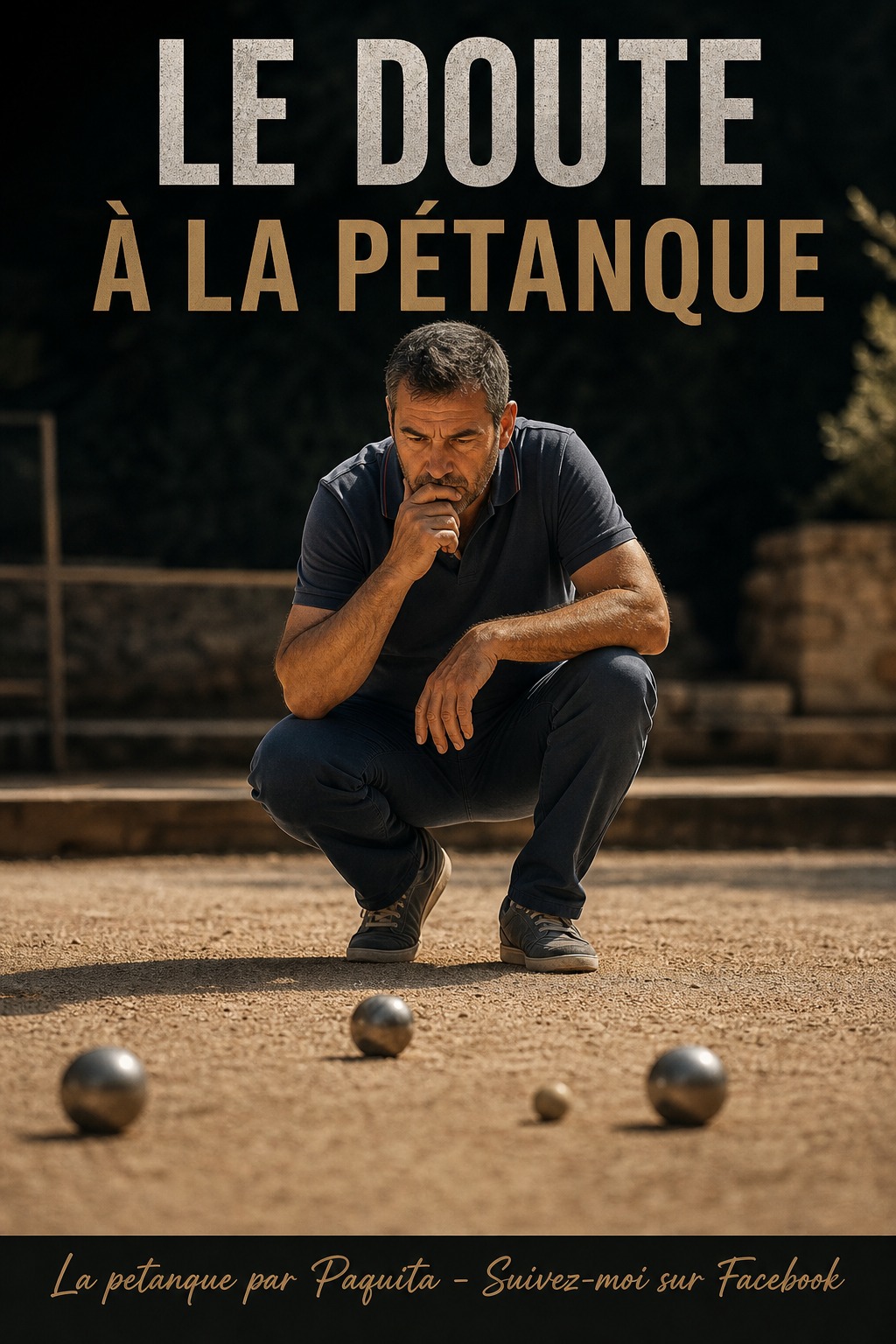
Why doubt can become a strength in pétanque
Why doubt can become a strength in pétanque: how to use it to read better, choose better and avoid overconfidence.1.The doubt that holds back and the doubt that enlightens
Paralyzing doubt looks like an escape: you hesitate, you put off the choice, you cling to incompatible options. Useful doubt, on the other hand, looks like a check. It asks: am I certain of the real threat? is this the right moment to attack? have I read the terrain correctly? This nuance changes everything.
The best players don't live without doubt. They live with a brief, precise, framed doubt. This doubt protects them against reflexes that are too quick. It doesn't break their confidence; it gives it a guardrail.
2.Why a slight doubt protects against the wrong kind of excess
The completely self-certain player sometimes becomes blind to essential details. He takes the end for granted, underestimates the jack's recoil angle or overestimates his own success of the day. A well-placed doubt acts like a mini lucidity alarm. It forces a review of the plan before locking it in.
This clarity is particularly valuable in games where confidence rises quickly. Excessive success can make you believe that all decisions are right. Yet a strong player stays able to re-check their reading, even in the good moments. That is often what avoids the strategic mistake that breaks a run of momentum.
3.Useful doubt just before choosing
Before playing, good doubt takes the form of one or two clear questions. No more. If you add ten scenarios, you slip into confusion. If you check nothing, you risk the automatic shot. Useful doubt therefore sits between panic and blindness.
This middle position is very powerful, because it makes the decision fuller. Once the check is done, you commit fully. Doubt no longer accompanies the shot. It stops before execution. This is a key point: well managed, doubt works before the boule, not during.
4.When confidence becomes dangerous
Confidence remains precious, of course. But if it stops listening to weak signals, it becomes a slippery slope. The player no longer hears his team, no longer sees the traps of the terrain and attempts the shot he likes rather than the one that truly serves the end. Useful doubt comes precisely to prevent this drift.
Here we find a quiet truth of the top level: the most solid players are not the most self-assured at every moment. They are the ones who know when to control their own confidence. This ability gives a superior stability across a whole game.
5.How to turn doubt into a reading tool
To become useful, doubt must be tied to concrete points: the value of the point, the number of boules left, the state of the terrain, the real quality of the lane, the best opposing response if you miss. As long as it stays vague, it wears you down. The moment it connects to these markers, it lights the way.
It also changes your relationship to error. A missed boule after a consistent check doesn't destroy the mind the same way a poorly thought-out choice does. Useful doubt therefore improves both the decision and the way you absorb the failure.
6.The mental routine that keeps doubt in its place
The ideal routine is short: see, check, decide, execute. If doubt returns during the gesture, it means it has exceeded its useful zone. You then need to rework the decision phase so that it is cleaner and shorter.
With training, this process becomes natural. The player no longer feels threatened by doubt; he uses it as a quick light before moving forward. It is often at this point that the mental game gains maturity.
Doubt becomes toxic when it stays vague. It becomes precious when it asks a real question and stops before execution.
| Situation | Solid reading | Common trap |
|---|---|---|
| Before choosing | Check the real threat | Staying in a vague hesitation |
| During the action | Stop second-guessing the decision | Letting doubt creep into the arm |
| After an error | Reread the reasoning | Dismissing the whole mental side at once |
| High confidence | Framing it with lucidity | Letting it become blind |
When in doubt, just ask yourself: what do I need to confirm before choosing? If you have the answer, stop doubting and play.
A simple method to stay clear-headed, protect your routine and play better when the score gets tight.
Discover now7.FAQ - Your frequently asked questions
No. A brief, precise doubt helps to check the read before committing.
If it produces a concrete question then a decision, it is useful. If it maintains vagueness, it becomes paralyzing.
Yes, and it is even often healthier. Useful doubt guards against excess certainty.
Because the decision phase was not closed off enough before the action.
By working on short routines: see, check, decide, execute, then analyze afterwards.