News · 20 July 2026
When and how to call an umpire in petanque during a competition?
NewsDisputed measurement, protest, moved boule: when to call a referee in a pétanque competition and how to do it without inflaming the game.1.The real role of the referee in competition
The referee applies the rules and secures the running of the competition. They don't replace the courtesy of the players, but they become indispensable when two teams no longer agree on a verifiable fact. Their intervention prevents a discussion from turning into a personal conflict.
A good call to the umpire starts with a simple sentence: “We have a doubt about this measurement” or “The situation has been moved, can you come?”. You describe the fact, not the opponent's supposed intention.
Priority reflex: as soon as a dispute arises, do not touch the boules, the jack or the circle anymore. The referee must find a clear situation.
2.Disputed measurement: the most common case
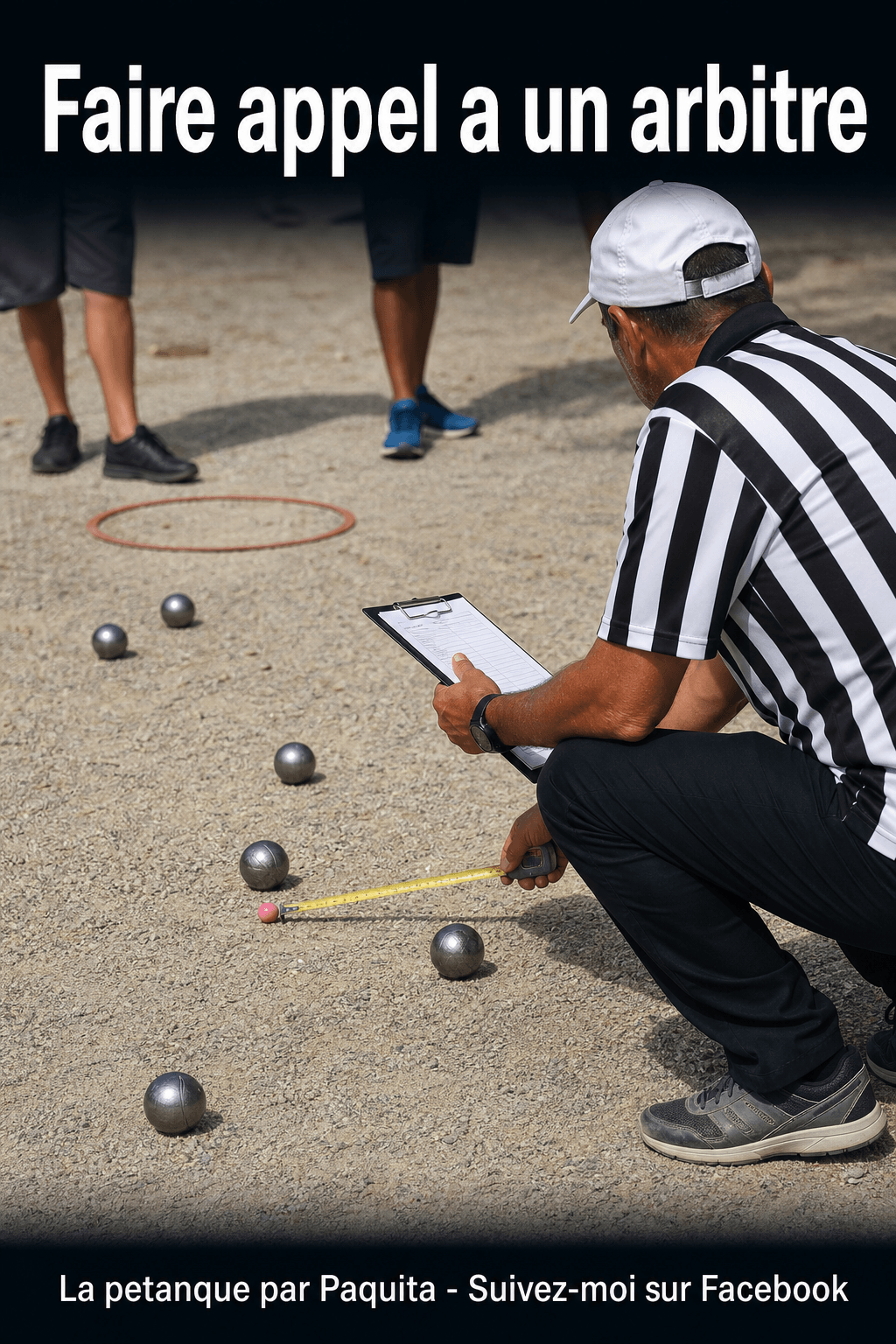
Measuring is the classic reason for an appeal. If the two teams do not agree on the boule that holds the point, the umpire can measure with a suitable tool and make a decision. Before his arrival, no one must push a boule with the foot, replace the jack or "help" by removing an obstacle.
The right attitude consists in leaving the zone untouched and stepping aside to make the measurement easier. The closer the players stay, the higher the risk of accidental displacement.
3.Displaced boule or jack: call before repairing
When a boule or the jack is accidentally moved, many players want to put it right immediately. That's human, but risky. If both teams aren't in full agreement on the initial position, the umpire must be called before any replacement.
The decision will depend on the origin of the displacement, the possibility of replacing correctly and the moment of the end. In case of doubt, the umpire protects both teams.
4.Disruptive behaviour: stay factual
An umpire can also intervene on behaviour: repeated disruption, talking during the throw, excessive contestation, delay or failure to follow instructions. Here too, vague accusations must be avoided. Describe what is happening: “The player is talking during the shot”, “the team is systematically late”, “the boule was moved after measuring”.
The more factual the call, the faster and more clearly the umpire can act.
5.When to call: early, but not for everything
Calling too late complicates everything. If three boules have been played after a disputed situation, it becomes much harder to go back. Conversely, calling the umpire for every detail slows the game and creates needless tension. The right threshold is simple: if agreement between the teams is impossible or the decision could change the point, call.
In competition, the peace of the game is worth more than a five-minute discussion over a millimeter.
6.The simple formula to request an intervention
Address the umpire or the scoring table without raising your voice: “We need an umpire on court X for a disputed measure.” Then wait. Do not replay, do not move anything, and do not give ten versions at once. One spokesperson per team is enough.
This discipline gives a serious impression and prevents refereeing from being felt as a personal attack.
| Situation | Good reflex | Frequent mistake |
|---|---|---|
| Contested measurement | Calling and leaving in place | Measuring with several hands |
| Displaced bowl | Freeze the situation | Repositioning without agreement |
| Behavior | Describe the fact | Accusing the person |
| Delay of game | Report calmly | Losing your temper straight away |
The referee decides better when the situation is intact. Your first mission isn't to convince: it's to preserve the terrain as it was.
To organize competitions, manage terrains and limit disputes right from the draw, the PétanqueLand software helps clubs frame their competitions cleanly.
Discover