News · 26 July 2026
Rule on discussions and disputes in pétanque competitions
NewsDiscussions, disputes and disputes in pétanque competitions: what the rules allow, what exceeds the limits and when to call the referee.1.The right to contest exists
A player can report a doubt: ball moved, uncertain measurement, incorrectly placed circle, irregular goal, contested order of play. It's normal. The regulation would be useless if no one could demand its application.
But to challenge is not to accuse. The right formula consists of stating a verifiable fact: the distance seems uncertain to me, can we measure it? The circle seems out of place, can we check? This way of doing things protects the atmosphere and speeds up the decision.
An admissible challenge is based on a specific fact. A vague, repeated or aggressive challenge becomes a behavioral problem.
2.The limit: slow down or influence the game
Disagreement becomes faulty when it serves to break the rhythm, destabilize a shooter or prevent the opponent from playing calmly. Speaking during a player's preparation, commenting on each gesture or multiplying objections without new information can be sanctioned.
The boundary is often seen in the intention. Asking for a measurement before playing is legitimate. Questioning the same measurement three times because you don't like the result is no longer acceptable.
| Action | Acceptable? | Why |
|---|---|---|
| Request a measurement | Yes | Objective doubt |
| Call the umpire | Yes | Continuing dispute |
| Talking while throwing | No | Influence the player |
| Constantly contest | No | Slows down the game |
3.When to call the referee
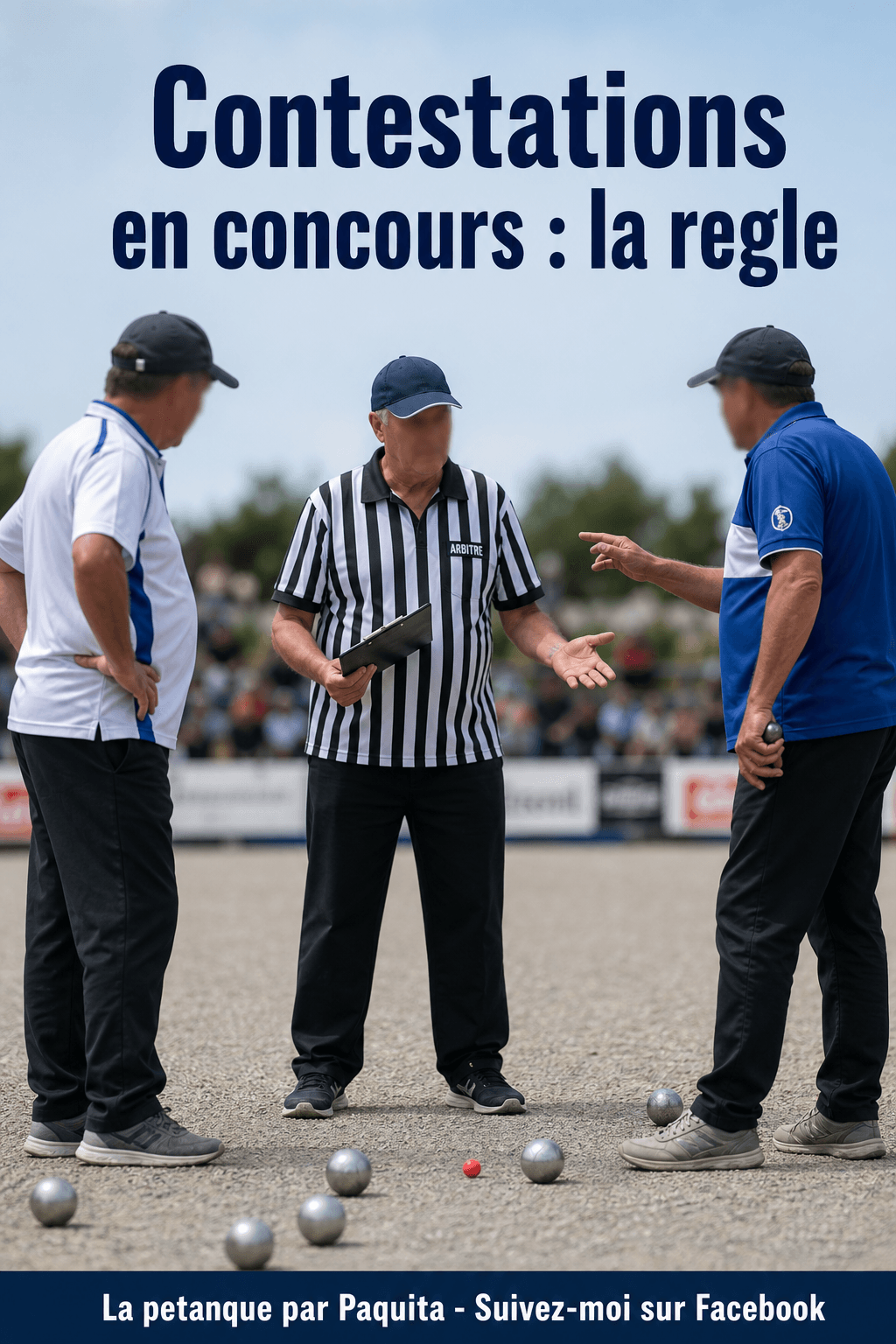
The referee must be called as soon as the players can no longer agree on a regulatory point. Waiting for the tone to rise is a bad strategy. The earlier the appeal, the simpler the decision.
Once the referee is present, the players briefly state the facts. We avoid endless stories and trials of intention. The referee observes, measures if necessary, then decides. The game resumes.
4.The role of the captain or reference player
In a team, everyone should not speak at the same time. The captain or the most calm player must speak, express the doubt and listen to the answer. Three voices protesting simultaneously create an impression of collective pressure.
This discipline also protects the team. An angry player can say too much, too quickly. The referent puts the debate back on the facts and prevents the regulatory dispute from becoming an attitude error.
5.Possible consequences
Depending on the behavior, the referee can call to order, warn, sanction an unsportsmanlike attitude or take the necessary measures for the game to resume normally. The sanction does not target the protest itself, but the abuse: pressure, obvious bad faith, refusal to obey, insults, inappropriate gestures.
In competitions, the image of the club also counts. A team known for arguing over every decision alienates referees and opponents. A firm but correct team gains credibility.
Before you object, formulate the sentence in your head in ten words or less. If you can't do this, it's often because the disagreement isn't yet clear enough to be useful.
6.The right three-step method
First, we see: what rule or situation is problematic? Then, we suggest a simple check: measure, replace, ask the referee. Finally, we accept the decision and resume the game. This method does not guarantee that everyone will be happy, but it guarantees that the game remains a game of pétanque.
Protest is a right, not a psychological weapon. Used well, it clarifies. Used incorrectly, it tires everyone and exposes its author to sanction.
For organizers, a clear tool already reduces some of the disputes: registrations, draws, groups and tables remain legible for everyone.
Discover