News · 20 July 2026
Rule of the starting signal in pétanque competitions: what the FFPJP really says
NewsWhen does an official game really start? Start signal, boule thrown too early, late on the terrain: the right reflexes in FFPJP competition.1.What is the start signal for?
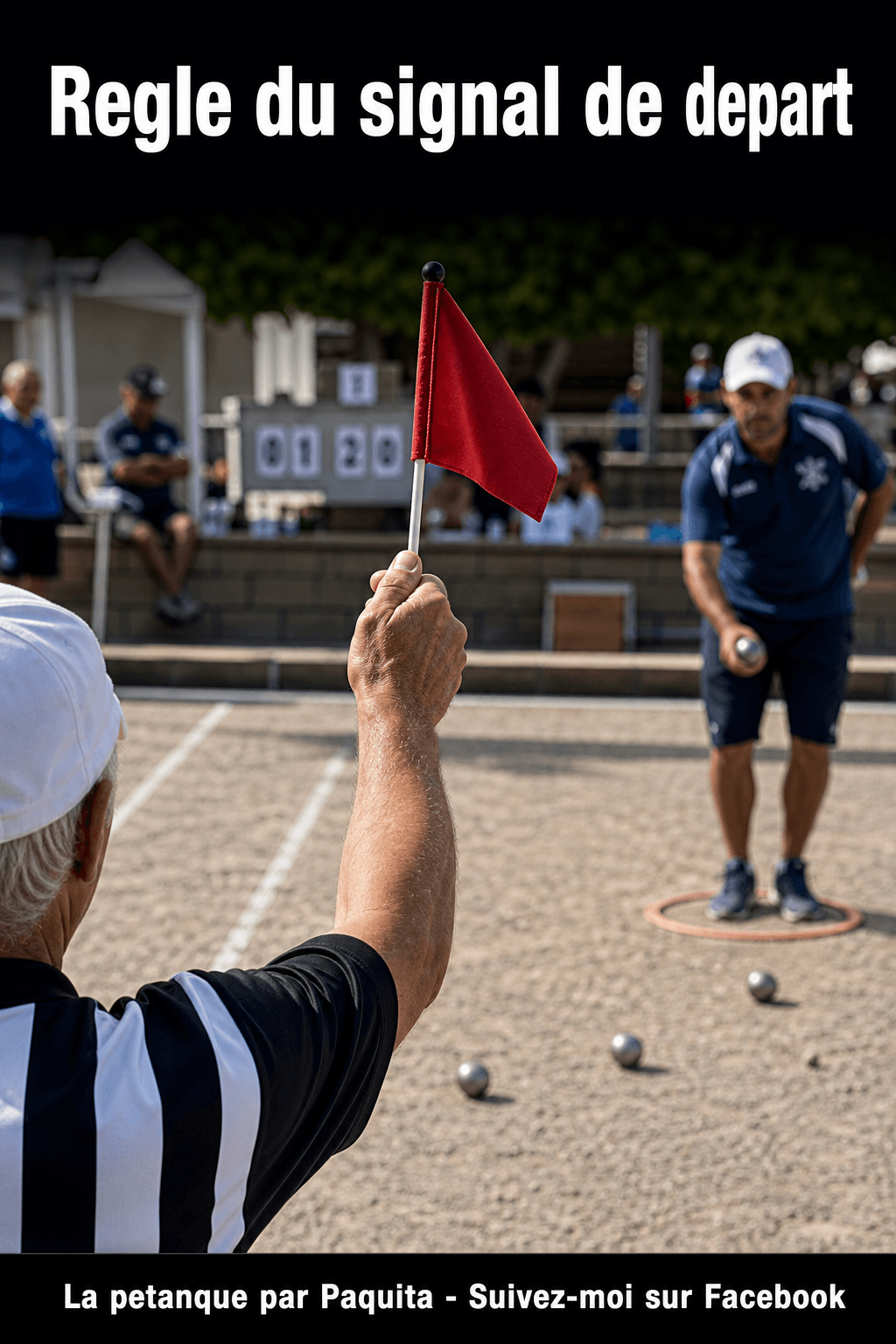
The start signal puts all teams on the same competition clock. It prevents some grounds from starting while others are still looking for their opponent, their frame or their ground number. In large competitions, this synchronisation is essential to manage the rounds, the schedules and the following calls.
This signal can be audible, verbal or relayed by the umpire and the table. The form matters less than the official instruction given to the players.
Practical rule: as long as the organizers have not given the start, you can settle in and check the terrain, but you do not throw a game boule.
2.Why you must not play before authorization
A boule thrown too early creates an immediate difficulty: should it be cancelled, replaced, replayed? Beyond the rules, it gives an impression of disorder. If a team starts alone, the opponent may not be ready, the referee may not have validated the court, and the desk may still be handling a change.
The right reflex is simple: reach the terrain, prepare your boules, identify the opponent, then wait for the official start.
3.What you can do before the signal
Before the start, players may go to their court, greet the opposing team, check they are on the right court and prepare their equipment. They may also ask the organisation for clarification if the court seems occupied or an opponent is missing.
On the other hand, starting the end, throwing the jack or playing a boule as if the game had begun exposes you to a dispute. Trial throws must also follow local instructions.
4.Opponent absent or late: do not start alone
If the opposing team is not present at the signal, do not start the game on your own. Alert the table or the umpire. The regulations and the competition's specific rules govern delays, but it is the organization that records the situation.
This step protects your team: a win or a penalty must be recorded officially, not decided between impatient players.
5.What to do if a boule was thrown too early?
Stop immediately and call the umpire or organiser if the teams cannot agree. The answer will depend on the timing, the instructions given and whether the game has actually started or not. In any case, it is better to interrupt right away than to let the end unfold and then dispute three boules later.
Prevention remains the best solution: wait for the signal, even if the terrain is ready.
6.The right routine for competitions
Arrive at the court with your boules, your licence if required, and listen to the announcement. Take your place without getting in the way of the other courts. Only at the signal, throw the jack according to the usual rules. This discipline may seem minor, but it makes for a smooth, respectful tournament that is easy to umpire.
The best players don't waste energy on these details: they know the routine and follow it automatically.
| Situation | Good reflex | Frequent mistake |
|---|---|---|
| Before the signal | Installation only | Throwing the jack |
| Opponent absent | Notify the table | Starting alone |
| Boule too early | Stop and report | Continue the end |
| Major tournament | Listen to the announcements | Follow the club's habit |
When you arrive on the terrain, tell yourself: ready isn't started. An official game starts when the organizers authorize it, not when the players are impatient.
Respect the timing, stay calm at the start and get into the game without rushing: the mental side counts from the very first announcement.
Discover