News · 26 July 2026
These rules on identifying balls that few players really know
NewsMarking, approval, checks and disputes: understand how petanque balls must remain identifiable in official competitions.1.Why ball identification really matters
On a busy field, several sets of balls can look the same. Confusion can change the point, change the tactical choice and create a dispute after the fact. Identification therefore protects the game as much as the player.
The rules do not require a complicated ceremony before each round, but it imposes a simple logic: knowing which boules belong to whom and whether they comply with the competition.
The regulations first serve to make the situation understandable for both teams. The faster a player clarifies, the less space the dispute takes up.
2.Signs that allow you to recognize a ball
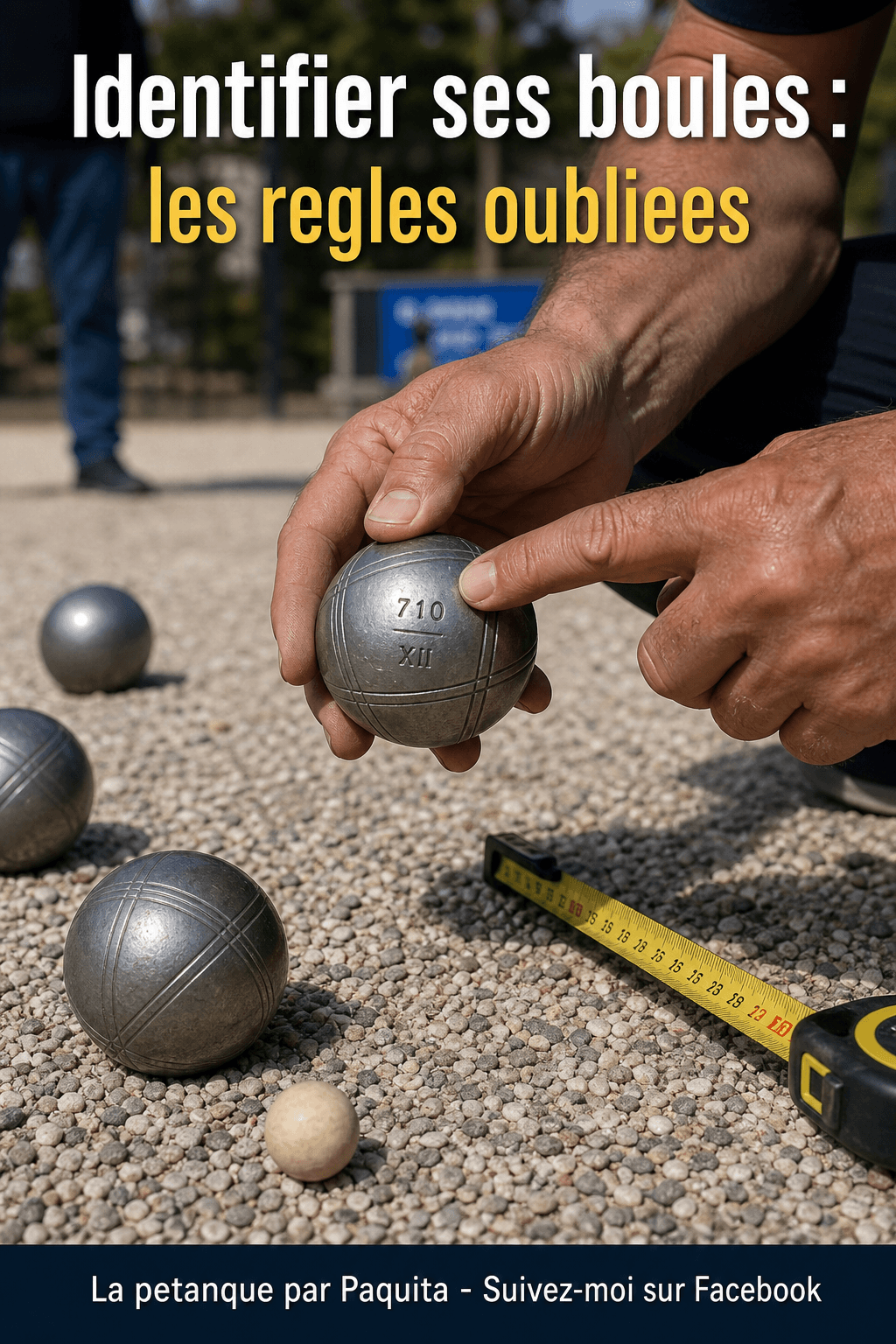
Brand, model, engraved weight, diameter, grooves, initials or serial number: all these elements help to remove doubt. Approved balls normally carry indications useful for control.
Old or very worn balls are not always prohibited, but they increase the risk of discussion if the engravings become illegible.
3.What the arbitrator looks at in the event of a dispute
The referee seeks to re-establish a reliable situation. He can ask to see the balls, compare the marks, check the engraved indications and listen to the explanations. The more objective the elements, the quicker the decision.
| Situation | Good reflex | Common error |
|---|---|---|
| Doubt | Check calmly | Accusing too quickly |
| Dispute | Call the umpire | Debating endlessly |
| End of lead | Validate before collection | Pick up too early |
4.Changing balls during a competition
Changing balls discreetly is one of the most sensitive situations. There may be a legitimate reason, but it must be announced and clarified before suspicion arises.
If a substitution is necessary, the prudent player warns the opponent and calls the referee if the context requires it.
When tension rises, slow down the decision and make the facts visible. A calm verification is better than a certainty announced too loudly.
5.The simple routine before an official game
Always bring out the same game, check the three boules, put away unnecessary boules and avoid leaving equipment lying around in the playing area. After each end, take your boules without mixing them with those from the neighboring field.
6.What to remember
Identifying your balls doesn't mean being fussy. It's about respecting the game, the opponent and the referee. Good players don't let the material become a subject: they make the situation clear before it becomes confrontational.
A regulatory reminder is better when it also serves your competition routine and your mental preparation.
Discover