News · 15 July 2026
Official rules on pétanque boules: weight, size and approval
NewsWeight, diameter, approval, marking: the official FFPJP rules on pétanque boules used in competitions.1.Why approval matters
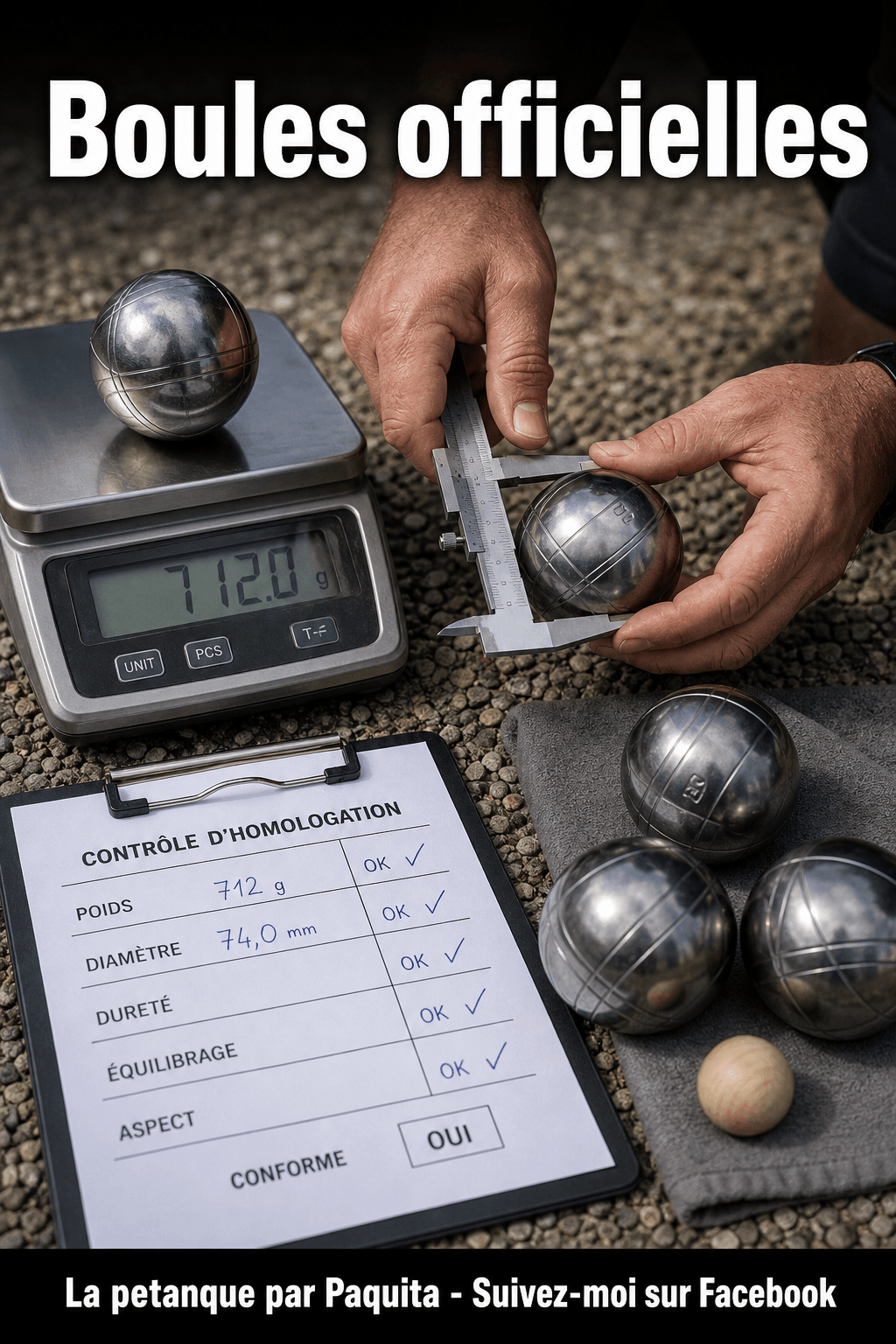
Approval guarantees that the boules meet common criteria. Without it, every player could turn up with equipment that’s too light, too heavy, too big, too small or modified. The competition would lose its fairness. Approved boules give all competitors a shared framework.
In competition, this detail isn't only there to avoid a penalty: it protects the fairness of the game. The better the rule is understood before the throw, the less it becomes a weapon for argument after the throw. A solid player doesn't wait for an incident to ask about the framework; they check, announce and play in a clear environment.
Before a competition, check the brand, the weight, the diameter and the general condition. A very worn or modified boule can become challengeable.
2.Weight and diameter: the essential references
Competition boules fall within a regulatory range of weight and diameter. These limits exist to avoid extremes: a tiny boule that’s hard to read, a very heavy boule that’s dangerous, a too-light boule with abnormal behaviour. Choosing your equipment therefore means finding your comfort within the official framework.
In competition, this detail isn't only there to avoid a penalty: it protects the fairness of the game. The better the rule is understood before the throw, the less it becomes a weapon for argument after the throw. A solid player doesn't wait for an incident to ask about the framework; they check, announce and play in a clear environment.
3.Marking, number and identification
A competition boule must be identifiable. The marking makes it possible to recognise the model and avoid confusion on the court. In a tight end, where several boules look alike, this identification prevents pointless discussions about the ownership of the boule or its compliance.
Don’t choose a boule just because it “looks pro”. First check that it’s approved and readable. The best boule is the one you can play without second thoughts.
4.Modified or overly worn boule
A boule deliberately altered, filled, heated, drilled or deformed falls outside the normal framework. Even a very old boule can raise questions if it no longer has the expected characteristics. Natural wear is one thing; a modification intended to change behaviour is another.
In competition, this detail isn't only there to avoid a penalty: it protects the fairness of the game. The better the rule is understood before the throw, the less it becomes a weapon for argument after the throw. A solid player doesn't wait for an incident to ask about the framework; they check, announce and play in a clear environment.
5.What to do in case of a dispute
If an opponent challenges a boule, the healthy reflex isn’t to get worked up. Leave the equipment available, call the referee and accept the check. A challenge doesn’t automatically mean cheating: it can also come from a legitimate doubt about a model or a state of wear.
A player who knows their equipment keeps their cool. They know what they play, why they chose it and how to prove its compliance.
| Point to check | Good reflex | Frequent mistake |
|---|---|---|
| Weight | Stay within the official range | Play a novelty boule |
| Diameter | Choose by hand and position | Go for an extreme size |
| Marking | Keep a readable identification | Erase the useful references |
| Wear | Check before a competition | Wait for a challenge |
Equipment matters, but it doesn’t replace method. The full series helps connect the choice of boules, technique, strategy and progress.
Discover