News · 23 July 2026
These zero throw situations in pétanque that many players handle poorly
NewsJet de cochonnet nul, relance, placement du cercle et erreurs fréquentes : les situations de jet nul que les joueurs de pétanque gèrent souvent mal.1.A null roll is noted before playing
The first practical rule is simple: check the jack before the first ball. Distance, limits, visibility, playing conditions: everything must be clear. If a player throws a ball when doubt already existed, the discussion becomes more delicate. The right time to challenge the validity of the goal is before the end actually begins.
In competitions, teams must avoid “we’ll see.” A goal that is too short or too long influences the entire strategy. Accepting it carelessly, then contesting it after a bad ball, creates an impression of opportunism.
Check the goal straight away: a well-observed null throw takes twenty seconds; a roll contested afterwards can spoil an entire end.
2.Classic causes of zero jet
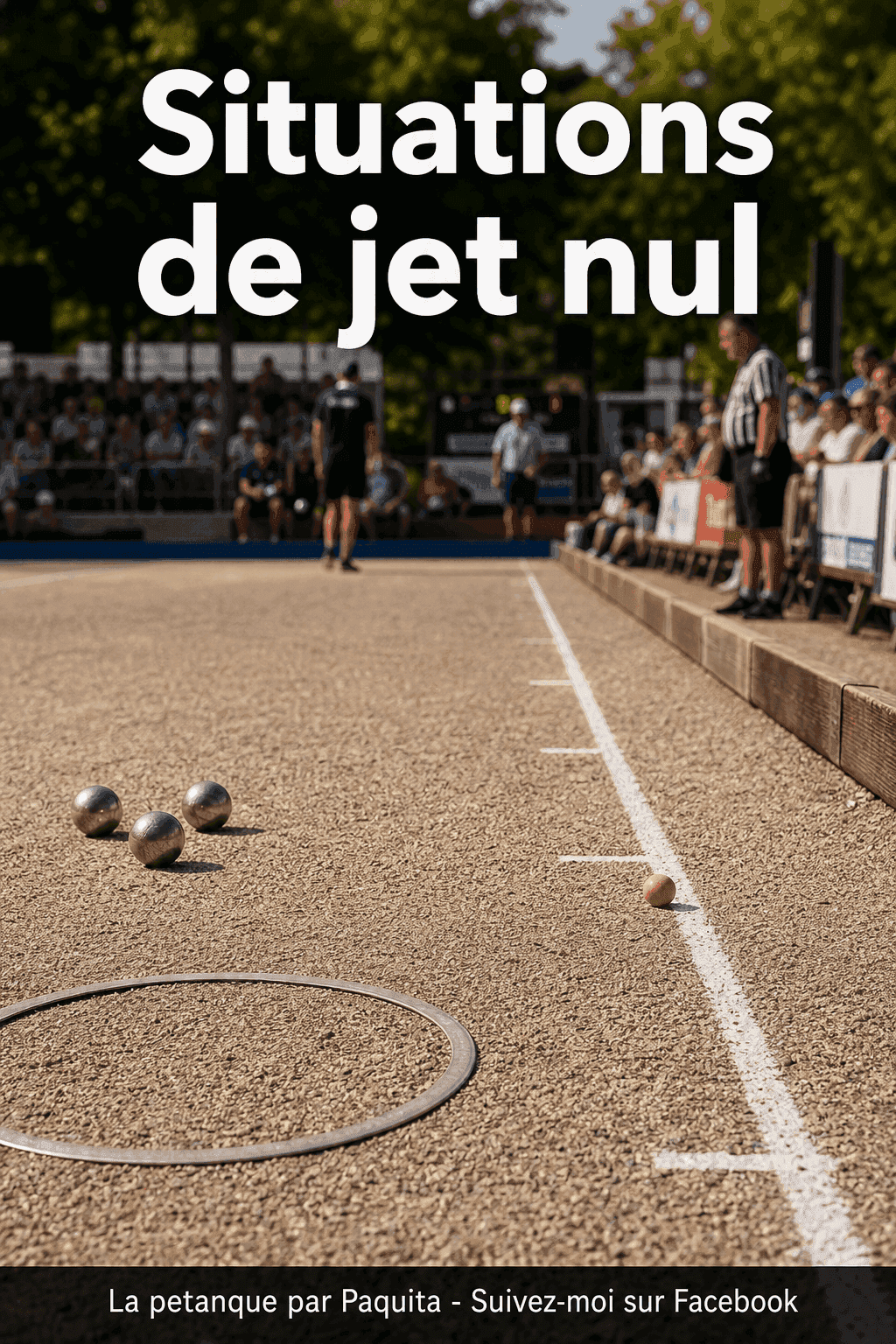
The best known case concerns distance. For seniors, the goal must be thrown within the usual regulation range, neither too close nor too far. But this is not the only criterion. You must also respect the distances at the limits, keep the goal visible from the circle and ensure that it does not rest in a prohibited area.
Some players only check meters. This is insufficient. A goal from a good distance can still be void if it is too close to a loss line or if it does not allow for proper play.
| Cause | Frequent mistake | Good reflex |
|---|---|---|
| Too short | Play anyway | Measure or estimate clearly |
| Too close to a limit | Just look at the distance | Control the dead zone |
| Hidden goal | Improvise | Replace according to procedure |
3.Who raises and from where?
The management of the null throw depends on the applicable procedure: the team which had the right to throw must respect the conditions of the regulations, then the goal can be placed according to the rules if the attempts fail. The important point is not to move the circle freely to fix the situation. The circle belongs to the route and its location obeys the placement rules.
In clubs, we sometimes see a player advance the circle fifty centimeters without asking, under the pretext that the pitch is complicated. In official competition, this shortcut is dangerous. If the configuration poses a problem, the referee or the organization must be contacted.
4.Why Club Habits Create Conflict
In friendly games, players often settle things: "raise, it doesn't matter". This flexibility maintains user-friendliness, but it can become a problem when it is imported into competitions. A more rigorous opponent is not necessarily painful; it simply applies a procedure which guarantees the same rule for everyone.
The danger is mixing two cultures: that of relaxation and that of competition. As soon as there is an issue, it is better to clearly announce the verification of the goal, without an aggressive tone. A sentence like “we check the distance before playing” is enough.
Never let discomfort sit silently. If the goal seems worthless to you, say so before your first ball, calmly and precisely.
5.Comparison: good procedure versus improvisation
A good procedure sometimes seems slower, but it speeds up the game over time. Improvisation saves ten seconds at the start and can cost five minutes of debate afterwards.
6.The checklist before the first ball
Before playing, check four points. Is the distance correct? Is the goal far enough out of bounds? Is it visible from the circle? Is the circle placed correctly in relation to the previous row? If an answer is problematic, correct it before launching.
This checklist is particularly useful on provisionally plotted land, public squares and tight spaces. It protects both the thrower and the opponent: no one gains by starting a lead on a doubtful goal.
In close games, announce the check without dramatizing: “we check the goal before playing”. This formula keeps the dialogue clean and avoids the impression of tactical contestation. If the goal is good, the lead starts on a clear basis. If it is zero, the procedure resumes naturally. The player who masters this step gains credibility, especially in competitions where small approximations quickly become major subjects of tension.
For clubs, a clear organization limits disputes: fields, teams, rounds and tables remain legible from the start to the end of the competition.
Discover