Actualités · 23 June 2026
These warm-up mistakes that cost you in pétanque
A botched warm-up, the wrong terrain, pointless gestures: the warm-up mistakes in pétanque that sink your first ends — and how to correct them in 10 minutes.1.The myth: “no need to warm up”
The pétanque gesture engages the shoulder, elbow and wrist over a precise range, with a non-negligible weight (700 to 800 g per boule). Without a warm-up, the arm starts “cold”, the shoulder does not open fully, and the trajectory loses sharpness. Worse, the brain itself is not tuned: it takes several minutes to recalibrate the perception of distances, to integrate the nature of the ground and to switch into “play” mode. Refusing to warm up is giving away the first ends to the opponent for free.
🎯The aim of a good warm-up is not muscular: it is to lock in the perception of the terrain and the weighting before it matters. The arm follows. It is exactly the opposite of other sports where one first seeks to raise body temperature.
2.Mistake 1: too short
The most common mistake: two or three boules released while talking, and off we go. The arm has not had time to register the feel of the weight, nor to calibrate the range. Result: the first end becomes a “disguised warm-up” paid dearly in points. Allow at least ten minutes, varying the distances and the types of shots.
3.Mistake 2: wrong terrain to warm up on
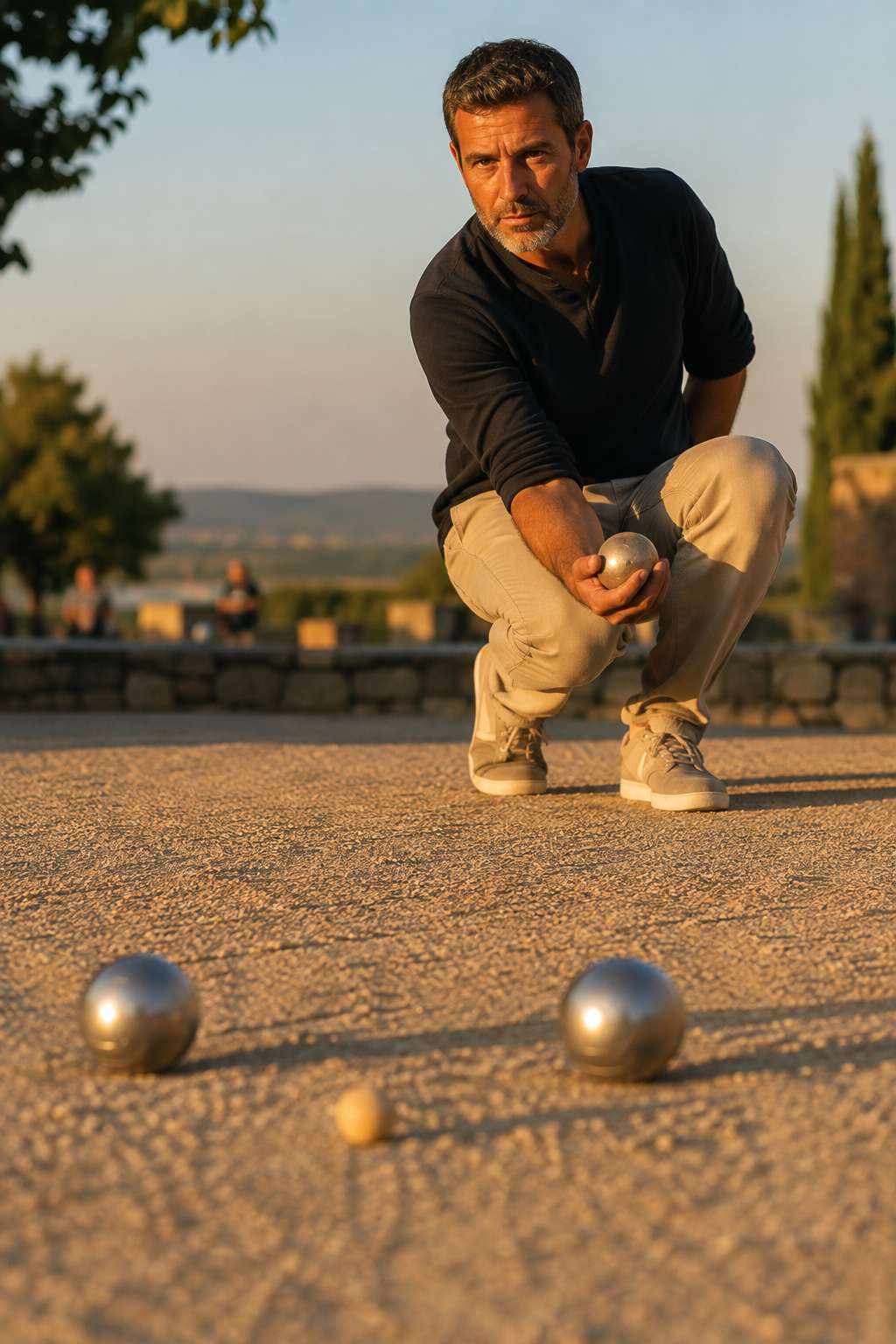
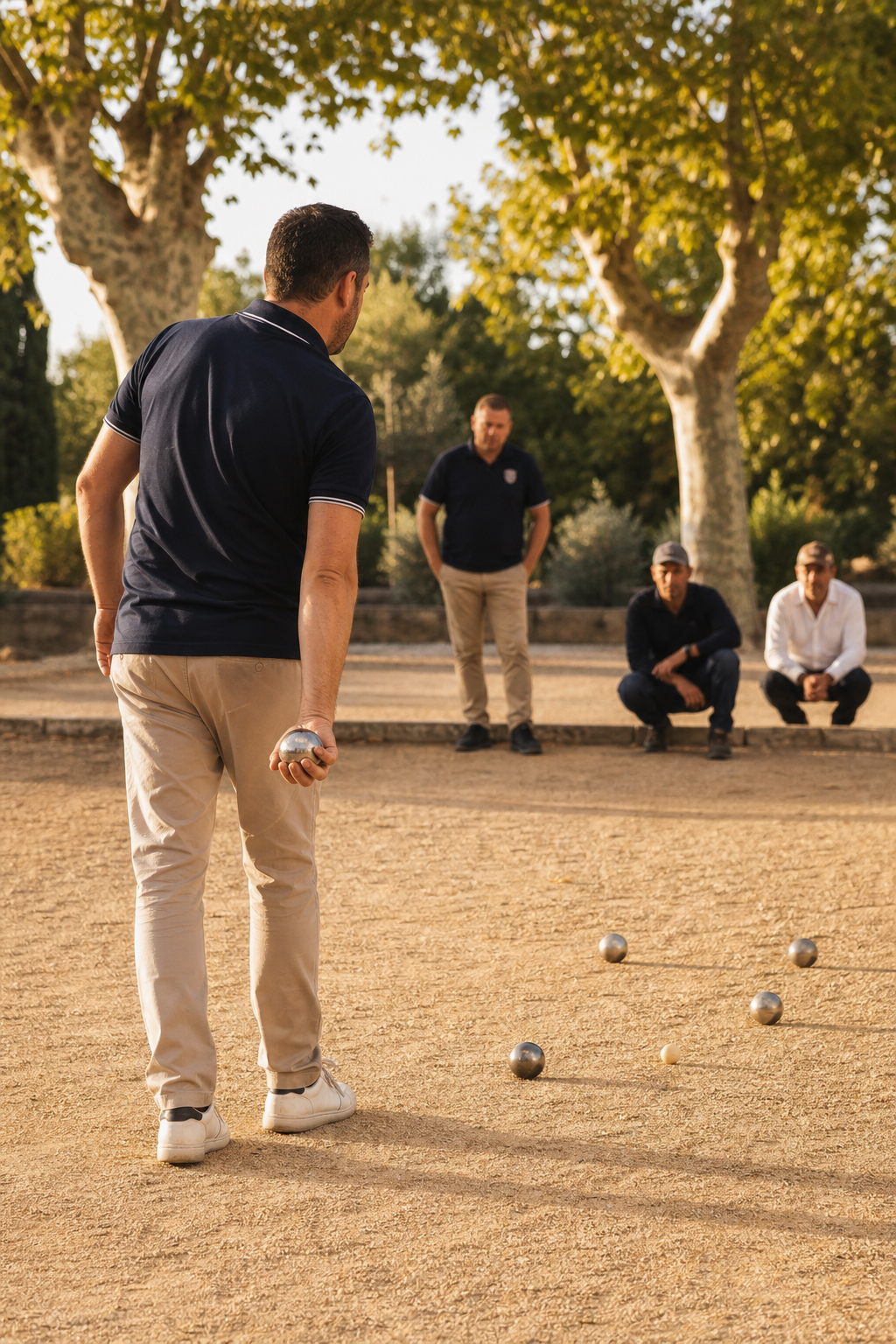
Warming up on a smooth terrain when you are going to play on a stony terrain is almost pointless. The nature of the ground — hard, soft, slippery, grippy — changes everything about the weight. The ideal is to ask to warm up on the playing terrain itself or, failing that, on a terrain of very similar appearance. Otherwise, the first ends will serve to discover the ground at exactly the wrong moment.
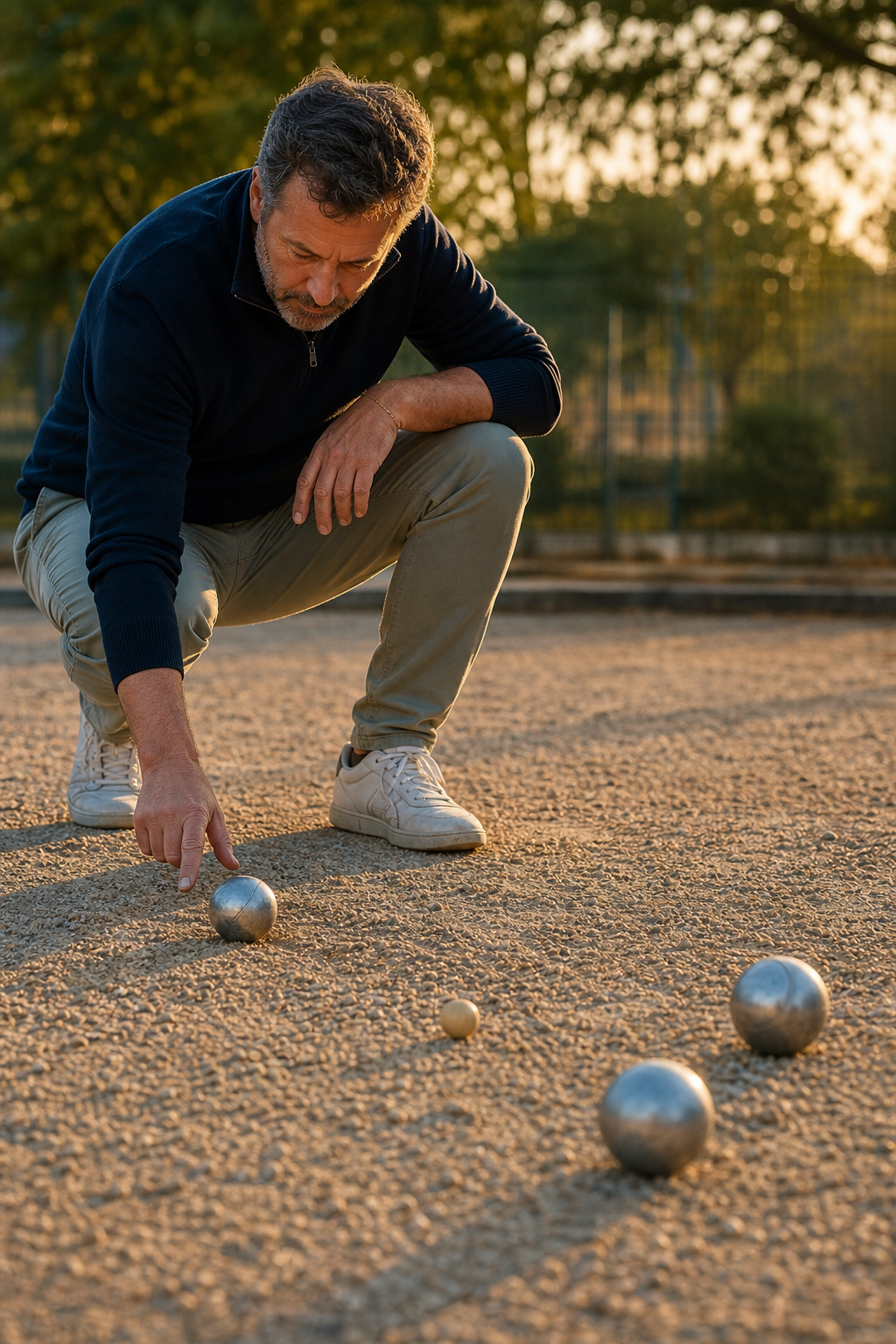
📐 Paquita's tipDuring the warm-up, place 3 jacks at 6 m, 8 m and 9 m, then point three boules at each. It is the single exercise that brings the most: it calibrates your weight on the real distances you will encounter in an end, and it trains the eye to those specific lengths.
4.Mistake 3: testing only one distance
Many players always warm up at 7 m because “it is comfortable”. Yet in an end, you will play at 6, 8, sometimes 10 metres. The weight changes radically from one distance to another. A warm-up that tests only one length really only prepares you for a quarter of the situations. To start well, you need at least three distances: short, medium, long.
5.Mistake 4: starting with shooting
Shooting demands maximum range and an explosiveness that do not exist cold. Starting with it means risking a muscle strain — and above all, it means starting a precision gesture before the depth sensors are calibrated. Always start with pointing, on a few boules at short distance, and only introduce shooting after a few minutes of arm movement.
6.Estimated impact of each mistake
Let us visualize how much each warm-up mistake costs you at the start of a game:
Estimated cost on the first end — out of 10 Warm-up too short · 8/10 The most penalizing mistake: arm and weight not calibrated. Wrong terrain · 7/10 We discover the ground when it counts. Only one distance tested · 6/10 The weight does not transfer mechanically from one length to another. Starting with shooting · 5/10 Muscle risk and precision lagging behind.| Error | Consequence | Correction |
|---|---|---|
| Too short | Cold arm | 10 min minimum |
| Wrong terrain | Wrong weighting | Warm up on the actual ground |
| Only one distance | Partial calibration | 3 distances minimum |
| Starting with shooting | Cold tendons | Pointing first, shooting after |
7.A 10-minute warm-up routine
A simple sequence, to be applied as is. Minutes 0 to 3 : a few very short pointing boules (5-6 m), supple arm, to wake up the shoulder. Minutes 3 to 6 : 3 boules at 6 m, 3 at 8 m, 3 at 9 m, pointing calmly. Minutes 6 to 8 : 4 or 5 short shots (less powerful than in play) to set up the range. Minutes 8 to 10 : 2 or 3 boules in the most likely configuration of the first end. This routine anchors the weight, prepares the shoulder and installs the right mental state. To structure your preparation further, see our free tools and the page little-known rules.
📘 THE COMPLETE SERIES The Pétanque Training Bible (Volumes 1 to 5)Five volumes to structure your preparation: warm-up, pointing, shooting, half-lob, difficult terrains. All the content to build a progressive, serious training programme adapted to your level, without leaving anything to chance.
📗 Discover the complete seriesFAQ — Your frequent questions
How long do you really need to warm up for pétanque?+ At least ten minutes. Anything less is insufficient to adjust the dosage over several distances and properly prepare the shoulder. About fifteen minutes is ideal if it's cold or if you're new to the terrain. Should you stretch before playing?+ Extensive static stretching before the game is counterproductive: it reduces accuracy immediately afterwards. Prefer gentle joint movements (shoulder, elbow, wrist) then warm up with the balls. Stretching has its place afterwards, for recovery. Why not start directly with shooting?+ Because the shot requires maximum amplitude and explosiveness that the muscles and tendons cannot deliver when cold: risk of muscular discomfort and delayed precision. A few minutes of point at first, the shooting then gradually introduces itself. How to warm up when you don't have access to the playing field?+ Choose a terrain that is as similar in nature as possible (hardness, grain size). Failing that, keep a complete warm-up elsewhere then take advantage of the first balls of the game to adjust your dosage, playing a little more cautiously for two or three ends. Is the same warm-up required during competition and during training?+ Yes, even a little longer in competition to integrate the pressure of the stakes. Keeping the same warm-up routine creates a stable benchmark that reassures and establishes the right mental state, in addition to preparing the body. 📎 Related articles GameThe lesser-known rules of pétanque ToolsFree PetanqueLand tools HomePétanque by Paquita© Pétanque by Paquita — petanqueland.fr ·
📘 Discover my books on PetanqueLand
Educational article. The warm-up remains to be adapted according to age, the day's physical condition and the playing conditions.