News · 10 July 2026
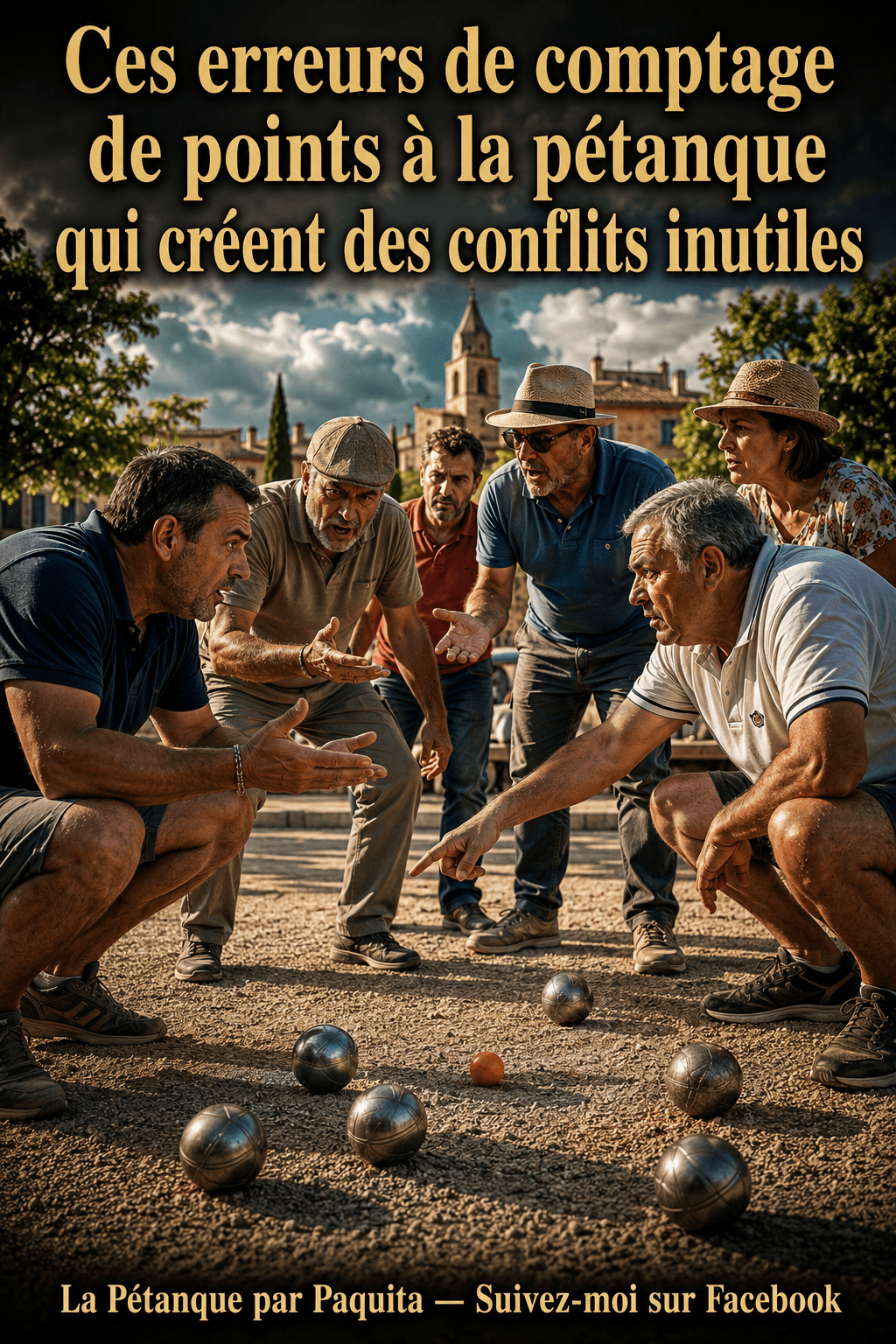
The scoring mistakes at pétanque that cause needless arguments
NewsA miscounted boule, a pointed finger, an end that escalates: the most frequent counting mistakes in pétanque and how to avoid them.1.The scoring principle, in one sentence
The FFPJP rulebook is crystal clear on this point: at the end of the end, the team with a bowl closest to the jack scores one point per bowl closer than the opponent's best bowl. No bonus, no half-point, no "let's round it up". Each bowl counts for one and only one point, provided it is strictly closer to the jack than any bowl of the opposing team.
This simple rule only becomes a source of conflict when applied in haste, without cross-checking. That is where errors are born.
Useful reminder: scoring is always done after all the bowls of both teams have been played. Scoring before the opponent has finished their bowls, even "for info", is a classic source of confusion and dispute.
2.Error No. 1 — scoring without having identified the right bowl
The first error, the daftest one, is to designate "by eye" the closest bowl without having actually checked it. On a cluster of bowls packed around the jack, the eye is easily fooled, especially from a distance or with an unfavourable viewing angle. Many disputes arise from a bowl believed to be winning when another, less visible from the circle, is in fact closer.
The right reflex
Move, look at the level of the bowls in question, and if the slightest doubt remains, get the tape measure out. A quick glance from the throwing circle never matches a physical check when the gap seems small.
3.Error No. 2 — avoiding measurement out of laziness or overconfidence
Many players avoid measuring "to save time" or because they are convinced they are right. The result: a point is awarded wrongly, often in good faith, but an error remains an error. The rulebook never requires you to guess: measuring is a right, at any time when a distance is disputed or uncertain.
Not measuring out of overconfidence is precisely the costliest error at the end of a tight game, where every point counts double.
Get into the habit of measuring as soon as the gap seems smaller than a bowl's width, even if you are "sure". This systematic reflex avoids 90% of scoring disputes — and it only takes a few extra seconds per end.
4.Error No. 3 — adding up the score too quickly between two ends
Another classic: a team announces the cumulative score before the two sides have agreed on the number of points in the end just completed. A player shouts "8 all" when the actual count of the end still had to be validated. This haste leads to disagreements that sometimes go back several ends, impossible to correct calmly.
The right reflex
Validate the end's score out loud, between the two of you, before adding it to the cumulative score. A three-second pause that saves ten minutes of hassle.
5.Error No. 4 — scoring alone, without the opponent's agreement
The rulebook does not provide for a single team to be both judge and party to the scoring. A player who announces the score alone, without the opponent confirming, runs the risk of a legitimate dispute later in the game. Scoring must always be a shared moment, not a unilateral declaration.
6.Rigorous scoring vs slapdash scoring: the gap in figures
Over a full game, the rigour of scoring directly changes the number of disputes encountered. Here is the trend observed in club games:
| Scoring situation | The right reflex | The common mistake |
|---|---|---|
| Bowls very close together | Measure systematically | Decide by eye |
| End of round | Validate the score between two | Announce alone, too quickly |
| Bowl identified | Move to check | Judge from the circle |
| Cumulative score | Recount out loud | Add up from memory |
7.The official method in 4 reflexes
The rulebook does not impose a precise ritual, but its spirit — to settle things objectively, leaving no room for doubt — translates into a simple, reproducible method for each end.
1. Wait for the end to be fully completed
No remaining bowl must change the situation. You only count when both teams have exhausted their bowls, or by mutual agreement if the gap is deemed insurmountable (dead end).
2. Physically identify the closest bowl
Move, look at ground level if needed, before asserting anything.
3. Measure at the slightest doubt
Always better than an estimate, even for the team that thinks it is right. Find our complete method on the lesser-known rules of pétanque and our free tools to practise reading the end of an end.
4. Validate the score between two before adding it up
A count announced and confirmed by both teams avoids 9 out of 10 disputes at the end of a game.
Staying clear-headed when the score is tight and every point counts double: this guide works on the mental side and the management of tense situations, including the delicate moment of scoring.
📗 Discover the book