Actualités · 22 June 2026
These pétanque terrains that secretly favor certain players
Sand, gravel, beaten earth, a short or long terrain: each surface favours a style of play. Discover which terrains suit pointers or shooters, and how to adapt.1.Why no terrain is neutral
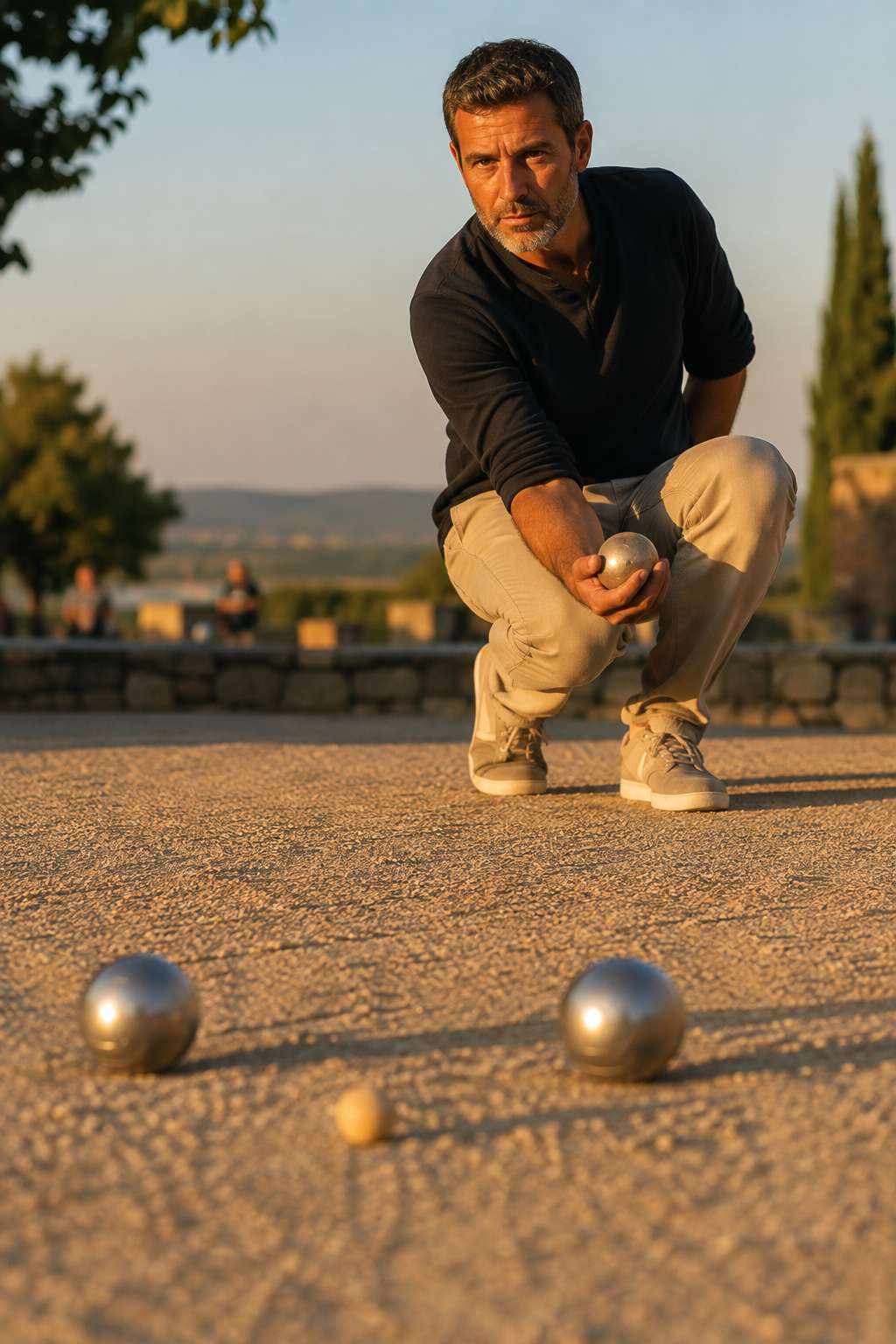
A pétanque terrain is a mix of surface, relief, length and conditions. Each of these parameters rewards one type of throwing motion and punishes another. A ground that 'absorbs' favors the one who places; a ground that 'bounces back' favors the one who strikes. The terrain doesn't decide the winner, but it quietly puts its thumb on the scale — and the player who doesn't see it is already playing with a handicap.
The stakes therefore aren't about finding the 'ideal' terrain, it doesn't exist. It's about reading which way today's leans, then adjusting your play and your shot choices accordingly.
🧭First question to ask yourself on arrival: does this ground forgive, or punish? A loose ground forgives the pointer's small weighting errors; a hard ground amplifies them but offers clean trajectories to the shooter. The answer shapes your whole game strategy.
2.Soft ground, the pointer's kingdom
Sand, loose earth, greasy ground after rain: the bowl sinks slightly and stops quickly. Long rolls are impossible, the direct iron shot buries itself, the bounces are soft. All of this rewards the patient pointer who places high, with a lob, and lets the bowl die close to the jack. The shooter, on the other hand, loses their main weapon: the flat trajectory and the clean carreau become rare.
On this type of ground, the advantage goes to whoever weights finely and accepts winning ends through pointing rather than shooting. Wanting to 'break the game' at all costs is often counterproductive there.
3.Hard and rolling ground, the shooter's terrain
Packed beaten earth, fine gravel, dry and smooth ground: the bowl slides, rolls far, bounces cleanly. Here, shooting takes on its full value — trajectories are clean, the carreau stays in place, the strike is rewarded. The pointer suffers more: the slightest weighting error sends the bowl three meters too far, and placing becomes an art of extreme precision.
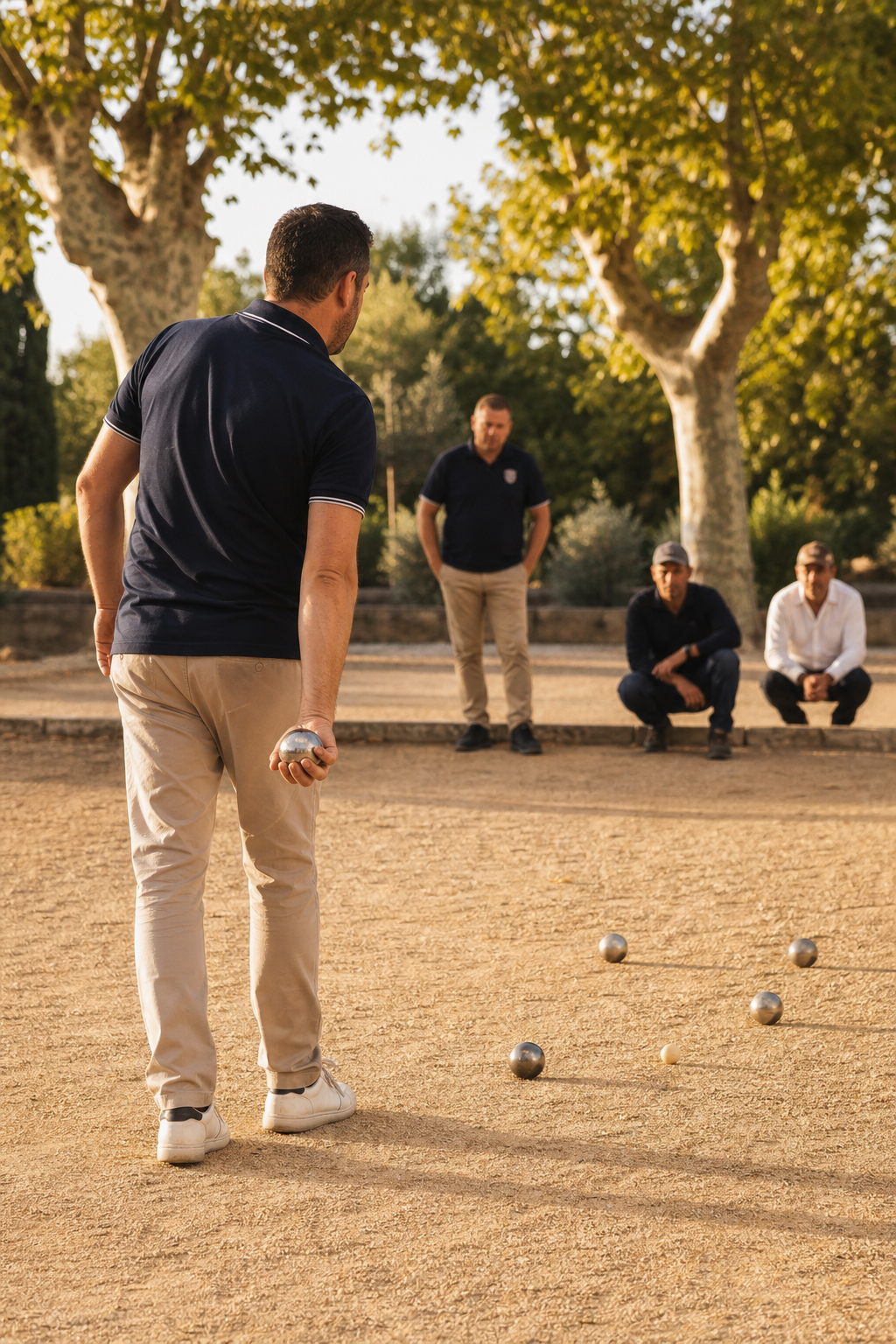
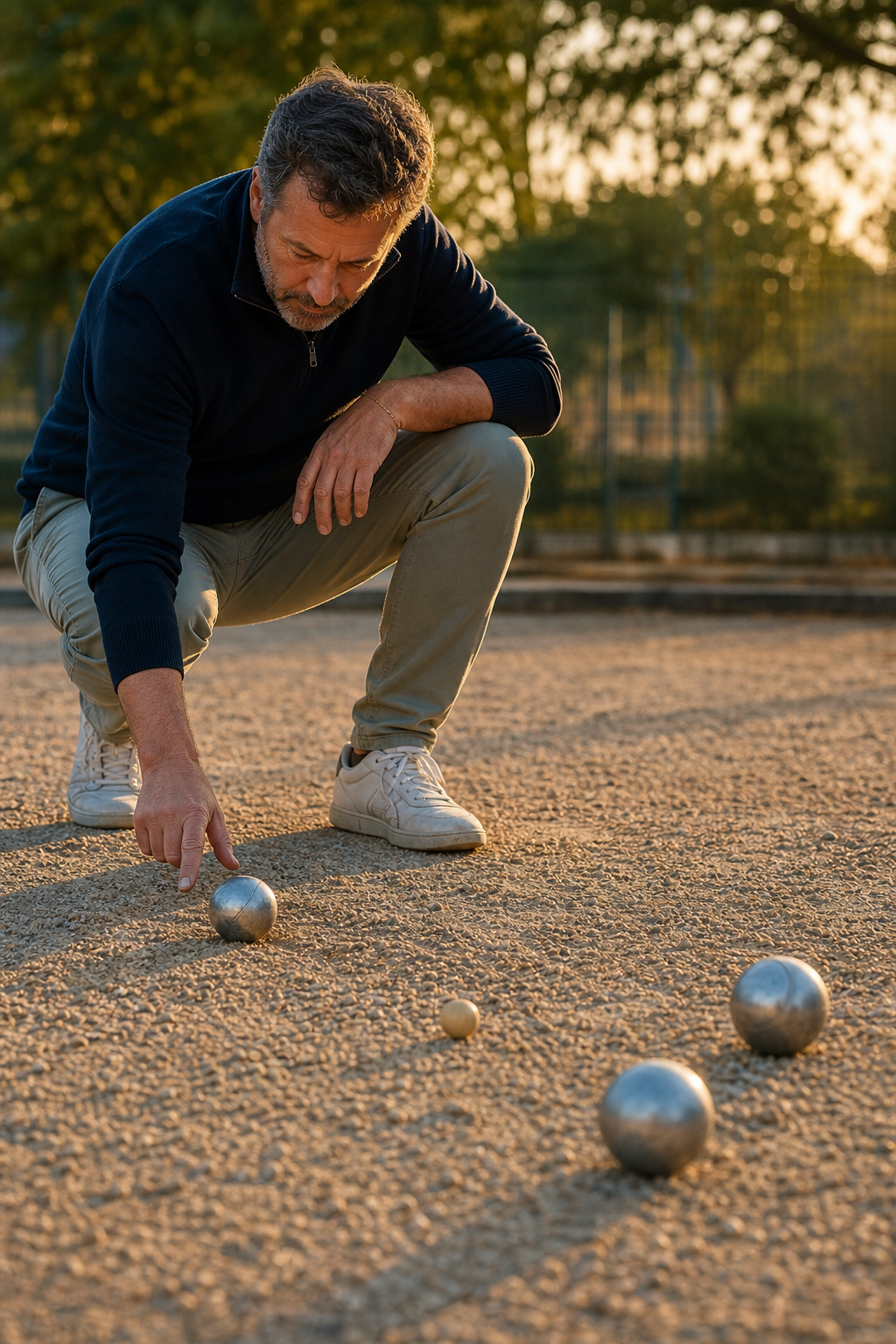
🎯 Paquita's tipBefore the first end, throw two trial bowls if the rules allow it, or observe the others': watch where they stop and how they bounce. This ten-second test tells you immediately whether the terrain 'holds' or 'rolls' — so whether to lob high or play shorter.
4.Short or long: the advantage that reverses
The length of the game reshuffles the cards. On a short game (6 to 7 meters), precision comes first, the gaps tighten, the meticulous pointer thrives and shooting becomes easier because the target is close. On a long game (9 to 10 meters), strength and consistency count more: shooting takes a real arm, pointing demands a lob mastered over the distance. Two meters more or less are enough to turn an advantage into a handicap.
5.Light, wind and time of the game
The ground isn't the only factor. The low evening sun flattens the relief and tricks the eye; a crosswind disrupts high lobs above all; a terrain that dries during the game shifts from 'holding' to 'rolling' without warning. These evolving conditions favor the attentive player who readjusts their reading, and trap the one who replays the same shot all game.
6.Which ground favors whom?
Let's visualize, ground type by ground type, the relative advantage of the pointer and the shooter. The higher the bar, the more the terrain favors that style:
Relative advantage by ground (pointer vs shooter) Pointer sand › loose › neutral › hard Shooter sand › loose › neutral › hard| Terrain type | Favors | The right adjustment |
|---|---|---|
| Sand / loose ground | Pointing | Lob high, aim short |
| Hard earth, rolling gravel | Shooter | Play shorter when pointing, dare to shoot |
| Short game (6-7 m) | Precision | Care for placement, easier shooting |
| Long game (9-10 m) | Power / consistency | Mastered lob, strong arm for shooting |
| Ground that dries during the game | No one | Readjust the weighting at every end |
7.Adapt instead of enduring
Reading the terrain's bias serves no purpose if you don't draw a decision from it. Three reflexes turn this reading into points.
1. Choose your role based on the ground
In a triplette, let the one whose style fits the day's terrain point, and save shooting for the grounds that reward it. The right player in the right position is worth more than a fixed role.
2. Set the weighting from the trial
One or two observation bowls are enough to set the lob. Better to 'lose' ten seconds than three ends correcting blind.
3. Re-read the terrain during the game
The ground evolves: it dries, hollows, settles. To deepen this reading, see our free tools and the page little-known rules.
📘 PAQUITA'S BOOK The Ultimate Guide to Difficult TerrainsTreacherous grounds, unpredictable bounces, surfaces that change during the game: this guide teaches you to read any terrain and turn its traps into advantages, end after end.
📗 Discover the bookFAQ — Your frequent questions
What terrain really favors the pointer?+ Soft soils: sand, loose soil, greasy soil after rain. The ball sinks in and stops quickly, which rewards high reach and penalizes tight shooting. On these surfaces, winning the leads at the point is often more profitable than looking for the diamond. Why does a hard ground give the shooter an advantage?+ Because a dry, smooth and rolling ground offers clean trajectories and free rebounds: the iron shot stays in place, the diamond is rewarded. Conversely, the slightest excess of dosage at the point sends the ball too far, which makes placement more difficult. How to quickly test unfamiliar terrain?+ Throw a test ball or two if allowed, or watch where other players' balls stop and how they bounce. You will know in a few seconds if the ground "holds" or "rolls", therefore whether to carry high, play shorter, or favor shooting. Does the length of the game really change the advantage?+ Yes. In short games, precision is key and shooting is easier because the target is close; the meticulous pointer flourishes there. In the long game, strength and consistency count more. Two meters difference is enough to transform an advantage into a handicap, hence the interest in identifying the imposed distance. Can we neutralize land advantage?+ We do not eliminate it, but we compensate for it by adapting its role, its dosage and its choice of shots. In triples, entrusting the point or the shot to the player whose style fits the ground of the day is the best way to turn the bias of the field to his advantage. 📎 Related articles GameThe lesser-known rules of pétanque ToolsFree PetanqueLand tools HomePétanque by Paquita© Pétanque by Paquita — petanqueland.fr ·
📘 Discover my books on PetanqueLand
Strategic advice with an educational aim, based on observing the game. Each player adapts these principles to their own terrain.