News · 30 July 2026
Pig moved by a ball: which rule applies exactly?
NewsPig moved by a pétanque ball: when to continue, when the goal becomes zero, how to measure and avoid errors in FFPJP competition.1.The official principle: the goal lives with the lead
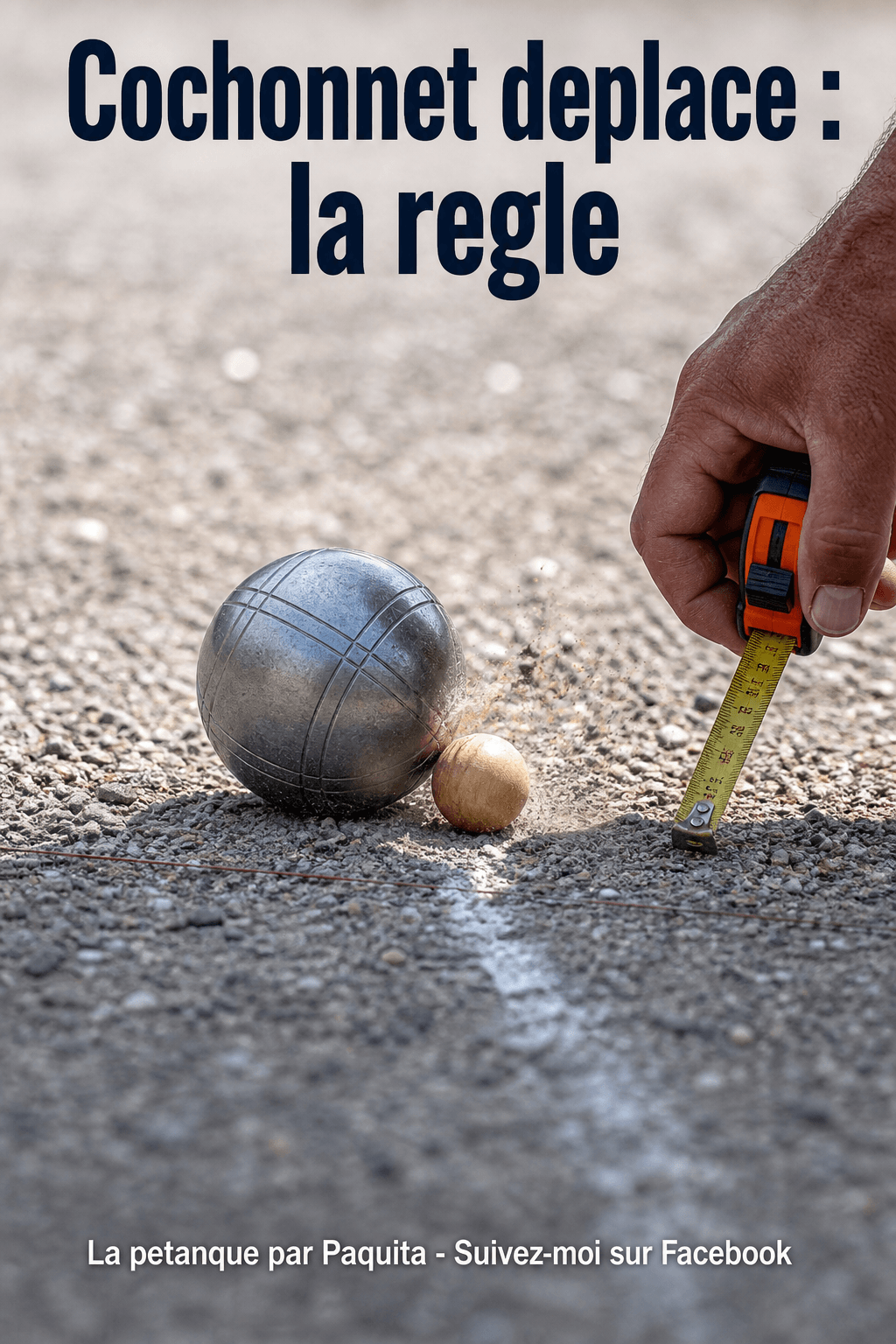
The jack is not a fixed target. As soon as it is validly thrown, it can be moved by a played ball, by a returning ball, by a collision between balls or by a normal action of the lead. As long as this movement does not cause the goal to become void, it is not replaced. The lead continues with the new goal position.
This is often the point that surprises recreational players. They keep in mind the initial location of the goal and want to return there out of an instinct for justice. In competitions, regulatory justice is different: what counts is the real situation after the fact, unless there are specific rules clearly provided for.
To remember: do not touch anything after the shock. We first observe where the goal has stopped, then we check if it remains visible, accessible and within the authorized limits.
2.When the jack remains valid
If a ball pushes the jack a few centimeters, a meter or more, but the goal remains in the playing field and visible from the circle, the lead continues. Balls already played are not replaced. Players simply measure the distances between each ball and the new goal position.
This rule can return a lead. A team that had the point can lose it because the goal was pushed towards an opposing ball. Conversely, a seemingly defensive shot can become an excellent operation if the goal is moved towards a friendly ball. This is part of the game: the goal is mobile, and the consequences of the blow are assumed.
3.When the move creates a null goal
Movement becomes problematic if the jack goes out of bounds, becomes untraceable, is hidden under certain conditions provided for by the regulations or no longer meets the validity criteria during the course. In this case, the zero goal rules apply. The essential question then becomes: do the two teams still have balls to play?
If both teams still have balls, the lead is generally drawn. If only one team still has balls, it can score as many points as it has balls to play. If no one has any more balls, the end can be drawn without a point. This mechanism prevents a team from being penalized while it could still act.
4.How to measure after moving
We always measure from the center of the immobilized jack, not from its old track. If a mark on the ground existed, it is only used to understand the history of the shot, not to calculate the point. The balls in place are compared to the new target. The point can therefore change hands without any additional ball being played.
When in doubt, teams should avoid handling the balls. The referee or person responsible for measuring must be able to see the exact position. Moving a ball to “see better” often means removing the evidence you need.
| Situation | Decision | Frequent mistake |
|---|---|---|
| Goal pushed but within limits | Lead continues | Return to start |
| Goal out of bounds | Apply zero goal | Count the old point |
| Visible goal but very misplaced | Measure at the new point | Measure at the old trace |
| Doubt between two balls | Call the umpire | Move to check |
5.Errors that create conflicts
The first error consists of confusing accidental impact with a normal effect of the game. A ball that moves the jack during its journey produces a game result. This is not a fault. The second mistake is deciding too quickly that the goal is void, when it simply remains in an unexpected place. The third is to count the points according to the memory of the lead, rather than according to the actual position.
There is also a more subtle error: forgetting the balls remaining to be played when the goal becomes zero. This information changes everything. Two teams with balls, only one team with balls, or no balls remaining: the regulatory result is not the same.
Before any discussion, calmly announce three facts: is the goal still visible? is it still within the limits? how many balls remain for each team? With these three answers, most arguments disappear.
6.The competitive decision method
In official competition, keep your method short. First, we freeze the scene: no one picks up, no one puts back. Next, we look at the position of the jack. If it is valid, we measure and continue. If it is zero, we check the remaining balls and we apply the corresponding case.
This method protects both teams. She avoids club arrangements like “let’s put it back where it was” or “let’s play again because it’s simpler”. In a friendly manner, everyone does what they want. In competitions, simplicity comes precisely from the strict application of the regulations.
Understanding the trajectories, bounces and reactions of the goal helps transform confusing shots into clear decisions.
Discover the guide