News · 21 July 2026
Bad pig: who raises, from where and according to what rules exactly?
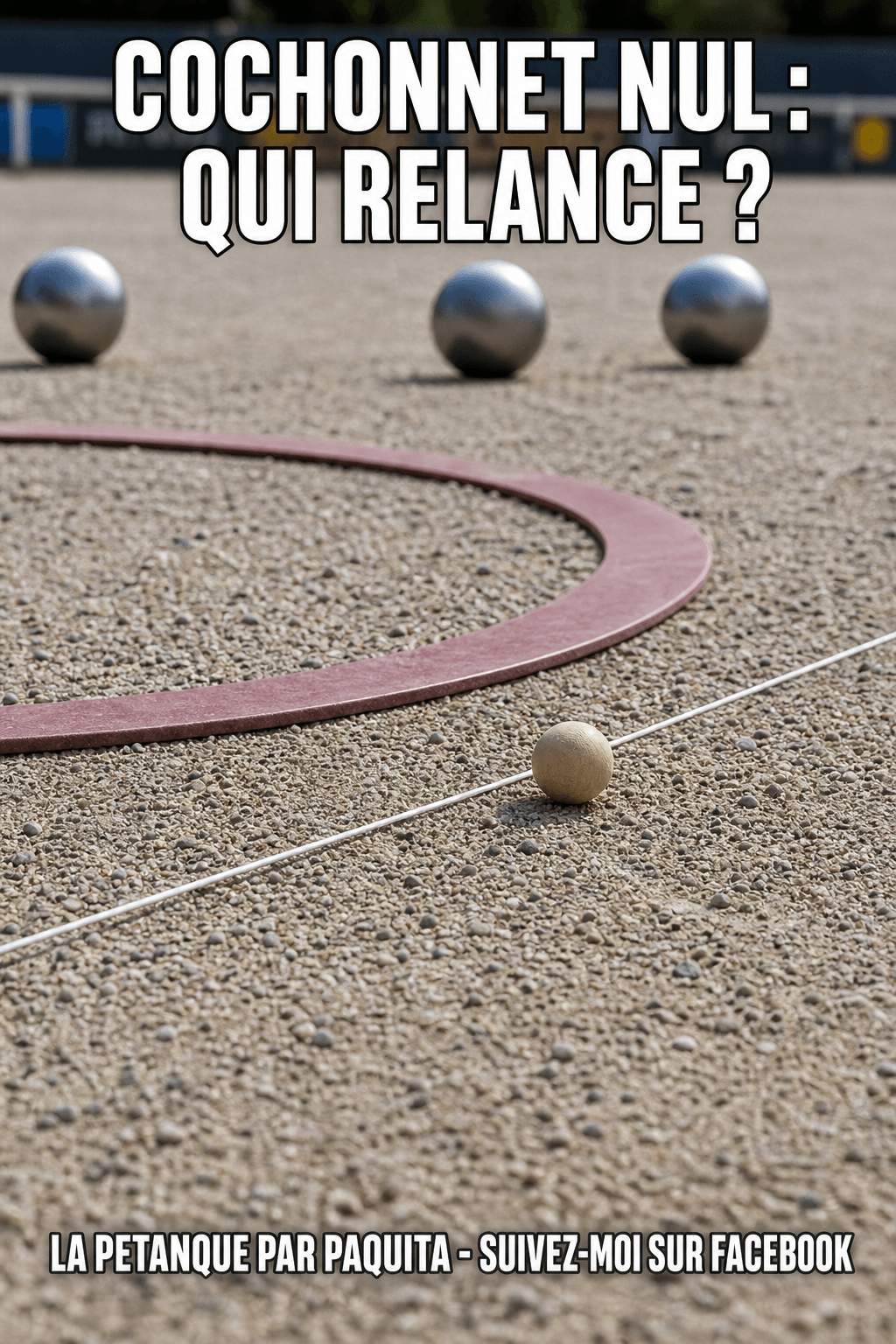
NewsWhen the jack throw is invalid, who throws it again and from which circle? The clear point on the official procedure in pétanque.1.When do we say that the jack is bad?
A jack can be void from the throw if it does not respect the conditions of validity: wrong distance, prohibited proximity to an obstacle or a limit, goal not visible from the circle, or impossible position depending on the playing framework. The reflex is not to discuss for a long time, but to check the criteria one by one.
This step is important, because a goal that is merely embarrassing is not necessarily zero. The rules do not require a perfect pitch, they require a valid goal.
2.Who rerolls after an invalid roll?
The procedure depends on the regulatory framework applied: after an invalid throw, the opponent may be required to place the goal under the conditions provided, then the team which had won or obtained the right to throw retains the throwing of the first ball according to the rule in force. The trap is to confuse goal placement and order of play.
In clubs, many give everything to the opponent out of habit. In competition, we must distinguish precisely between these two things.
The right reflex is always the same: observe, keep the marks, then decide. This discipline protects the point as much as the climate of the game.
3.Where should we start from?
The circle does not move randomly to arrange the distance. We start from the regulatory circle linked to the route, except in special cases provided for by the organization or the configuration of the land. The distance to the goal is measured from the inside edge of the circle towards the goal.
Moving the circle without agreement can create a second irregularity when we wanted to correct the first.
In a borderline situation, don't try to win the discussion. Try to reconstruct the facts in order: where the goal was, where the ball was, what boundary was crossed, and by what.
4.Distance is not enough
A goal from a good distance may be void if it is too close to a boundary or a prohibited obstacle, or if it is not visible from the circle. Conversely, a goal that appears long or short to the eye must be measured before being refused.
The correct method is therefore to measure if necessary, then to check the immediate environment of the goal.
| Useful reflex | Why | Frequent mistake |
|---|---|---|
| Mark before moving | Secure the proof | Moving too fast |
| Check the validity | Avoid a false point | Play by eye |
| Call the referee if in doubt | Neutral decision | Endless debate |
5.The role of the referee in a disputed start
A disputed lead start must be resolved early. If the teams do not agree on the distance or validity of the goal, the referee intervenes before the first ball. Once several balls have been played, the situation becomes more difficult to reconstruct.
Calling the referee at this time protects both teams: no one gains an advantage on an approximate interpretation.
6.Throw well to avoid the restart
The best way to avoid the problem is to prepare for the throw: choose a clear line, check the approximate distance, take into account the terrain and avoid areas close to the limits. A goal throw is not a secondary gesture; it conditions the whole life.
Experienced players use goal as a tactical choice, not a formality.
To organize club competitions, manage draws and avoid procedural errors from the start of the games.
Discover