Actualités · 23 June 2026
How to recognise a great pétanque player from the very first end
Even before their first point, a great pétanque player gives himself away through ten precise details: routine, gaze, posture, circle management. The complete guide to spotting them.1.The approach to the circle
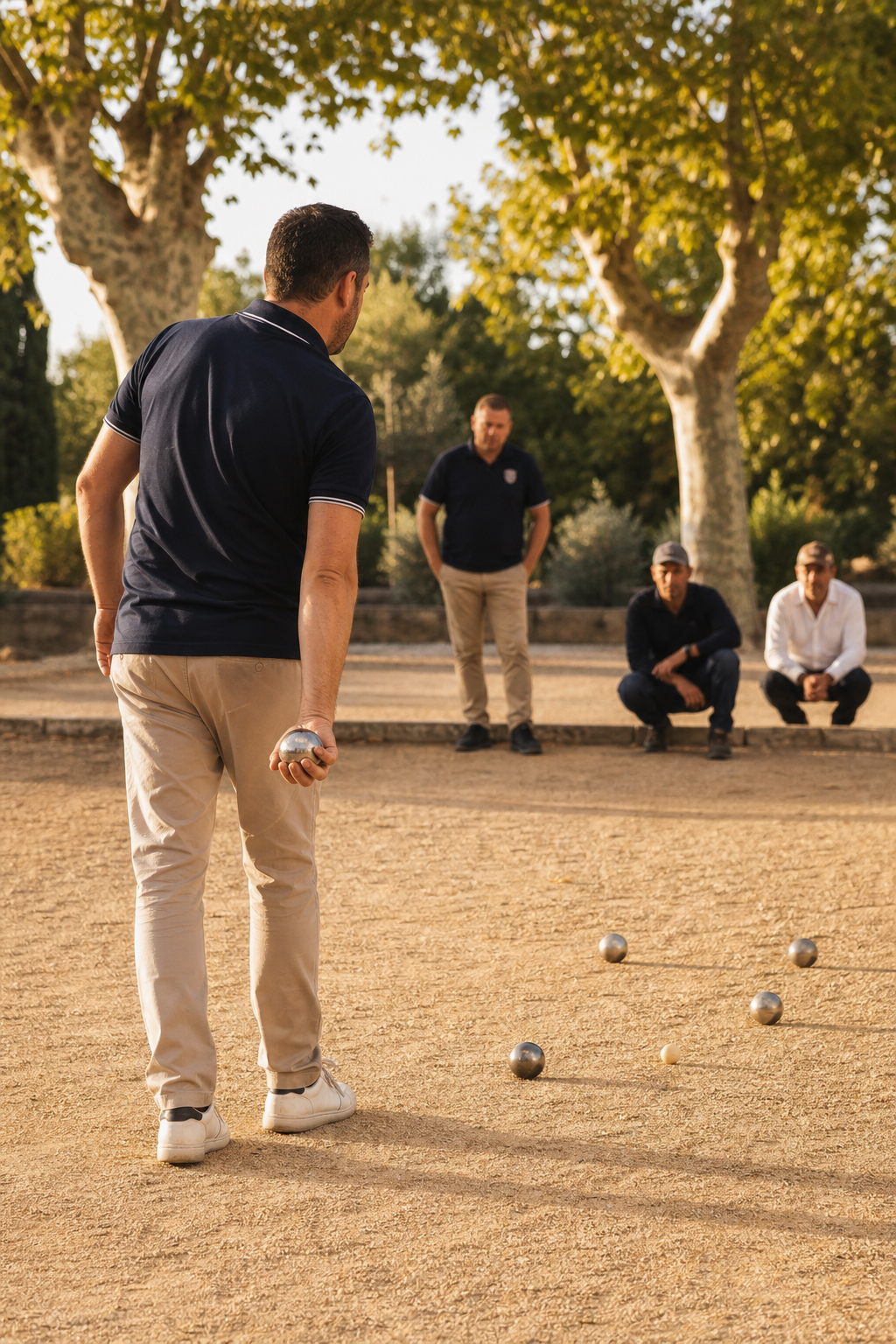
First sign, the most immediate: the way of getting to the circle. A great player arrives composed, without rushing and without ostentatious slowness. They don't arrive talking, they arrive looking. By the time they enter the circle, they already know where they are going to play: the decision is made. An average player, on the other hand, arrives still discussing with their partners, adjusts their decision on the circle, hesitates. This difference in arrival is visible from 15 metres away.
2.The pre-bowl routine
The routine is the player's fingerprint. A great player has their own, short or long, but identical bowl after bowl. Three breaths, two swings, a gaze fixed on the target, and they play. Always in the same order, in the same tempo. This regularity is what allows them to hold up under pressure: their body knows the sequence and reproduces it even when the mental side wavers. An average player, on the other hand, changes their routine according to the stakes: shorter when confident, longer when doubting. That is exactly the opposite of what should be done.
🔁If you want to spot a great player in 30 seconds, just observe their routine over two consecutive bowls. The similarity (or the difference) betrays the level more than any result. An identical routine despite two misses is the signature of a player who has put in the work.
3.The gaze and the scan of the terrain
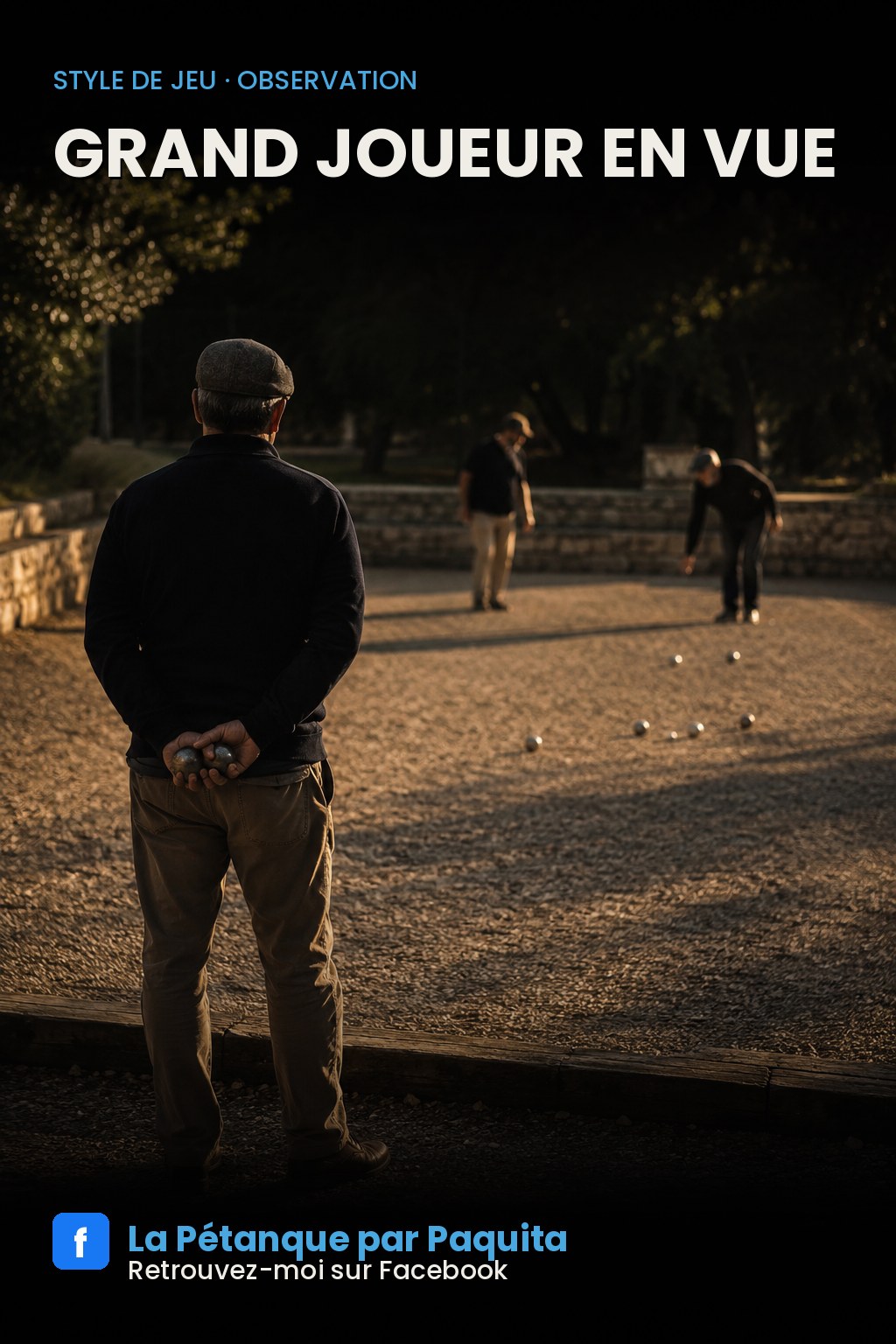
A great player's gaze is never frozen. They scan. On arriving at the circle, they look at the jack, the bowls around it, the angle of the ground, the trajectory they are going to aim for. All of this in a few seconds. Once the decision is made, they fix on their point of impact (the "little stone" they are aiming at) and don't move from it. An average player rarely looks at the terrain on arriving: they aim at their bowl while swinging it, which is tactically far less precise.
4.Handling the bowl
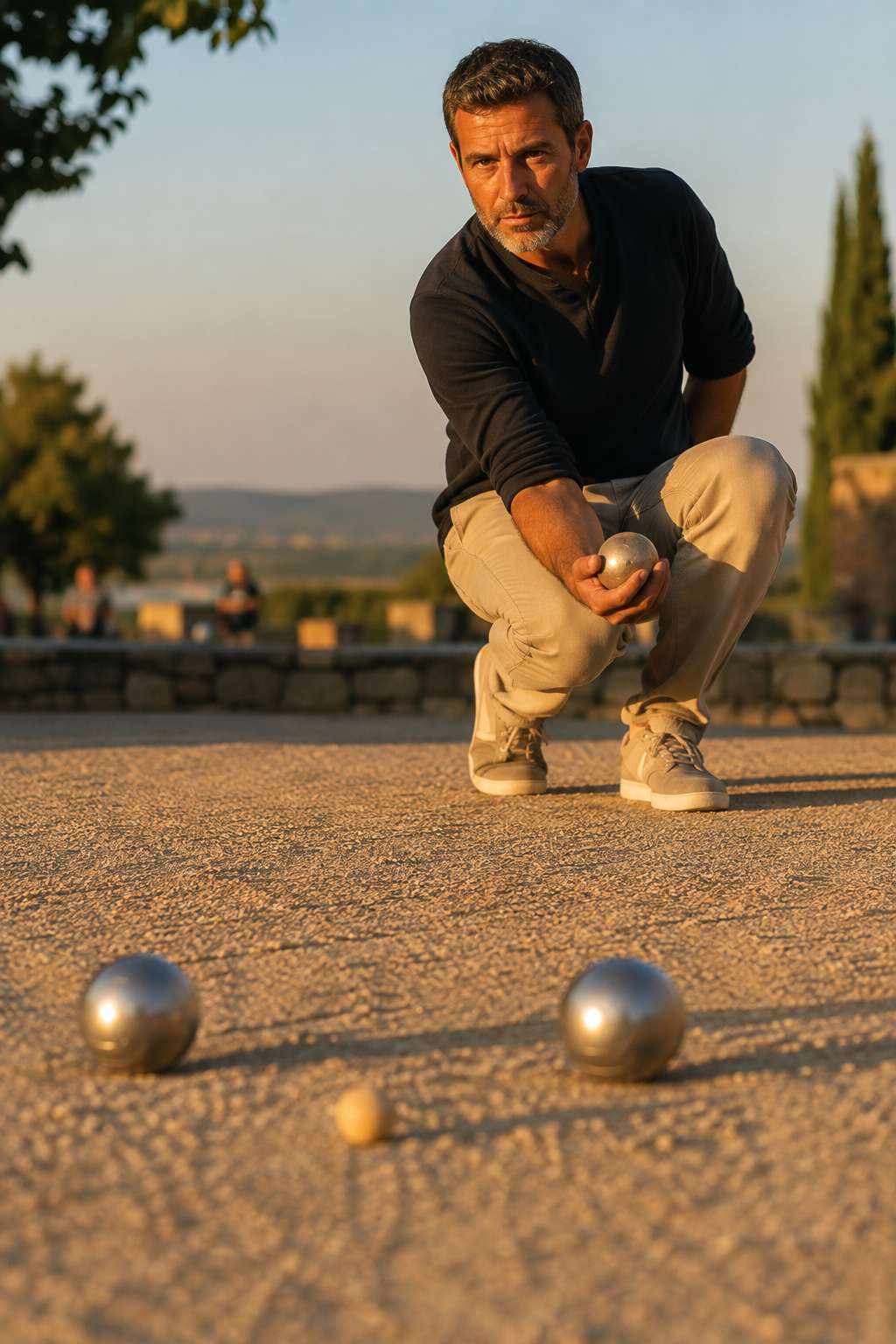
The bowl in a great player's hand is never "fiddled with". They hold it like a tool. They often check the grip, adjust the position of the fingers, make a last contact with the palm before swinging it. These micro-gestures are not tics; they anchor the feel. An average player holds their bowl without thinking, sometimes engages it poorly without feeling it, and the result shows in the release.
5.Voice and team silence
Great teams are recognised by their economy of words. They speak tactics, not emotion. Brief sentences, two or three exchanges per end. No exclamations over misses, no debriefs in the middle of an end. This disciplined speech is an outward sign of inner cohesion: everyone knows what to expect, no one wastes energy on useless comments. Conversely, a team that comments on every bowl, that shouts its joys and disappointments, dissipates its energy and sends a clear signal to the opponent.
6.The release action
The release action is probably the hardest marker to fake. In a great player, it is short, fluid, with no visible tension in the shoulders. The wrist finishes the bowl's trajectory, the hand stays in the air for a fraction of a second before dropping. The bowl spins the right way and leaves with a controlled rotation. In an average player, the action shortens under pressure, the wrist "closes" too early, and the bowl comes out without consistent rotation.
👁️ Paquita's tipDuring your next game, take 30 seconds at the start of the match to observe a single element: the pre-bowl routine of your main opponent. If it is regular, be careful: you are facing a player who has put in the work. If it varies according to the stakes, you will know where to press during the game.
7.Great player vs average player — comparison
The signs described above, ranked by observability.
Regularity of visible markers — level of observation Great player stable routine · scanning gaze · tactical voice · fluid action Average player variable routine · fixed gaze · emotional voice · tense action Reliability of the diagnosis from the very first end — out of 10 Observation of the 3 zones (circle, gaze, voice) · 9/10 Three zones are enough to form a very reliable opinion in a few ends. Observation of the bowls' result alone · 4/10 The result deceives: a great player can miss a bowl, an average one can pull one off.| Sign observed | Great player | Average player |
|---|---|---|
| Arrival at the circle | Composed, scanning gaze | While discussing |
| Pre-bowl routine | Identical every time | Variable according to stakes |
| Handling the bowl | Precise, adjusted | Fiddled with |
| Team voice | Brief, tactical | Emotional |
| Release action | Short and fluid | Tense under pressure |
8.What to do with these signs strategically?
Spotting a great player opposite serves no purpose if you do nothing about it. Three simple adjustments: play tight from end 1 (a great player doesn't crack mid-game, barring an accident — you have to push them early), avoid spectacular shots (you offer them the chance to reply cleanly), impose your rhythm (theirs is calibrated to destabilise them, slow it down if you are behind, speed up if you are ahead). If the reading is the opposite — you are facing an average player hiding behind a fine action — open up the game, take calculated risks, wear down their mental side. See also our free tools and the page of little-known rules.
📕 THE GUIDE The Ultimate Guide to Difficult TerrainsRecognising a great player also means knowing how to play against them on a tricky terrain. This guide brings together the strategies, tactical choices and mental routines that make the difference when you face someone stronger than you on ground that forgives nothing.
📗 Discover the guideFAQ — Your frequent questions
Can we really judge a player on a single lead?+ We do not judge its total level, but we very clearly identify its fundamental quality. Stable routine, scanned gaze, fluid gesture: three clues visible in a few seconds which distinguish in-depth work from a game of inspiration. What is the most reliable marker?+ The pre-ball routine. This is the most difficult clue to fake because it depends on an automatism built by repetition. An identical routine on 5 balls in a row indicates a player who has worked. Can a great player miss in the first end?+ Of course, like everyone else. But his routine, his look and his gestures will remain identical to what they were before the failure. It is this stability that reveals the level, not the result itself. How to work with these markers at home?+ Film yourself on ten consecutive balls in practice. Check that your routine is identical from one ball to another, that your eyes scan before the decision, and that your letting go remains fluid. The work begins with awareness. Should we change strategy depending on the opposing profile?+ Yes, slightly. Facing a big player, play tight early, avoid spectacular shots, impose your rhythm. Faced with an average player, open the game and take calculated risks to tire his mind, which breaks down more quickly. 📎 Related articles GameThe lesser-known rules of pétanque ToolsFree PetanqueLand tools HomePétanque by Paquita© Pétanque by Paquita — petanqueland.fr ·
📘 Discover my books on PetanqueLand
An observation article, based on what can be seen. These signs do not replace play; they shed light on it and allow you to adapt your strategy.