Actualités · 22 June 2026
The biggest observation mistakes before an end in pétanque
Before throwing, good players read the terrain, the score and the opponent. The 6 observation mistakes that lose ends — and the method to correct them.1.Looking is not observing
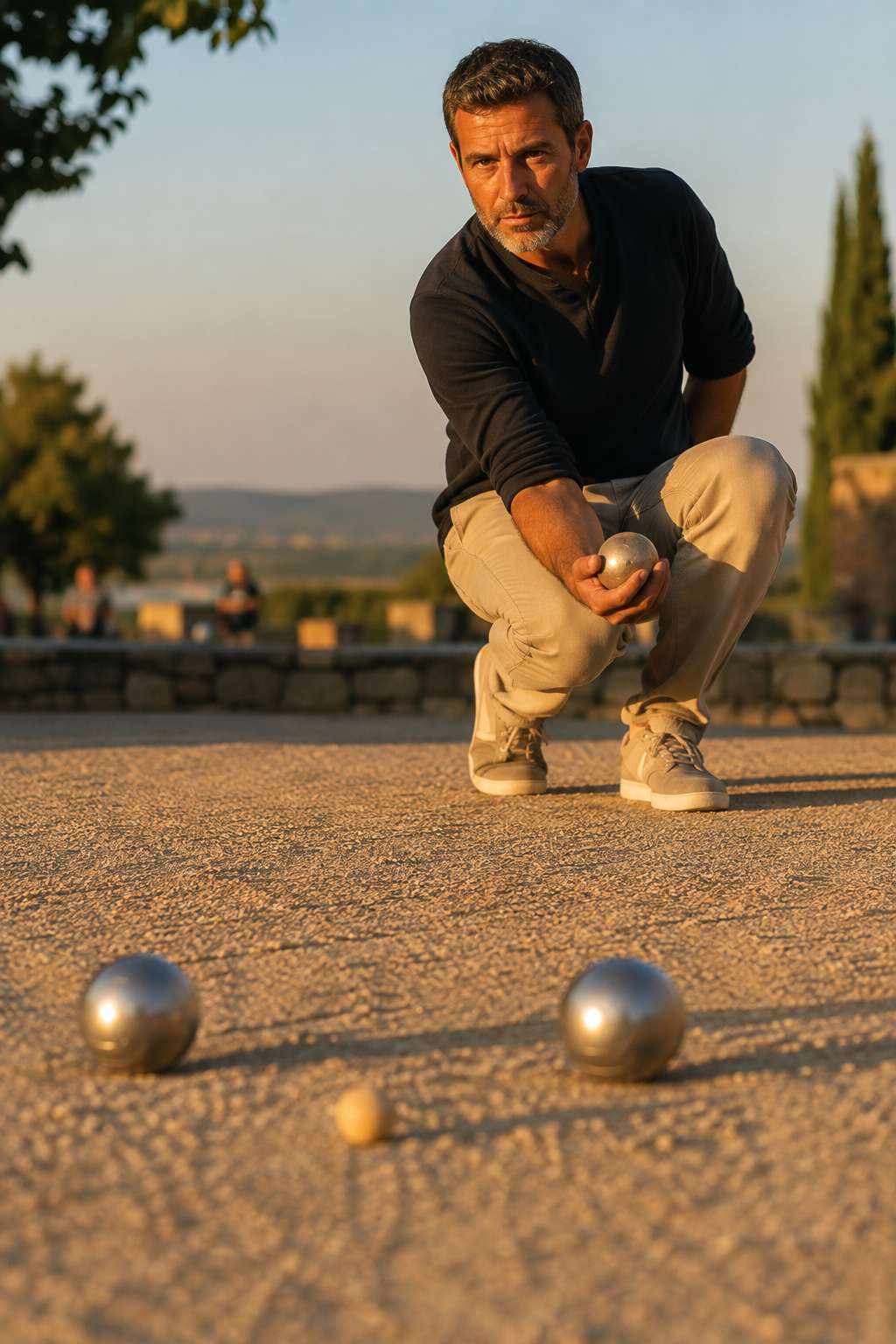
Everyone looks at the terrain. Few players reallyobserve it. Looking is seeing where the jack is; observing is interpreting what you see to draw a decision from it: which shot to play, with what force, on which trajectory. The difference is measured over the course of a game — and it's huge.
The player who observes turns every end into a problem to solve. The player who merely looks replays the same shot every time, whatever the situation. That's the first great divide between levels, well before the quality of the technique.
👁️Basic rule: before every end, your gaze must answer three questions — where (the jack and the bowls), how (the state of the ground), why (the score dictates which shot). Skipping even one of these questions means playing blind.
2.Mistake no. 1 — ignoring the state of the ground on the trajectory
The most frequent. You aim at the jack without reading what lies between the bowl and it: a bump, a hollow, a patch of rolling gravel, a hard slab. As a result, a perfectly measured lob comes off the rails in the last metre. Good pointers “scan” the trajectory before choosing between a lob, a half-lob or a roll.
3.Mistake no. 2 — observing without taking the score into account
At 12-6, you play safe; at 6-12, you take risks. Observing the terrain without integrating the score leads to bad choices: shooting when one point is enough, or pointing cautiously when you absolutely need to close the gap. Reading the score is part of observing, just like reading the ground.
4.Mistake no. 3 — poorly identifying the bowl to play
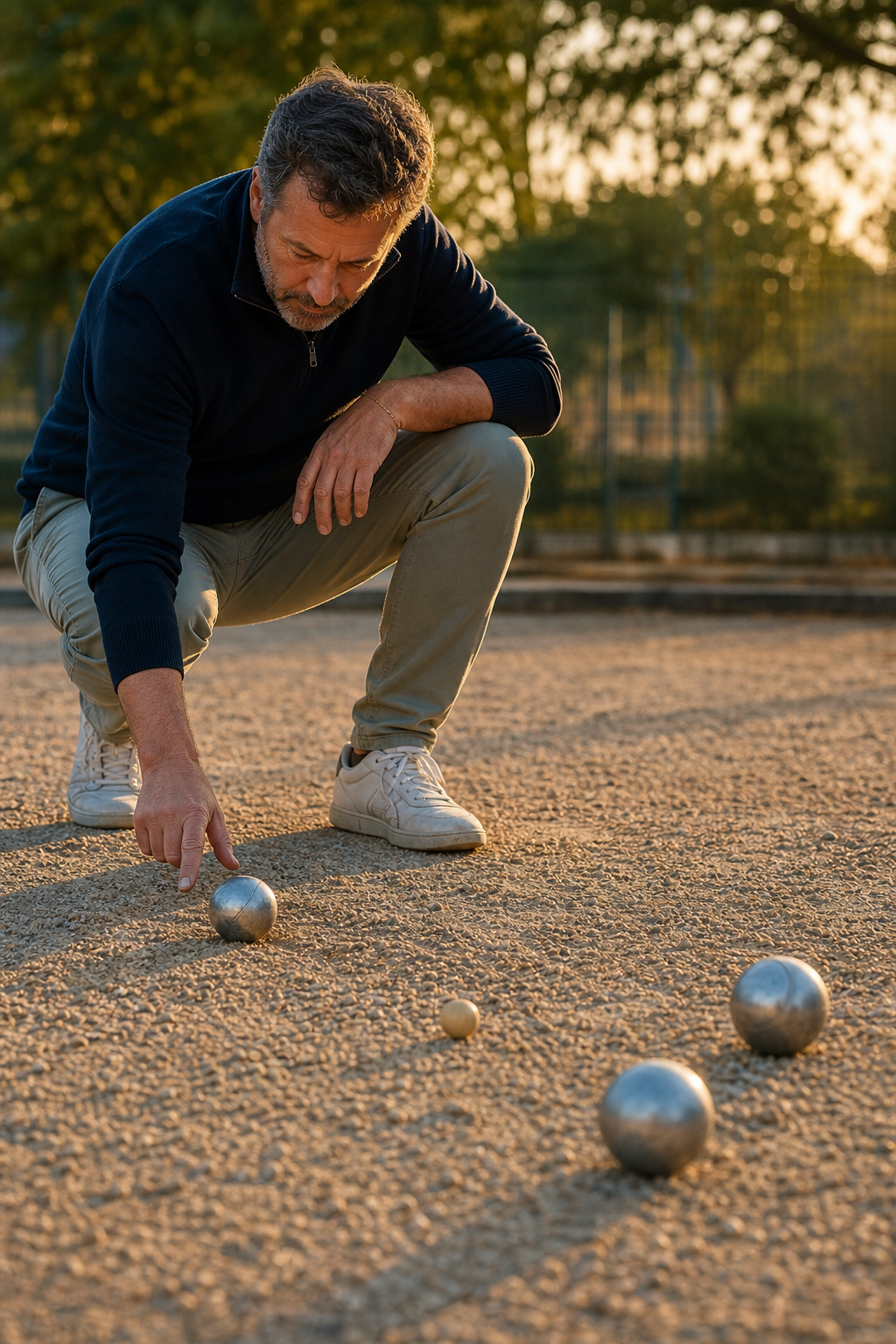
Which opposing bowl really threatens? Which one is “in front” in the sense of the rules? Many players shoot the most visible bowl, not the most dangerous one, or point without having seen that one of their bowls was already holding the point. A methodical glance at the real distances avoids this waste.
🎯 Paquita's tipBefore deciding, ask yourself in a low voice: “If I don't play, what happens?” The answer immediately reveals the real threat — and therefore the right shot. It's the most profitable observation reflex in the game.
5.Mistake no. 4 — not reading the opponent
Observation doesn't stop at the ground. An opponent who sighs, who changes their routine, who hesitates over the pointing/shooting choice, is an opponent who is doubting. Reading them lets you adjust your pressure: play safe when they're on a roll, attack them when they're wobbling. It's free information, laid out right in front of your eyes.
6.Reading vs rushing: the gap in figures
Over a complete game, the player who takes their 10 seconds of observation chooses their shots clearly better than the one who rushes on. Let's visualise the gap in good shot choices over the course of the ends:
Good shot choices per end (out of 6 typical ends) Player who observes regularly correct choices Player who rushes erratic Quality of terrain reading — out of 10 The player who observes · 8/10 Reads the ground, the score and the opponent before every end. The rushed player · 4/10 Sees the jack, ignores the rest — and pays for it over time.| What to observe | The right reflex | The common mistake |
|---|---|---|
| State of the ground | Scan the trajectory | Aim only at the jack |
| Score | Adjust the risk | Always the same shot |
| Bowls in play | Identify the real threat | Shoot the most visible |
| Opponent | Read the doubt | Only look at one's own bowl |
7.The 10-second observation method
No need to spend a minute on it. A short, systematic observation routine is enough, as long as you always do it in the same order.
1. The ground, from the circle to the jack
A visual sweep of the trajectory: bumps, hollows, rolling zones. It determines the type of shot (lob, half-lob, roll).
2. The score, therefore the intention
Play safe or attack? The score dictates the objective of the end before even choosing the bowl.
3. The real threat and the opponent
Which bowl is doing damage, and what mental state the opponent is in. To go further, our free tools and our page little-known rules help structure this reading.
📘 PAQUITA'S BOOK The Ultimate Guide to Difficult TerrainsReading a tricky ground, anticipating the bounces, choosing the right shot according to the terrain: the complete guide to turn your observation into points, end after end.
📗 Discover the bookFAQ — Your frequent questions
How long should you observe before a lead?+ Around ten seconds are enough if the observation is methodical: a scan of the ground on the trajectory, a point on the score, an identification of the real threat and the state of the adversary. The goal is not to think for a long time but to look at the right things, always in the same order. Point or shoot: how observation helps you choose?+ By combining three pieces of information: the state of the ground (a tricky ground makes the point risky and can favor the shot), the score (leading invites to secure, being led to dare) and the opposing threat (a ball very close to the goal is often shot rather than attempting a perfect point). It's the combined reading that decides, not the habit. How to spot the really dangerous ball?+ Comparing the actual distances to the goal, not the spectacular appearance of the balls. The ball closest to the jack is the one that holds the point; it is generally she who must be neutralized. Ask yourself, “If I don’t play, who gets the point?” » to identify the threat in one second. Can we really “read” the opponent in pétanque?+ Yes, to a certain extent. A change in routine, sighs, prolonged hesitation over the choice of move often betray doubt. These are not certainties, but useful clues to adjust your pressure - secure when the opponent is successful, attack him when he falters. Can observation be worked on during training?+ Absolutely. In training, get into the habit of announcing your reading out loud before each ball: state of the ground, intention, threat. By verbalizing, you anchor the observation routine until it becomes automatic in a match. 📎 Related articles GameThe lesser-known rules of pétanque ToolsFree PetanqueLand tools HomePétanque by Paquita© Pétanque by Paquita — petanqueland.fr ·
📘 Discover my books on PetanqueLand
Strategic advice with an educational aim, based on observing the game. Each player adapts these principles to their own practice.