Actualités · 22 June 2026
Why the first impression is often misleading in pétanque
In pétanque, the first glance often lies: terrain, a boule that "holds", opponent, score. Here's why, and the method to check before you play.1.The brain judges before having looked
Faced with a game situation, our brain never starts from zero. It immediately slaps on a label: "easy", "dangerous", "flat", "won". It's fast, comfortable — and that is exactly where the error creeps in. This first reading relies on what jumps out, not on what really matters. Well-raked ground looks safe; a spectacular bowl looks uncatchable; a lead of a few points looks secured.
Good players are not those who never have a first impression — they have one like everyone else. They are the ones who have made a habit of not trusting it until they have verified it. Between the impression and the decision, they slip in a second glance. That is the whole gap.
⚡The first impression is not your enemy: it's a hypothesis, not a conclusion. The error is not feeling it, but playing on it without having checked it through a move or an extra glance.
2.The terrain that "looks" flat
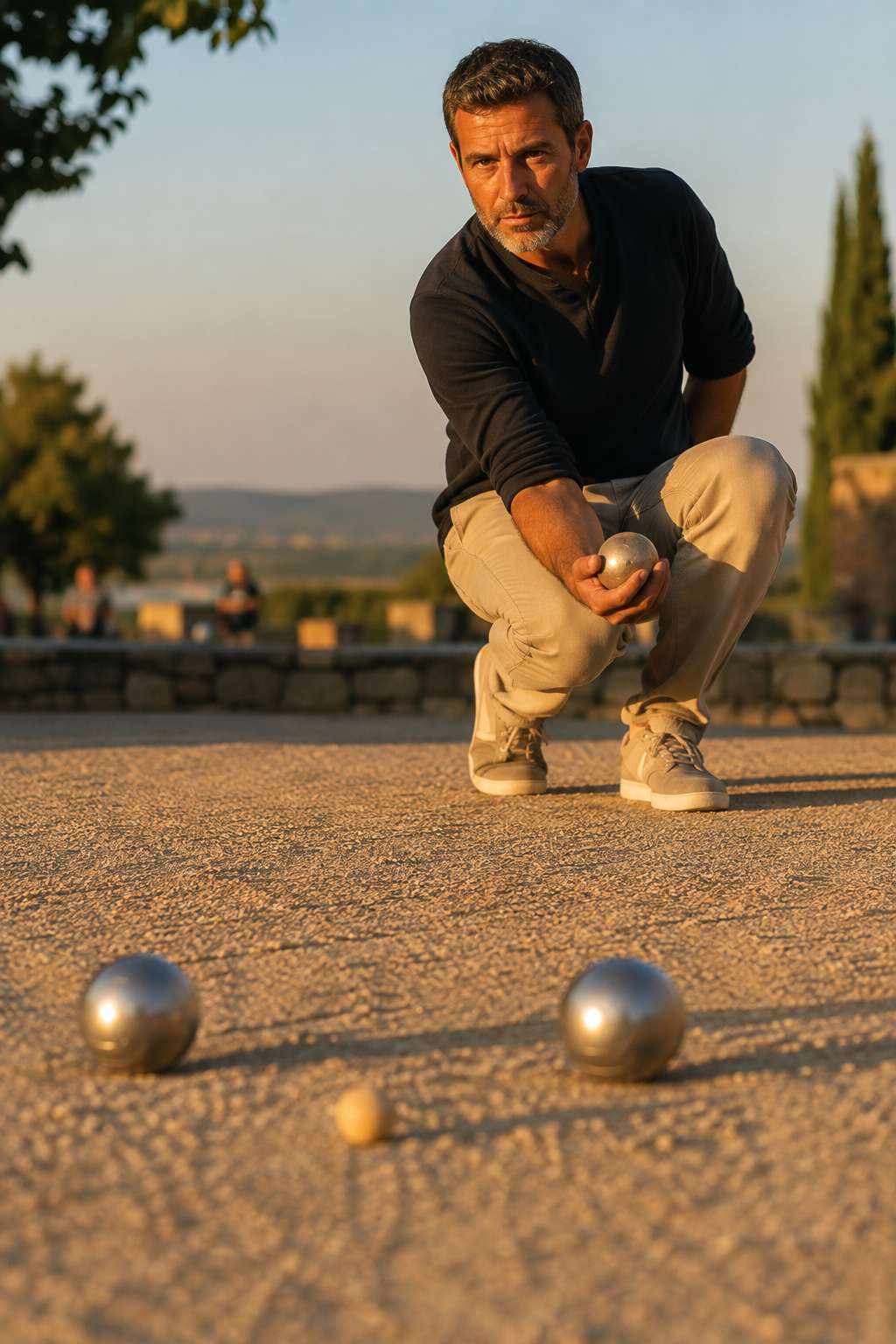
It's the costliest illusion. Seen from the circle, a terrain looks smooth and regular. You gauge a "normal" lob and the bowl skews off in the last metre, deflected by a slight slope or a hard patch invisible from afar. The ground doesn't lie — it's our gaze that skims over it. The low evening light, the dust, a recent raking smooth out the real relief.
The corrective reflex comes down to one gesture: walk the trajectory, or at least sweep it with your gaze from a different angle. A bump spotted at ten centimetres changes the choice between lobbing, half-lobbing and rolling. What the eye didn't see from the circle, moving reveals it.
3.The bowl that "holds" the point… or not
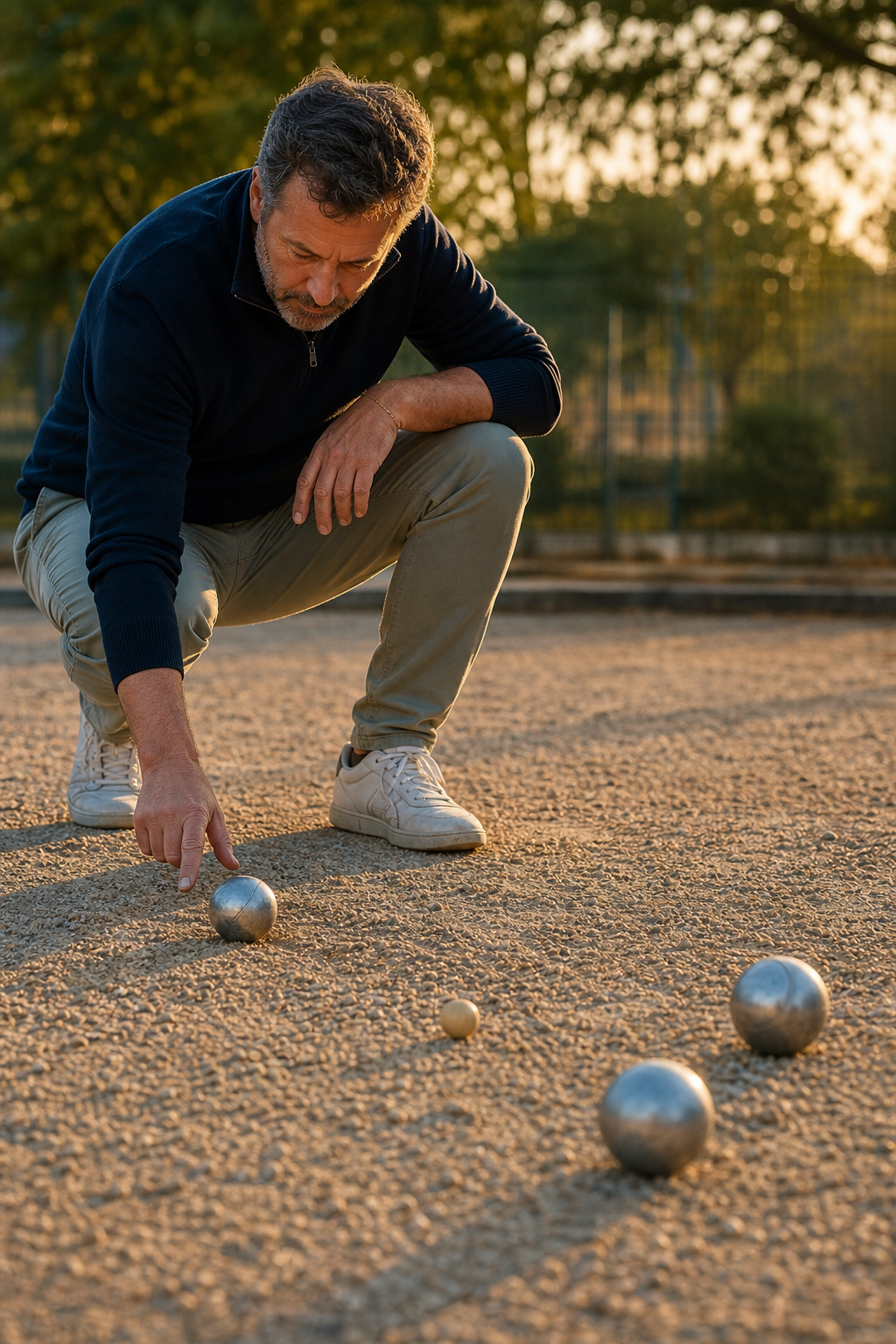
A bowl placed just in front of the jack "looks" like it holds the point. But the view from the circle flattens the distances: a bowl slightly offset to the side looks closer than another perfectly in line. How many players shoot a bowl that no longer held the point, or point when they were already ahead? The eye judges the staging, not the measurement.
🎯 Paquita's tipBefore deciding on the shot, take three steps towards the jack and look at the bowls from above, not from the side. Nine times out of ten, this two-second move corrects a false first impression — and saves you from shooting the wrong bowl.
4.The score that reassures too early
Leading 10-4 "gives" the impression of having won. This impression relaxes attention, makes you play cautiously when you should be locking it down, or take unnecessary risks. Conversely, being behind creates a sense of urgency that pushes you to shoot everything, right now. In both cases, it's the feeling of the score that's driving, not its analysis. Yet 10-4 is not won: three missed ends and the gap melts away.
5.The opponent judged in three seconds
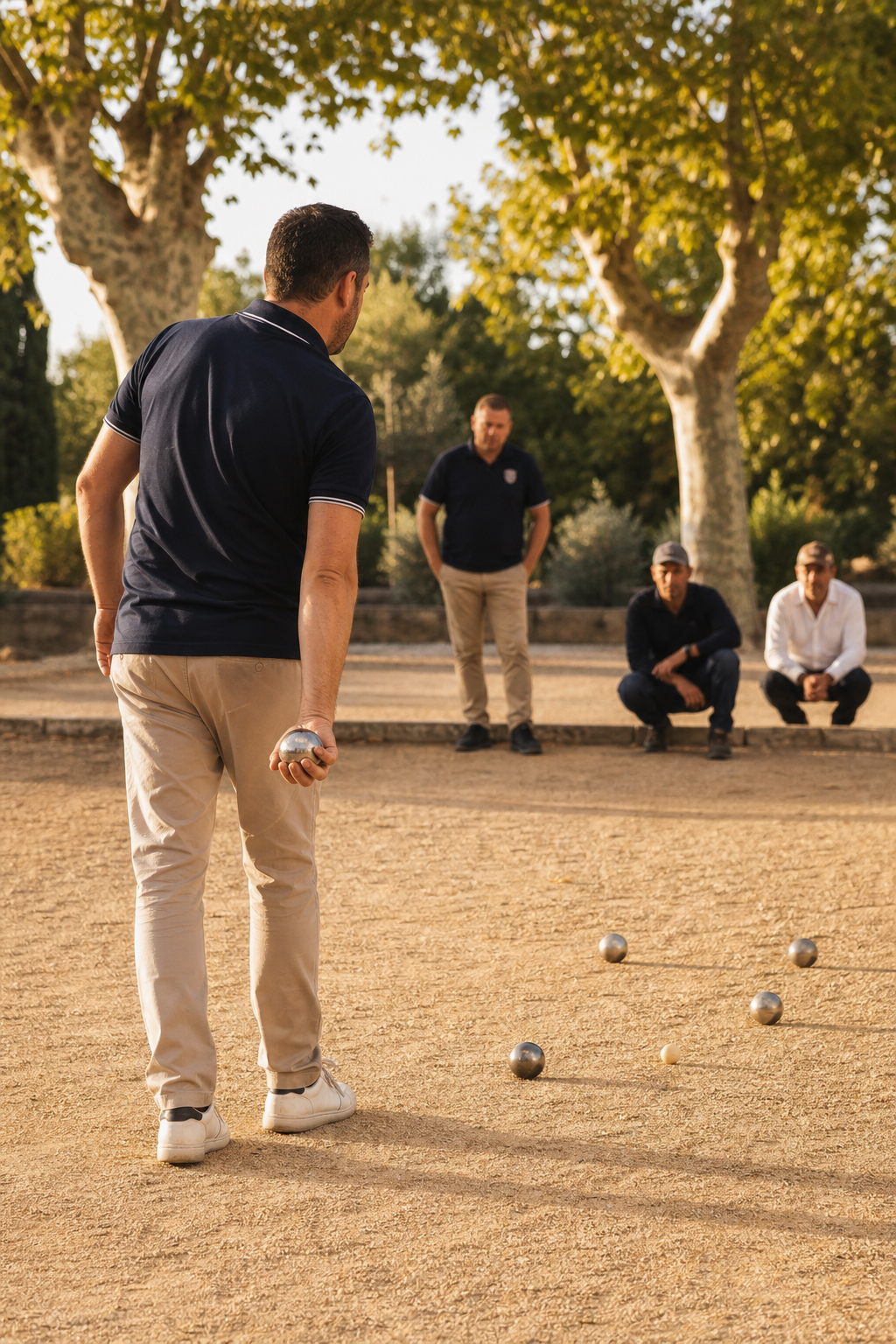
We size up the opponent before they have even played: their outfit, their age, their equipment, their apparent ease. These signals say almost nothing about their real level. The quiet player who looks unremarkable sometimes points like clockwork; the big guy with shiny equipment shoots wide under pressure. Judging the opponent on appearance means depriving yourself of the only useful information: what they actually do bowl after bowl.
6.First impression vs verification
Let's compare, domain by domain, what the first impression "sees" and what a methodical second glance reveals. The reliability gap is clear:
Reliability of a decision — out of 10 After verification · 8/10 Ground walked, bowls seen from above, score analysed, opponent observed in action. On first impression · 4/10 Decision made "by feel" from the circle, without checking.| Situation | What the 1st impression says | What verification reveals |
|---|---|---|
| Ground | "It's flat" | Slope / hard patch |
| Bowl in front | "It holds" | Offset, doesn't hold |
| Score 10-4 | "It's won" | 3 ends and the gap melts away |
| Opponent | "Not dangerous" | Judge on their real shots |
7.The second-glance method
No need to double your playing time. It's enough to insert, between the impression and the decision, a short and always identical routine.
1. Name the impression
"I feel it's flat / that it holds / that it's won." Saying the hypothesis out loud in a low voice turns it into something to verify, not a certainty.
2. Move to check
Three steps towards the jack, a glance from above, a look at the trajectory from another angle. It's the gesture that disproves or confirms the impression.
3. Decide on the fact, not on appearance
The shot is then chosen on what you have verified. To structure this reading, our free tools and the page little-known rules help you leave nothing out.
📘 PAQUITA'S BOOK Winning under pressure in pétanqueWhen the stakes rise, it's the first impression that takes over and makes you play too fast. This guide teaches you to keep a cool head, check before throwing and decide rightly, even in the moments that count.
📗 Discover the bookFAQ — Your frequent questions
Should you completely ignore your first impression?+ No. The first impression is a useful assumption: it focuses attention on what seems important. The mistake is to take it as a conclusion. We keep it as a starting point, then we check it by moving or taking a second look before deciding on it. How do you know if a piece of land is really regular?+ By walking the path between the circle and the goal, or looking at it from a different angle and with a different light. Bumps, hollows and hard patches invisible from afar appear when you change your point of view. It is this control that dictates the choice between carry, half-carry and roll. Why do we often shoot the wrong ball?+ Because, seen from the round, the most spectacular or visually best placed ball is not always the one that actually holds the point. The angle overwrites the distances. By looking at the balls above, after a few steps towards the goal, we identify the real threat and we avoid neutralizing a ball which was not in the way. Is a comfortable lead really misleading?+ Yes, because the feeling of progress relaxes attention or pushes people to manage risk poorly. In pétanque, a game can change in two or three ends. Better to treat each lead as if the score was close: secure when you lead, without ever considering the game as played until the points are reached. How to avoid underestimating an opponent?+ By judging him only on his actual shots, not on his looks, his age or his equipment. Observe what he succeeds and what he fails throughout the rounds, and adjust your strategy accordingly. Appearance says almost nothing about the level; the progress of the game provides reliable information. 📎 Related articles GameThe lesser-known rules of pétanque ToolsFree PetanqueLand tools HomePétanque by Paquita© Pétanque by Paquita — petanqueland.fr ·
📘 Discover my books on PetanqueLand
Tips for educational purposes, based on observing the game. Each player adapts these principles to their own practice.